It happens on almost every hotel stay: you hear a knock at 9 a.m., you’re still in your robe with coffee half-made, and you freeze. Do you have to open the door? Can you send housekeeping away without losing your clean towels for the day? Most travelers guess their way through this moment, and it leads to skipped cleans, awkward hallway encounters, and rooms that never get serviced at all.
This guide to hotel housekeeping etiquette walks you through the whole picture. We’ll explain how cleaning schedules actually work, when to let staff in and when it’s perfectly fine to decline, and how to use the do-not-disturb sign without accidentally canceling your service. You’ll also find practical advice on protecting your valuables, tipping housekeeping fairly, and requesting more or less cleaning to fit your stay. By the end, that morning knock won’t catch you off guard again.
How Hotel Housekeeping Schedules Work
Most hotels run their cleaning rounds between 9 a.m. and 3 p.m., with the busiest stretch usually falling between 10 a.m. and 1 p.m. That means a knock before 9 a.m. or after 3 p.m. is unusual, unless your property offers evening turndown service. If someone knocks well outside the standard window, it’s reasonable to be cautious and check who it is.
How long a clean actually takes
A stayover clean takes roughly 20 to 30 minutes for a standard room, so you’re planning around a short window rather than losing the whole day. If you know the attendant is working your floor, stepping out for half an hour is often enough to let the work happen without disrupting your morning.
The order of cleaning matters too. Rooms are usually serviced in checkout order first, since departure cleans are more thorough and early departures need rooms turned around quickly for arriving guests. Occupied stayover rooms come later in the round, which is why your clean might land anywhere from late morning to mid-afternoon.
If you want service at a specific time, tell the front desk the night before or in the morning. Requests are logged and passed to the floor attendant, and while exact timing can’t always be promised, a stated preference usually gets you a much narrower window than leaving it to chance.
When to Let Staff In and When to Decline
The first thing to know is simple: you are never obliged to open the door. If you’re unwell, mid-call, or getting changed, say “later please” through the door and ask when they can return. A legitimate attendant will accept this without any problem and move on to the next room.
Before you unlock anything, verify who is actually standing there. Legitimate attendants wear a uniform or a name badge, and they will not object to waiting while you check. If someone claims to be housekeeping but seems evasive about it, call the front desk and ask whether staff have been sent to your room. This takes thirty seconds and resolves almost every uncertain situation.
If you do decline service, don’t just leave it to chance. A silent room with no response often gets skipped entirely for the day, so hang the do-not-disturb sign to make your choice clear. It also helps to understand what your actions signal to the cleaning team:
- Leaving the room unmarked counts as implicit permission; attendants will service it as normal while you’re out.
- If you want no entry while you’re away, the sign alone works, but telling the front desk explicitly is the surest way to guarantee it.
- A verbal “come back later” without the sign can be forgotten by the time the attendant finishes the floor, so pair your words with the sign.
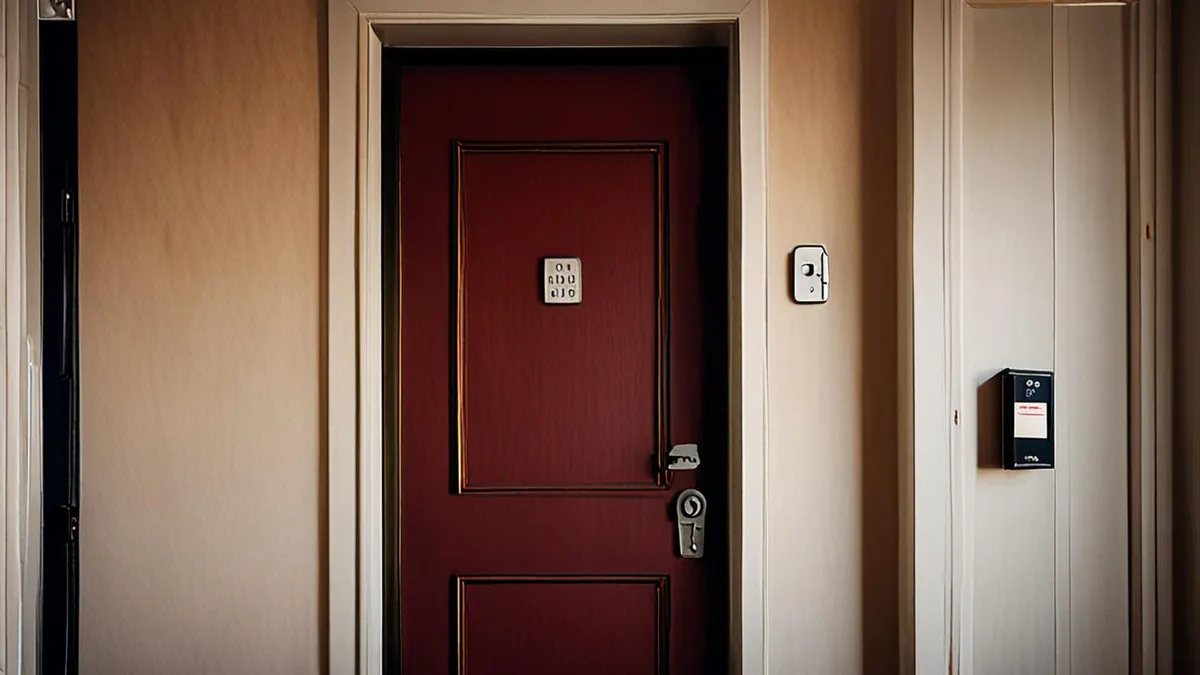
Using the Do-Not-Disturb Sign Without Blocking Service
The do-not-disturb sign is a useful tool, but it works both ways. Housekeeping typically skips rooms displaying the sign, and attendants may not circle back to a skipped room before their shift ends. So if you do want cleaning that day, remove the sign by mid-morning to make sure your room stays on the route.
What happens if the sign stays up
Many properties make one second attempt after 2 p.m. If the sign is still hanging at that point, that day’s service is usually forfeited, and your room stays as it is until the next day. If you’re sleeping in, hang the sign overnight for uninterrupted rest, then take it down as soon as you head to breakfast so you catch the mid-morning round instead.
If the sign does cost you a clean, all is not lost. Ask at the front desk for fresh towels and toiletries, and most hotels will deliver them to your room within an hour at no charge. It won’t replace a full service, but it covers the essentials until the attendant reaches you the following day.
Privacy, Security and Valuables
Housekeeping attendants enter every room they service, which is exactly why securing your valuables matters. Before you head out for the day, lock your laptop, passport, cash and jewelry in the in-room safe. If your room has no safe or the items are too bulky, ask the front desk about their safe deposit option instead of leaving anything out in the open.
When you are inside the room working, make a habit of using the door latch or deadbolt. Staff will knock and wait rather than force a latched door, so this gives you full control over who comes in and when. It is a simple step that prevents any awkward mid-work interruptions.
A few extra habits worth building:
- Keep the safe code to yourself and avoid obvious combinations like your birth year, since anyone staying with you or visiting the room could guess it.
- Never leave a keycard or room number card visible in public areas such as the lobby bar or pool deck, because it links a stranger to your room.
- If you return and the room shows signs of an entry you did not expect, note the time and mention it at the desk right away rather than waiting until checkout.
If something goes missing or your room was not serviced after being marked occupied, report it immediately. Reputable hotels track every keycard entry to a named employee, so a prompt report gives them a real chance to resolve the issue. And if an entry ever makes you uncomfortable, you can request that cleaning happens only while you are present. Confirm this arrangement at the front desk so the instruction reaches the floor attendant directly.
Tipping Housekeeping the Right Way
In the United States, a tip of $2 to $5 per night is the widely suggested range for housekeeping. The key detail is presentation: place the cash in an envelope or add a short note marked for housekeeping. Loose bills left on the desk are often treated as clutter and cleared away without anyone realizing they were a tip.
Daily beats checkout
Tip daily rather than saving it all for checkout day. The attendant who serviced your room may change between shifts, so a lump sum at the end can easily go to someone who never touched your room. A small amount left each morning goes directly to the person who did the work that day.
Adjust the amount for the room and the workload. For suites, extra requests or a heavy mess, $5 to $10 per night is reasonable for larger rooms. If an attendant made several special trips, say for extra towels or an iron, a little extra on that day is a fair acknowledgment.
Outside North America, the picture changes. In many countries tipping housekeeping is uncommon or already covered by service charges, so leaving cash may confuse or even embarrass staff. Check local norms before your trip, or simply ask at the front desk whether tipping is expected at that property.
Requesting Less or Extra Cleaning on Your Stay
Housekeeping service is not one-size-fits-all, and most hotels are happy to adjust it to your preferences. Whether you want less intrusion during a lazy morning or an extra polish before guests arrive, a quick word at the front desk usually does the trick. The key is to make your wishes known early, clearly and politely, so the floor attendant has time to log them into the day’s schedule. Here is how to set it up properly.
- Ask at check-in about cleaning frequency. If you value privacy, request every-other-day or on-request cleaning. Most mid-range and large-chain hotels accommodate this easily, since full daily service is no longer automatic at many properties anyway.
- Time any extra clean carefully. If you want the room refreshed before guests arrive or before an evening out, make the request by noon so it can be slotted into the afternoon round rather than missed entirely. A specific request, such as fresh towels only, is even easier to arrange.
- Use the towel signal. Hang towels you want reused and leave used ones on the floor. This simple convention is understood by attendants everywhere and cuts down on unnecessary washing, which is good for both the environment and the hotel’s laundry load.
- Handle turndown on the spot. Evening turndown, offered at many upscale properties, can usually be declined once and it will not be repeated. Just say so politely when staff knock, and they will note it for the rest of your stay.
Getting the cleaning schedule right makes a real difference to how a stay feels, especially at resorts where you may be in and out of the room all day. A room that is freshened exactly when you want it, and left alone when you do not, simply feels more like home. The same logic applies to choosing the property itself: if you are weighing up service styles, it helps to understand what to expect from all-inclusive resorts compared to standard hotels before you book. Either way, a clear request at check-in beats an awkward knock later, and it saves both you and the attendant a wasted trip.
The Etiquette Balance in Brief
That knock at 9 a.m. while you are still in your robe has a simple answer: you never have to open the door. Say “later please” through it, hang the do-not-disturb sign if you want to sleep on, and take the sign down by mid-morning when you are ready for service. Housekeeping works a 9 a.m. to 3 p.m. window, so plan your sign and requests around it rather than resisting it.
You always control entry: verify who is at the door, decline politely, or hang the do-not-disturb sign, and remember to remove it by mid-morning if you want your room cleaned. Secure your valuables, tip $2 to $5 per night where customary, and set your preferred cleaning frequency at check-in. If this guide helped you handle your next hotel stay with a little more confidence, leave a comment or share it with a fellow traveler.