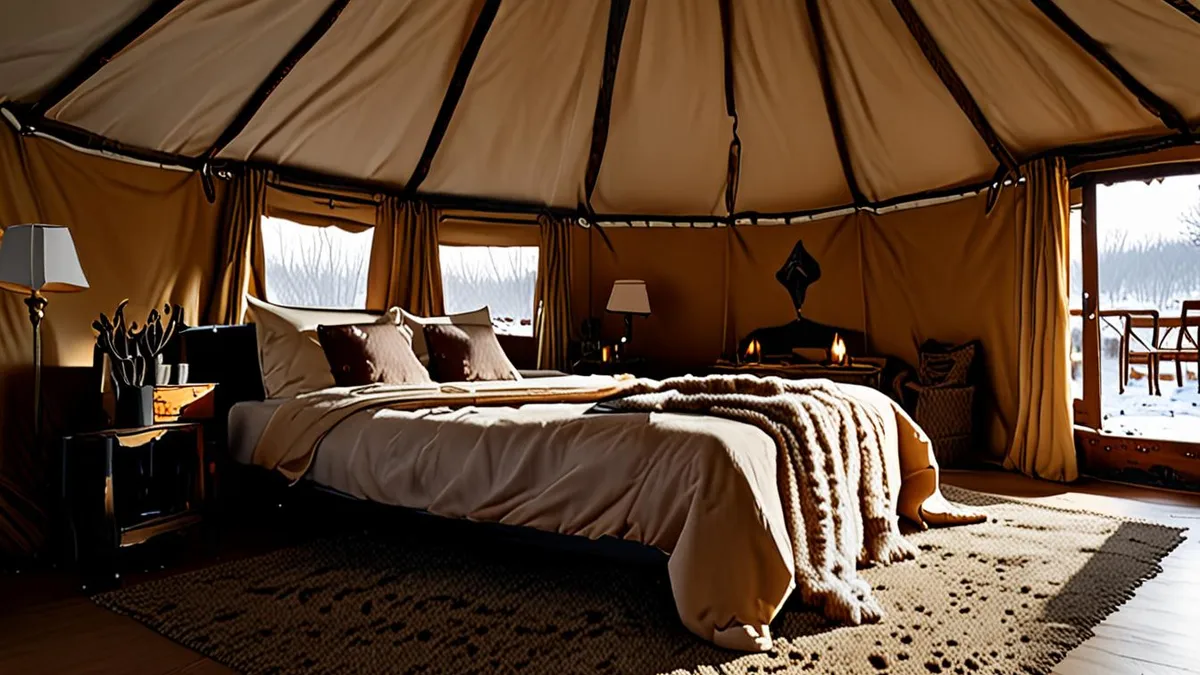
The idea sounds magical: you, a steaming mug, and snow falling softly outside a glowing tent. But the doubt creeps in fast. Can a canvas or dome structure really stay warm when temperatures drop well below freezing, or will you spend the night shivering in your sleeping bag?
The good news is that winter glamping is engineered for exactly this challenge. Four-season tents and domes are built with insulated materials, and most heated units rely on a small wood stove or another heating system to keep the interior genuinely comfortable. In this guide, we break down what makes a tent winter-ready, how wood stoves and alternative heating options actually work, when and where a cold-season trip makes sense, what to pack, and how to stay safe around a live stove. By the end, you will know whether a snow-covered dome belongs on your travel list this season.
What Makes a Tent Winter-Ready
The difference between a summer tent and a true four-season glamping unit comes down to materials. Winter-ready domes and cabins use insulated membranes, double-layer canvas, or thermal coatings that are rated to perform in extreme cold, typically down to around -30°C (-22°F). That rating matters: it means the fabric and insulation layers are designed to hold heat inside rather than let it radiate straight out into the night air.
Why shape matters in the snow
Geodesic domes have a practical advantage beyond their looks. Their curved roof geometry gives snow nothing to grip, so accumulation slides off instead of piling up and stressing the structure. If you are booking a mountain site where snowfall is heavy, a dome is often the safest bet.
Safari-style canvas tents take a different approach. Instead of thick insulation, they rely on heavy-duty canvas paired with a wood stove to stay warm. The canvas breathes, which helps manage condensation, but the heat source does the heavy lifting.
One detail travelers often overlook is what happens under the floor. Cold air sinks, and without protection it seeps up through the ground level and chills the whole space. Well-designed winter units solve this with raised platforms and snow skirts that seal the gap between the tent and the frozen ground below.
How Wood Stoves in Glamping Tents Work
The heart of most winter glamping setups is a small wood stove, and it is more capable than its size suggests. These compact units typically produce 3-6 kW of heat, which is enough to hold a comfortable 20-30°C (68-86°F) inside the tent, as long as someone keeps feeding the fire.
Where the smoke goes
You might wonder how a chimney works on a fabric structure. The stove’s pipe passes through a heat-resistant flashing panel set into the roof or wall of the tent. This panel shields the canvas or membrane from the hot pipe, so the heat stays in the stove and chimney instead of scorching the tent material around it.
The midnight top-up
Here is the practical reality of a stove-heated stay: firewood is typically restocked every 8-12 hours, so on a long winter night you should expect one mid-night top-up. Some sites have staff who handle this for you; others leave a wood supply inside the tent and expect guests to load a log or two themselves. Ask before you book so you know what to expect.
Timing matters, too. Canvas tents cool quickly once the fire dies, with interior temperatures dropping noticeably within 1-2 hours. If you let the fire burn out at bedtime, you will wake up cold. If you are curious how the cold season compares with the rest of the year, the month-by-month guide to glamping seasons in the US puts winter in context with every other time to go.
Alternative Heating: Electric, Propane and Radiant Floor Options
Not every winter glamping unit depends on a wood stove. When a dome or cabin sits on the grid, hosts often skip the firewood entirely and install electric space heaters or mini-split heat pumps. These units are quiet, controllable, and often come with a thermostat, so you can set a target temperature and forget about it.
Off-grid sites take a different route. Propane heaters are common in units without electrical hookups, and reputable operators pair them with built-in carbon monoxide detectors as a safety measure. At the premium end of the market, some domes feature radiant underfloor heating, which spreads warmth evenly across the floor so your bare feet never touch a cold surface.
The biggest practical difference between these systems and a wood stove is overnight care. Electric and propane systems hold a steady temperature without anyone getting up to refuel, which means uninterrupted sleep on the coldest nights.
- Thermostat control: electric and mini-split systems let you set an exact temperature, while a wood stove requires constant adjustment by adding or withholding wood.
- Condensation management: propane combustion releases moisture, so hosts often combine propane heat with ventilation to keep tent walls dry.
- Warm-floor comfort: radiant underfloor heating warms the surface you actually touch, which makes a bigger difference to perceived comfort than air temperature alone.
- Power dependency: electric systems stop working in an outage, so grid-powered sites often keep a backup heat source on hand.
When and Where Winter Glamping Makes Sense
Winter glamping is not a year-round product in most places. Across most US regions, the season runs roughly November through March, and that window shapes everything from pricing to what you’ll actually see outside your tent window.
Location matters as much as timing. Mountain and northern sites deliver the classic snow experience: white landscapes, frosted trees and long, cozy evenings by the stove. If you’d rather avoid deep winter, desert sites in the Southwest offer a different rhythm — mild, sunny days for hiking and genuinely cold nights that make the heated tent feel earned rather than endured.
What winter rates look like
Expect rates of $150-400 per night at most winter-ready sites. That is often higher than summer prices at the same properties, which surprises many first-timers. The premium reflects the extra infrastructure involved: insulated structures, heating systems and the extra staff time needed to keep units comfortable in sub-zero conditions.
One planning tip worth taking seriously: book 2-3 months ahead for holiday weekends such as Christmas and New Year. Those dates sell out first at popular mountain sites, and last-minute availability tends to be limited to midweek slots. If your dates are flexible, a Sunday or Monday arrival in January or February often gets you the same snow scenery with more space and calmer hosts.
What to Pack for a Heated Tent Stay
Packing for a heated tent is different from packing for a hotel stay, and also different from backcountry winter camping. The tent itself handles the cold; your job is to stay comfortable as temperatures inside shift through the night and as you move between the warm interior and the outdoors.
The single most useful habit is layering. Tent interiors can swing from 25°C to 10°C overnight as the stove burns down, so you want clothing you can add and shed easily. Insulated slippers are another small luxury that pays off, since floors can get cold in the late hours even in a well-heated unit. If you want a broader reference, this complete glamping packing checklist covers the basics in more detail.
- A headlamp or lantern: stove refuelling happens in the dark, usually mid-night, and you’ll want both hands free for the ash pan and firewood.
- Moisture-wicking base layers: they manage sweat from daytime activity and keep you comfortable through the overnight temperature swing.
- Insulated slippers with grippy soles: useful for cold floors at night and for quick trips across snowy decks or platforms to the washroom facilities.
- A refillable water bottle: dry stove-heated air dehydrates you faster than you expect, and warm water beats a midnight walk to a shared tap.
One thing you can leave behind: most sites provide bedding and towels, often of surprisingly good quality. Focus your packing on personal cold-weather gear rather than linens, and check your specific site’s list before adding bulky extras to the car.
Safety and Comfort Tips Around Tent Stoves
A wood stove is the heart of a canvas tent stay, and it deserves a little respect. These are real stoves with real hot surfaces, and a few simple habits keep the evening cozy instead of stressful. Canvas tents also cool quickly once the fire dies, so a properly managed stove matters more here than in a rigid cabin.
- Keep a clear zone around the stove. Bedding, sleeping bags, backpacks and drying clothes should stay at least one meter from the stove surface. Canvas and synthetic fabrics heat up faster than you’d think, and a rolled sleeping bag against the stove body is a genuine hazard. Boots and gloves can go near the stove to dry, but only when you’re awake and watching them.
- Let staff handle refuelling unless you’ve been briefed. Many resorts restock stoves overnight or train guests on arrival, and a typical top-up happens every 8-12 hours. If nobody has walked you through loading wood, adjusting the air intake and managing ash, ask for a demonstration rather than improvising.
- Crack a vent slightly. A fire needs oxygen to burn cleanly, and a sealed tent makes the stove smolder and smoke. A slightly open vent also keeps the air fresher for sleeping, which you’ll appreciate on a long winter night.
- Confirm the carbon monoxide detector before booking. Any unit with a stove or fuel-burning heater should have one. It’s a fair question to ask when you reserve, and a good operator will answer without hesitation.
Follow those basics and the stove becomes pure pleasure rather than a worry. There’s something genuinely satisfying about tossing in a log, hearing the crackle and watching the thermometer climb while snow falls outside — and doing it safely means you’ll remember the crackle, not the mishap.
Wrapping Up Your Winter Glamping Plan
So, can a tent really stay warm when it’s freezing outside? Yes, when it’s built for it. Winter glamping combines insulated domes or canvas tents with wood stoves or electric heat designed for sub-zero nights. Four-season domes use insulated membranes rated to around -30°C (-22°F), and with a stove running, the interior stays warm enough that you can read in a t-shirt while snow piles up outside.
The trade-off is simple: wood stoves need attention and regular refuelling, while grid-powered units hold heat hands-free. Plan for the November-March season, expect rates of $150-400 per night, and book 2-3 months ahead for holiday weekends. If a cozy night under a snow-dusted dome sounds like your kind of winter, leave a comment or share this article with a friend who needs a cold-season getaway.