Most travelers spend hours comparing prices but only minutes thinking about whether the hotel they book is actually safe. It’s an easy oversight: the photos look polished, the rate is right, and the location seems central on a map. Yet a few minutes of preparation before and right after check-in can make the difference between a restful stay and a stressful one. The hotel safety tips in this guide take almost no extra time, and most cost nothing at all.
Below, you’ll find practical advice for every stage of your stay. We’ll cover how to vet a hotel before you book, how to choose a safer room location, and what to do in the first 10 minutes after check-in. You’ll also learn how to protect valuables and documents, handle strangers and unexpected visitors, and prepare for fire and health emergencies. A quick checklist at the end ties everything together so you can review it before your next trip.
Vet the Hotel Before You Book
The best time to protect yourself is before you hand over your credit card. A hotel’s booking photos show you the prettiest version of a property, but recent guest reviews show you the reality. Focus on reviews from the last 3-6 months, since management changes, renovations and declining maintenance standards can transform a hotel quickly. A glowing review from five years ago tells you little about tonight’s front desk staff or the state of the door locks.
Search reviews for warning words
Instead of reading reviews one by one, use the search function on booking sites and type in keywords like “break-in”, “unsafe” or “lock”. If multiple recent guests mention a broken deadbolt, staff leaving side doors propped open or a pattern of theft, you’ll see it in seconds. One complaint can be a grudge; a recurring theme across several months is a signal worth taking seriously.
Next, look beyond the property line. Open a map with street-view imagery and check the neighborhood at night, not just the daytime photos on the booking page. Areas that look charming at noon can feel very different after dark, and the view from the hotel entrance rarely tells the whole story. If the street-view imagery shows empty, poorly lit blocks or shuttered storefronts nearby, plan your evening movements accordingly or consider another property.
Finally, scan the hotel’s own listing for two practical features: 24-hour front desk staffing and controlled key-card access to guest floors. A staffed desk means someone can verify visitors and respond to problems at 3 a.m., not just during business hours. Key-card elevators or stairwell gates keep non-guests from wandering the corridors. Neither feature guarantees a problem-free stay, but both show the property takes security seriously, which is exactly the kind of hotel you want to book.
Choosing a Safer Room Location
Once you’ve picked a hotel, the next decision is which room to request, and it matters more than most travelers realize. Where your room sits in the building affects both your security and your chances of a quick rescue in an emergency. The good news is that you can influence this simply by adding a request to your booking or asking politely at the front desk.
The sweet spot is floors 3-6. These floors are above easy ground access, so an intruder can’t simply climb in through a window or slip in from the street, yet they remain within reach of most fire ladders. Ground floors and floors 1-2 are the most accessible to intruders, while very high floors can complicate a ladder rescue, so the middle range gives you the best balance of both concerns.
Position within the corridor counts too. As a general rule, avoid the following spots:
- The end of long corridors: these rooms see the least foot traffic, which means fewer natural witnesses if someone lingers at your door or tries the handle.
- Rooms next to stairwells: stairwell doors are common access points for non-guests, and the heavy doors slam loudly all night.
- Rooms facing unlit parking lots: a dark lot outside your window offers cover for anyone watching the rooms, so ask for a side facing the street, the lobby or a lit courtyard instead.
Ideally, ask for a room close to the elevator but not directly beside it. Proximity to the elevator means a well-lit, busy stretch of corridor, while a room right next to it means constant door traffic, noise and strangers passing your door at all hours. A few doors down gives you the light and activity without the disruption.
The First 10 Minutes After Check-In
The first few minutes after you step into your room are the perfect time for a quick safety sweep, while your luggage is still by the door and your attention is fresh. It takes less than ten minutes, and once it’s done you can relax for the rest of your stay. Make it a habit, the same way you always find your key card before leaving an elevator. Here’s the routine to follow every time, whether you’re in a brand-new hotel or a familiar favorite.
- Test the deadbolt and secondary lock. Close the door and slide the deadbolt fully, then try the handle to confirm it actually holds. Do the same with the chain or swing bar, and check that the hardware isn’t loose or screwed into weakened wood. A lock that slides but doesn’t catch is worse than no lock at all, because it gives you false confidence every time you turn in for the night.
- Check the door viewer. Look through the peephole and confirm it’s intact, unobstructed and facing outward. A missing or reversed viewer means you can’t verify who’s at the door before opening it, which is a problem worth reporting to the front desk immediately.
- Find the nearest emergency exit stairwell. Open your door, look for the exit sign and walk to the stairwell once so you know exactly where it is. Then count the doors from your room to it, because in a smoky, dark or power-outage hallway, you may need to find it by touch and count.
- Test the window locks and balcony door. Open and close each window and any balcony door, and confirm the locks actually engage. On lower floors especially, a window that looks closed but doesn’t lock is an open invitation.
Fire services generally advise staying no higher than the 4th-6th floor for ladder rescue reach, and knowing your exit route matters just as much as your floor. If anything fails your inspection, a broken lock, a missing viewer, a jammed window, call the front desk right away and ask for a fix or a room change. Most hotels will resolve it without fuss, and staff would much rather hear about a faulty chain at check-in than deal with a real problem later. You’ll sleep far better knowing your door, windows and escape route all work.
Protecting Valuables and Documents
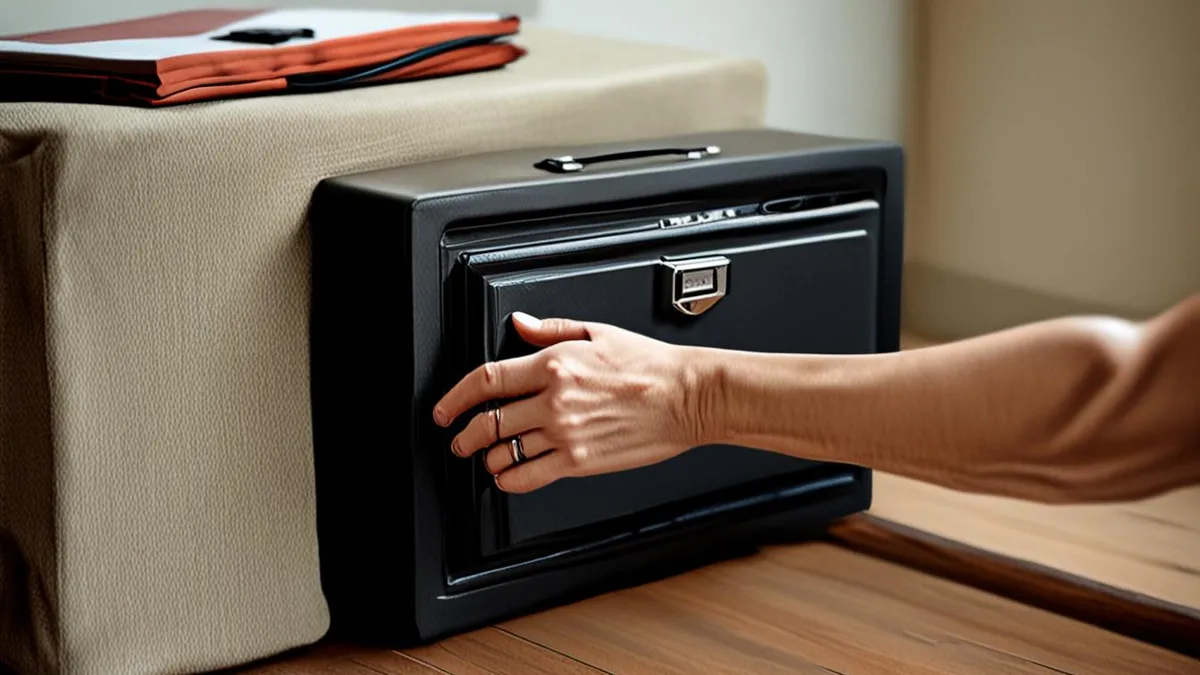
Most hotel rooms come with an in-room safe, and it exists for a reason: use it. Passports, spare credit cards, a backup phone or tablet, and any jewelry you are not wearing should go inside every time you leave the room. Most in-room safes are sized to fit a laptop along with your travel documents, so there is rarely a good excuse to leave electronics out on the desk.
The same logic applies to what you leave in plain sight. Cash, cameras, phones and chargers sitting on a bed or nightstand are the items most commonly stolen from guest rooms, whether by an outsider or someone with legitimate access to the hallway. Tidy up before you head out: if a stranger walked in right now, would anything valuable be visible in under ten seconds? If yes, put it away or lock it up.
Back up your passport before you need it
A lost passport can turn a fun trip into a bureaucratic nightmare, but copies make the replacement process dramatically easier. Keep digital and paper copies of your passport stored separately from the original. Snap clear photos of the ID page and email them to yourself, and tuck a paper photocopy in a different bag from the one carrying the real document. If your passport is ever lost or stolen, a copy speeds up your appointment at the nearest consulate and helps you prove who you are in the meantime.
Finally, never carry everything in one place. Split your cash and cards between your luggage and your day bag so a single theft, pickpocketing incident or lost bag is not a total loss. Keep one card and some local currency in your room safe, a different card in your day bag, and a small emergency stash tucked in a second pocket. It takes two minutes to set up and can save your entire trip.
Handling Strangers, Visitors and Front-Desk Calls
Most hotel security problems do not involve the locks at all — they involve people. A polite knock and a convincing uniform are all it takes for someone to talk their way into your room, so treat every unannounced visitor with caution. If someone claims to be staff or says they have a delivery for you, do not open the door. Look through the viewer, keep the door locked, and call the front desk to verify that the hotel actually sent someone. Real staff will not mind the delay; a scammer will often leave quickly once you mention calling down.
Your room number itself is sensitive information, and it is worth protecting from the moment you arrive. Ask the front desk to write it down instead of announcing it aloud at check-in, especially in a busy lobby where anyone can overhear. The same goes for conversations elsewhere in the hotel: there is no reason for a stranger in an elevator or on a shuttle bus to know where you are staying or how long you will be gone.
A few extra habits worth building:
- Carry a business card or matchbook from the hotel so you can show a driver where to take you without saying the name or address out loud in front of others.
- If the front desk calls to “confirm” your credit card details or asks you to come down because of a problem with your reservation, hang up and dial the desk directly yourself — scammers use this trick to fish for card numbers.
- When meeting new people on your trip, suggest meeting in the lobby or a public space rather than giving out your room number or floor.
- If someone follows you into the elevator and does not press a floor, wait for them to get off first, or ride past your floor and come back down.
None of these habits require paranoia — just a little healthy skepticism. The overwhelming majority of hotel stays pass without incident, and a few seconds of verification at the door is a small price for keeping it that way.
Fire, Emergency and Health Preparedness
The best time to plan for an emergency is when everything is calm and nothing is on fire. On arrival, before you unpack, open your door and read the evacuation map printed on the back of it. Find your room’s location, identify the nearest emergency exit stairwell, and then walk the route once. As you go, note how many doors you pass along the way — in smoke or darkness, or if the power is out, that mental tally may be the only way to find your exit.
Know your room’s safety equipment
Take thirty seconds to confirm there is a smoke detector in the room, mounted on the ceiling or high on the wall. If you cannot find one, or it looks like it has been tampered with, mention it to the front desk and ask for a different room. While you are at it, note the location of the nearest alarm pull station on your floor, usually near the stairwell or elevator. In a real emergency, pulling that station alerts the whole building faster than waiting for someone else to notice.
Fire services generally advise that guests stay no higher than the 4th-6th floor, since that is roughly the reach of ladder equipment in many cities. If you have a choice at check-in, this is one more reason a mid-height floor works in your favor — high enough to be out of easy reach from the ground, low enough that rescue is realistic.
Save the numbers before your first night
Before you go to sleep on your first night, save two numbers in your phone: the local emergency number for the country you are visiting, and the hotel’s front desk number. In many countries the emergency number is not 911, and fumbling through a search at 3 a.m. is not the moment to learn that. Add the front desk line too, since it is often the fastest way to reach help for a medical issue, a security concern or anything else on the property. Two minutes of setup now means you will not be scrolling through a booking app while something urgent is happening.
Quick Hotel Safety Checklist to Remember
It is easy to focus on price, location and photos when booking a hotel, and forget to ask whether the place is actually safe. The reassuring part is that a handful of small habits covers most of the risk. Before you book, read recent reviews and check the neighborhood, then aim for a room on floors 3-6, widely considered the safest balance between ground-floor access and ladder rescue reach.
Once you arrive, test the deadbolt, secondary lock and door viewer within your first 5 minutes, and locate the nearest emergency exit stairwell. Store passports, spare cards and electronics in the in-room safe instead of leaving them in plain sight, which is how the most commonly stolen items go missing.
During your stay, verify unexpected visitors by calling the front desk, keep your room number to yourself, and know your evacuation route plus the local emergency numbers before your first night. None of this takes more than a few minutes in total, yet it protects your documents, your money and your sleep. If these tips helped you, leave a comment or share this article with a fellow traveler.