Dreaming of a lavender-field countryside stay in southern France but unsure where and how to book the right farmhouse villa? You are not alone. Provence farmhouse villas, often converted from traditional stone mas, are among the most sought-after countryside stays in France, and the booking process can feel confusing the first time around.
This guide walks you through everything you need to plan with confidence. We cover why a farmhouse villa beats a hotel for many travelers, the best regions to search, when to book for your dates and budget, what a Provençal mas is actually like inside, how to get around the countryside, and how to pick the right villa for your trip. By the end, you will know exactly where to start looking and what to check before you commit.
Why Choose a Provence Farmhouse Villa for a Countryside Stay
A mas is a traditional Provençal stone farmhouse, and the best ones have been carefully restored into villas with private pools, shaded courtyards and gardens framed by vineyards or lavender fields. No hotel room, however lovely, gives you your own terrace, your own pool and a view across the fields at sunset. That combination of privacy and setting is exactly what draws travelers to these properties.
Farmhouse villas also make practical sense for groups and families. Instead of booking several hotel rooms, everyone shares one house with a real kitchen, multiple bedrooms and common space to spread out. Many guests find that the highlight of their trip is not a sightseeing day but a long, slow lunch at the farmhouse table, followed by an afternoon by the pool.
Close to village life, far from the crowds
Staying in the countryside puts you minutes from village markets rather than city crowds. You can drive into a nearby village in the morning for bread, cheese and peaches, then return to your quiet terrace before the tour buses arrive. You get authentic daily Provençal life on your own schedule, which is difficult to replicate from a hotel in a town center.
Best Regions in Provence for Farmhouse Villas
Provence is a large region, and the right base depends heavily on what you want from your trip. Three areas stand out for farmhouse villa stays, each with a distinct character. The Luberon is famous for its hilltop villages, the Alpilles for their food and olive groves, and the areas around Aix-en-Provence and Avignon for their access to city comforts. None of them is objectively better; the trick is matching the landscape and drive times to how you actually plan to spend your days.
In the Luberon, restored stone mas sit below villages like Gordes and Bonnieux, two of the most photographed hilltop towns in France. Lavender fields and cherry orchards fill the valleys between them, and morning light on the ochre stone is the image most people carry home. The Alpilles, near Saint-Rémy-de-Provence, pair olive groves and low rocky ridges with easy access to one of the region’s best market towns. Around Aix and Avignon, you trade some isolation for restaurants, train stations and straightforward day trips.
- Luberon micro-regions: the area around Gordes and Bonnieux in the Grand Luberon feels more dramatic and steep, while villages toward the Petit Luberon, such as those near Ménerbes, tend to sit on gentler terrain with wider valley views.
- Alpilles practicality: villas here are often within a short drive of Saint-Rémy-de-Provence, which means reliable access to cafés, bakeries and a well-known weekly market without giving up a rural setting.
- Aix and Avignon access: both cities offer TGV connections, so a villa in this area can work well if part of your group wants to sightsee or you plan car-free arrival by train before picking up a rental.
Whichever region you choose, spend a few minutes mapping the actual road route from a candidate villa to the villages on your must-see list. Winding country roads take longer than the map suggests, and choosing the wrong corner of the region can quietly add an hour of driving to every day.
When to Book Provence Farmhouse Villas
Timing your booking matters as much as picking the right villa. The most desirable Provence farmhouse villas are small in number and repeat-booked year after year, so the calendar fills quickly for the high season.
Booking for summer
For a July or August stay, reserve 6 to 9 months ahead for the widest choice. Peak season runs June through August, and many mas-style properties require 7-night minimum stays during July and August, so plan your week carefully before you inquire. Waiting until spring usually means choosing from whatever dates remain rather than the villa you actually want.
Shoulder season value
May and September deliver mild weather, lower prices and quieter villages. Lavender blooms roughly from mid-June to mid-July, so if fields are your priority, late June is the sweet spot between good weather and peak crowds. Weekly rates typically range from about €1,500 in low season to €10,000+ for large estates in summer, depending on size, location and season, so shoulder-season dates can make a big difference to your budget. Always confirm current rates directly with the owner or agency, as pricing changes from year to year.
What to Expect Inside a Provençal Mas
Step inside a Provençal mas and the first thing you notice is the cool, quiet hush. These old farmhouses were built with thick stone walls designed to hold off the summer heat, so interiors stay pleasantly chilly even in July and August. The trade-off is that many older properties lack air conditioning, so if you are sensitive to heat, ask about cooling options before you book.
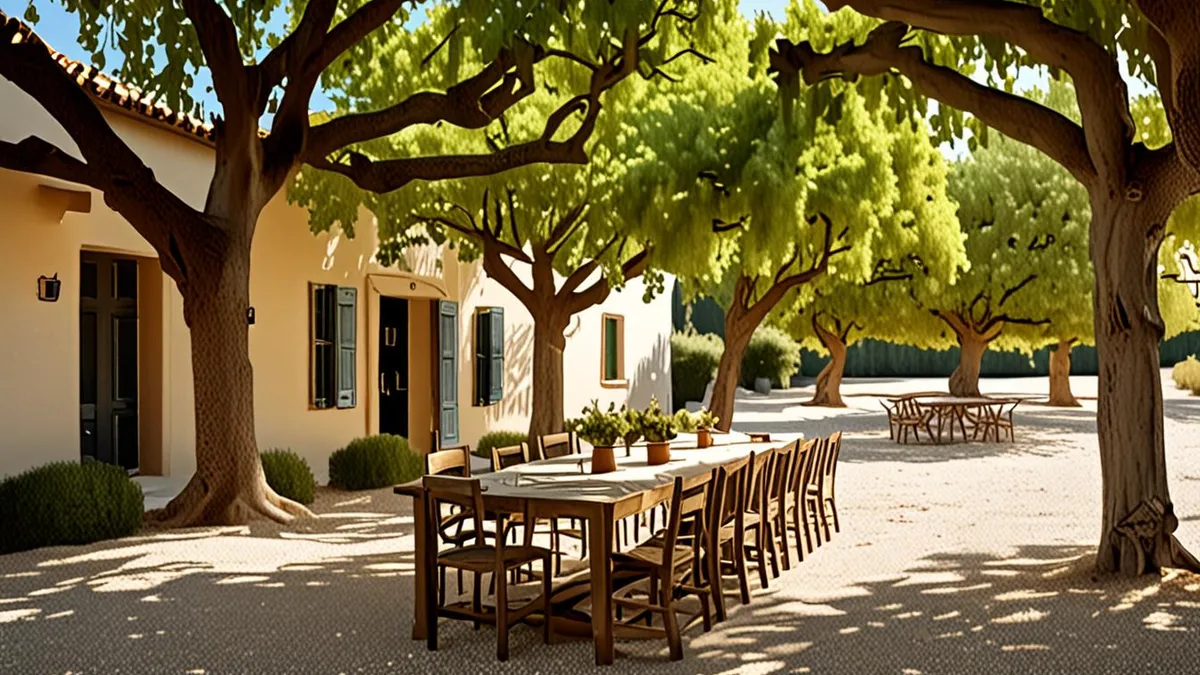
The character of a mas comes from its details. Bedrooms are typically shaded by traditional wooden shutters, which you close during the day to keep rooms dark and cool. Downstairs, you will often find a long farmhouse table made for hours-long meals, and many villas add an outdoor summer kitchen so cooking in the evening heat does not mean heating up the house.
- Shutters do real work: keep them closed during morning and midday hours, then open the east- and west-facing ones as the sun moves to create a natural cross-breeze through the house.
- Outdoor summer kitchens vary: some are simple setups with a grill and sink, while others include a full stove, fridge and covered dining area, so check what your villa offers if you plan to cook outside often.
- Farmhouse tables are usually long: many seat eight or more, which makes a mas particularly good for group trips where shared meals are the point of the stay.
- Decor tends toward the rustic: expect terracotta floors, exposed beams and linen rather than sleek modern finishes, which is part of the charm but means fewer built-in closets in some bedrooms.
A private pool is near-standard at farmhouse villas in Provence, and for most travelers it becomes the center of daily life. One practical check: if you travel in May or October, ask whether the pool is heated and whether heating is included in the rate, since unheated pools can be bracing in shoulder season.
Getting Around the Provence Countryside
A rental car is essential for a Provence farmhouse stay. Most villas sit 15 to 45 minutes from the nearest market town, and public transport rarely reaches the small country lanes where these properties are found. Book the car for the full length of your stay, not just a day or two, because you will use it for groceries as much as for sightseeing.
Choose a small to mid-size car if you can. Villages like Gordes and Ménerbes sit on steep, narrow roads with tight corners and limited parking, and a compact car makes both driving and parking far less stressful. Automatic transmissions are less common in France than at home for many travelers, so reserve one early if you prefer it.
Make a market town your anchor
Pick a market town such as Apt or Saint-Rémy-de-Provence as your practical base for groceries, bakeries and pharmacies. On the first day, do a full shop rather than relying on village épicerie shops, which are small and pricier. Learn which days the town holds its weekly market, then plan your route around it, because fresh produce, cheese and rotisserie chicken from the market can easily become dinner.
The same logic applies anywhere you rent a countryside villa: the details of access and logistics matter as much as the property itself. The thinking in this guide on how to choose a villa rental for your trip applies well to Provence too.
How to Choose the Right Farmhouse Villa
Choosing the right farmhouse villa depends less on the property itself and more on how well it fits your specific trip. Two mas with nearly identical photos can deliver completely different holidays depending on region, pool setup, bedroom layout and drive times. Before you commit a deposit, work through the practical checks below. An hour of questions now can save you a week of small frustrations later.
- Match the region to your trip style. Choose the Luberon if scenery and hilltop villages are your priority, the Alpilles if food, markets and olive groves matter most, or the Avignon area if you want restaurants, trains and easy day trips over total isolation.
- Confirm the pool season. Ask exactly when the pool is open, whether it is heated and whether heating costs extra. This matters most for stays in May or October, when an unheated pool may simply be too cold to enjoy.
- Check bed configurations against your group. Verify how many bedrooms have double beds versus twins, which rooms share bathrooms, and whether children can sleep near parents. Listing photos rarely show any of this clearly.
- Ask whether the owner lives on-site. Some mas share their grounds with the owner’s house, which suits travelers who appreciate local tips and help, but not those seeking complete privacy.
- Test drive times to your priority villages. A villa can look central on a map yet sit an hour of winding roads from the places you actually want to visit. Use realistic driving estimates, not straight-line distances, and remember most villas sit a good drive from the nearest market town.
- Read the small print on minimum stays. Many properties require a full week during peak summer, so make sure the booking terms fit your dates before you fall in love with a listing.
Taking the time to work through these questions pays off for the entire trip. A villa that matches your region, your group and your daily rhythm turns a good holiday into the classic Provençal countryside stay you were picturing when you booked.
Planning Your Provence Countryside Escape
So, where does that leave your lavender-field dream? A farmhouse villa in the Luberon, the Alpilles or the countryside near Aix-en-Provence gives you the space, privacy and village access that hotels simply can’t match. Pick the region that fits your trip style, confirm the pool season and bed setup before you commit, and keep a rental car in the plan, since a drive to the nearest market town is part of everyday life in the Provençal countryside.
Timing matters just as much as location. Book 6 to 9 months ahead if you want a July or August stay, or aim for May and September for milder weather, lower rates and quieter villages. Do that, and a Provençal mas delivers the classic countryside stay you were picturing from the start. If this guide helped you plan your escape, leave a comment or share it with a fellow traveler.