You’ve picked the resort, booked the flights, and pictured yourself on a white-sand beach in the Mexican Caribbean. Then you arrive and find brown sargassum seaweed piled along the shore instead of the postcard-perfect sand from the photos. It’s a common disappointment, especially during seaweed season, and it catches travelers off guard every year.
The good news is that seaweed season is predictable enough to plan around, and resorts along the coast from Cancun to Tulum work hard to keep their beaches usable. This article explains what sargassum actually looks like when it arrives, how resorts fight it on their beaches, which shorelines typically stay cleaner, and how to time your trip for the best odds. We’ll also cover the questions worth asking before you book, how to make the most of a seaweed-affected stay, and the key takeaways to remember when comparing properties.
What Seaweed Season on the Mexican Caribbean Actually Looks Like
Sargassum is a brown, floating seaweed that drifts across the open Atlantic, pushed by currents and winds, before washing up on Caribbean coastlines. It’s not a local pollution problem, and it doesn’t come from anywhere nearby. When it arrives, it comes in waves: some days the water delivers a fresh band of seaweed, other days it stays offshore entirely. That matters, because a beach can look messy on Monday and nearly clear by Friday.
The main season runs roughly April to August, with May to July usually the heaviest months. During that stretch, large arrivals are more frequent, though the intensity varies a lot from week to week and from one beach to the next. From November to February, beaches from Cancun down to Tulum are typically at their clearest, and many travelers never see more than a stray clump of seaweed.
Why conditions change so fast
Wind direction and ocean currents decide where sargassum goes, and both shift constantly. A stretch of bad days can clear within days once the winds change, which is why a single bad review or photo from months ago tells you very little about what a beach looks like today. The practical takeaway: judge the season, then check conditions close to your travel date rather than months in advance.
How Resorts Fight Seaweed Season on Their Beaches
Resorts on the Mexican Caribbean don’t just shrug at sargassum; most have a playbook they run every year during the heavy months of the season. The goal is simple: stop seaweed from reaching the sand, and remove whatever does as fast as possible. The methods vary by property size and budget, but the most common tools are floating booms, raking crews, and collection boats. Bigger properties with deeper pockets usually deploy all three, while smaller hotels may rely on manual crews alone.
- Offshore booms: These floating barriers are anchored a short distance from shore to catch drifting sargassum before it touches the beach, which keeps the waterline and swimming area cleaner for longer. Not every beach can accommodate them, though, since depth and currents affect how well they hold position.
- Pre-dawn raking crews: Many properties send teams out before sunrise so guests wake up to raked sand, since removing seaweed early also reduces odor as the day heats up. Expect this routine to be most visible during peak months.
- Boats and barges: Larger resorts use small vessels to scoop seaweed out at sea, which is far more efficient than clearing it once it’s spread across the beach.
Cleanup is only half the story. When the shoreline is affected, some resorts temporarily shift beach service, pools, and activities to compensate. That might mean moving a beach bar’s setup, relocating water sports to a calmer section of the property, or leaning harder on pool programming until the sand recovers. A few properties also adjust how they describe their beach in booking listings, so marketing photos may not reflect current conditions. Results vary by property, so it pays to ask exactly what a resort does before you book, and to confirm whether any facilities close while cleanup is underway.
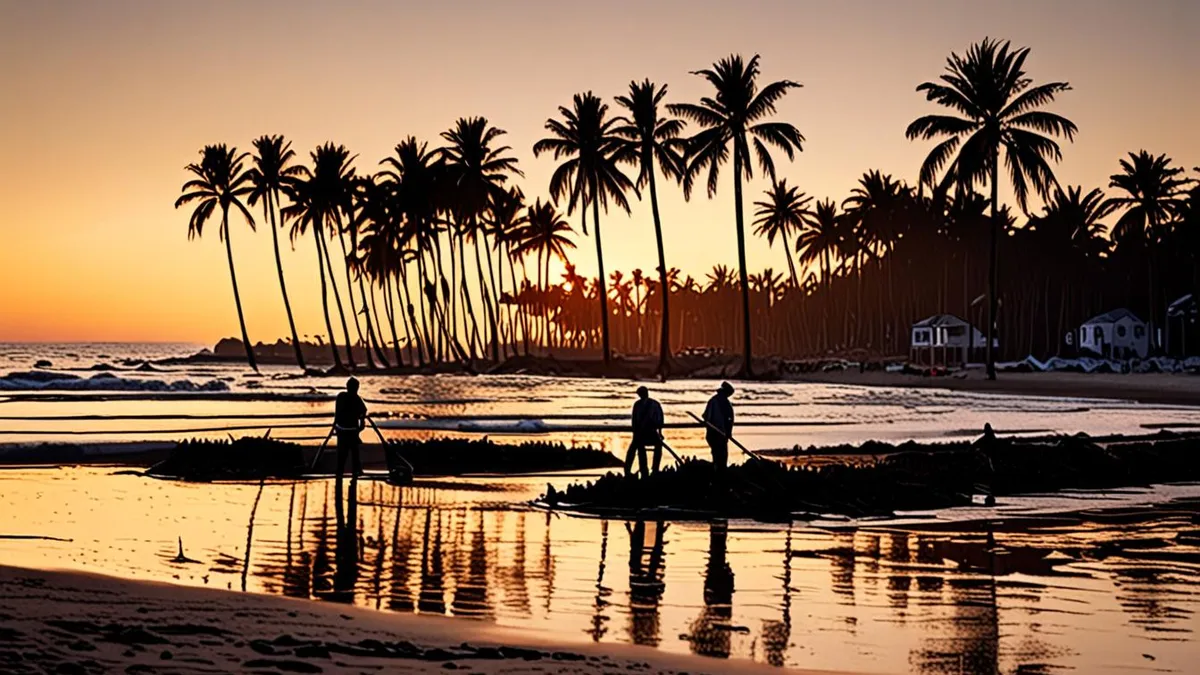
Where to Stay: Beaches That Usually Get Less Seaweed
Not every beach in the Mexican Caribbean faces the same seaweed risk, and geography is the main reason why. Sargassum drifts in from the open Atlantic and hits shores that face east. That makes shoreline orientation the single most useful thing to look at when choosing where to stay.
West-facing shores have the advantage
West-facing beaches, such as the lee side of Cozumel and parts of Isla Mujeres, typically see far less sargassum than open east-facing beaches. The seaweed simply doesn’t reach those sheltered waters in the same volume, so swimmable water and clean sand last much longer through the season. If a clean beach is your priority, these protected shores deserve a close look.
Where the brunt lands
East-facing stretches of the Riviera Maya coast, including Playa del Carmen and Tulum, take the brunt of arrivals. That doesn’t mean they’re unusable during seaweed season, but they’re the beaches where resort cleanup efforts matter most. Resorts with protected coves or man-made beach barriers keep swimmable water longer during peak months, so a property’s specific setup can matter more than the town it sits in.
One final tip beats all generic claims: check recent traveler photos of the exact beach you’re considering, posted within the last few weeks. Conditions change fast, and current photos from guests tell you far more than marketing shots taken during a clear month.
Timing Your Trip Around Seaweed Season
When a spotless stretch of sand is the whole point of your trip, timing matters more than any other booking decision. Sargassum conditions on the Mexican Caribbean follow a fairly predictable rhythm, so you can plan around it if you know which months to target and how far ahead to reserve. Here’s a practical way to approach it.
- Target November to February for the cleanest beaches. These are typically the lightest seaweed months, which is why so many travelers want them. That demand comes at a cost: winter is high season, so booking 3-6 months ahead gives you better rates and a real choice of rooms instead of whatever is left.
- Consider April to August if saving money matters more than sand. Rates in Cancun and the Riviera Maya often drop 20-40% during these heavier seaweed months. It’s a genuine trade-off, since shoreline conditions are less predictable, but the savings can be substantial for a pool- and activities-focused trip.
- Look at March and late October for a middle path. These shoulder months often combine decent beach conditions with moderate prices, sitting outside both the heaviest sargassum window and the peak winter rush. They’re a good compromise if your dates are flexible.
- Check sargassum forecasts in the final weeks before departure. Conditions shift quickly with winds and currents, so a forecast made months out tells you little. Monitoring updates close to your travel date gives you a far more accurate picture and time to adjust plans if needed.
Whichever window you choose, pairing the right months with an early reservation makes the biggest difference to both price and peace of mind. For a deeper look at how booking timing affects rates across the year, this guide to when to book resorts for lower rates covers the broader strategy in detail.
Questions to Ask Before Booking a Resort During Seaweed Season
Resort websites all show the same turquoise water and white sand, but during sargassum season the reality can vary enormously from one property to the next. The difference usually comes down to what a resort actually does when seaweed arrives, not what its brochures promise. A few direct questions before you book will tell you far more than any photo gallery.
Start by asking about the property’s specific cleanup setup. Some resorts invest heavily in equipment and staff, while others simply rake what washes up and hope for the best. Then dig into what happens to your vacation if the shoreline gets hit hard, because a beautiful beach you can’t comfortably use is a different product entirely. Finally, protect yourself financially in case conditions turn against you. Here’s what to ask:
- What equipment does the resort use? Ask specifically whether they run offshore booms, daily raking crews, or seaweed-removal boats, since these three approaches catch seaweed at different stages and deliver very different results on the sand.
- Do all facilities stay open during heavy arrivals? Confirm whether beach access, pools, and water activities remain fully operational when a big sargassum arrival hits, because some properties quietly restrict certain areas or services during peak weeks.
- Can they send recent guest photos? Marketing shots are usually taken during the clear months, so request photos from guests who stayed within the last few weeks. Recent images show what the beach actually looks like right now.
- What is the cancellation policy? Ask whether the resort offers flexible cancellation or rebooking if shoreline conditions deteriorate badly, so you’re not locked into a prepaid stay on a beach you’d rather not sit on.
Get answers in writing where possible, ideally in an email you can refer back to. A resort that handles sargassum well will usually answer these questions quickly and in detail, which is itself a good sign about how seriously they take the issue.
Making the Most of a Seaweed-Affected Stay
The biggest mistake travelers make during sargassum season is treating the beach as the entire vacation. In reality, the Mexican Caribbean offers plenty of experiences that barely notice what’s washing ashore. Cenotes, reef snorkeling trips, and lagoon tours are largely unaffected by shoreline seaweed, since the sargassum sits near the coast rather than in the freshwater sinkholes, on the offshore reef, or in the sheltered lagoons. Plan a few of these outings and a messy beach day becomes a minor detail rather than a ruined trip.
Work Around the Shoreline
Most large resorts have more than one place to relax. When the open oceanfront is messy, head for the pools or any beach club on the leeward side of the property, where the water stays calmer and cleaner. Many properties also maintain protected swimming areas that hold up better than the open shore. Ask at the front desk which spots are in the best shape that day, since conditions can shift overnight.
Stay Flexible Day to Day
Pack a pair of water shoes, because even a raked beach can leave stray bits of seaweed and natural debris on the sand and in the shallows. It also helps to be flexible about where you swim: one stretch of beach might be messy in the morning and clear by afternoon, while a cove a short walk away stays pleasant all day. Treat each day as its own decision rather than committing to one spot in advance.
Finally, remember the economics. Seaweed-season rates in Cancun and the Riviera Maya often drop 20-40% compared to peak season, which can easily offset the trade-off if your plans don’t hinge on pristine sand. A week of cenotes, snorkeling, good food, and mostly swimmable water at a steep discount is a perfectly good vacation by most standards.
Key Takeaways on Seaweed Season and Mexican Caribbean Resorts
Sargassum season on the Mexican Caribbean peaks from April to August, with the heaviest arrivals typically between May and July, and eases off from November to February. Resorts don’t sit back during those heavy months: they install floating booms offshore, rake the sand daily, and in some cases collect seaweed at sea before it ever reaches the beach. Results vary by property, so two resorts on the same stretch of coast can look very different on the same morning.
The bigger lesson is that where and when you go matters more than the destination name. West-facing beaches on the lee side of Cozumel and Isla Mujeres usually stay clearer than open east-facing shores, and choosing the right travel window shapes your odds more than anything else. The core decision is simple: weigh the 20-40% savings of the off-season against less predictable sand. If this helped you plan, leave a comment or share the article with a fellow traveler.