Booking villas with kids online is easy—until you arrive and realize that private pool has no fence, the staircase has open risers, and the balcony railings are wide enough for a curious toddler to squeeze through. Many families don’t think to check these details before paying, yet a dream stay can quickly become a safety risk for young children.
This guide walks you through the essentials: why villas with kids need a different safety checklist than resort rooms, what pool safety features to verify (including proper fencing and the fact that villa pools typically have no lifeguards), how to assess stairs, balconies and windows inside the villa, and the questions to ask your host before you pay a deposit. We’ll also cover choosing kid-friendly destinations, packing backup safety gear like portable alarms, and a final checklist to wrap up your villa safety check before you book.
Why Villas With Kids Need a Different Safety Checklist
A resort stay comes with an invisible safety net. There is usually a front desk you can call at any hour, staff walking the grounds, and in many cases lifeguards or attendants around the main pool. A private villa has none of that. When you book a villa, you and your family are effectively the only people responsible for safety during your stay, and the owner may live hours or even continents away.
This matters more than it might first appear. Villa pools almost never have lifeguards, and many are cleaned and maintained on a schedule you never see. Nobody inspects the railings or checks the gate latch between guests. If something is broken or missing, you often discover it at check-in, with kids already excited and running through the door.
The features adults love are the ones toddlers find first
Here is the uncomfortable part: the design elements that make a villa look stunning in photos are usually the same ones that pose the biggest risks for young children. Infinity pools blur the edge between water and deck. Rooftop terraces offer sweeping views with railings built for adult aesthetics, not climbing kids. Open-plan staircases look airy and modern, but they are exactly the kind of feature a curious two-year-old will tackle the moment your back is turned.
Drowning remains a leading cause of accidental death for children under 5 on vacation, and a private pool with no fence, no alarm and no lifeguard is the single biggest reason villa trips demand extra planning. The good news is that nearly every hazard can be managed, as long as you know about it before you arrive rather than after.
That is why listing photos are not enough. A wide-angle shot of the pool deck rarely shows whether there is a fence, and descriptions tend to highlight the sunset views rather than the gap under the balcony railing. Hosts are not necessarily hiding anything; they simply are not thinking like a parent of a toddler. Your job is to ask specific, written questions about the features that matter, and to treat vague or cheerful answers as a reason to keep asking until you get concrete details.
Pool Safety Features to Verify Before Booking
The pool is usually the reason you booked the villa, and it’s also the feature that deserves the most scrutiny. Start by asking exactly how the pool is separated from the living areas. A fence or removable mesh safety fence at least 4 feet (1.2 m) high with a self-closing, self-latching gate is the standard you want, because a fence a toddler can climb or a gate that swings open on its own defeats the purpose.
Depth matters just as much as barriers. If you have waders or new swimmers, confirm the pool has a genuine shallow end, clearly marked depth markings, and a shallow area of at least 3 feet so kids can stand comfortably rather than cling to the edge. Ask for a photo of the shallow end, not just the infinity-edge shot from the listing.
Don’t stop at the water itself. A quick checklist of extras worth confirming with the host:
- Pool alarm: a surface or underwater alarm that sounds when someone enters the water unexpectedly adds a layer of protection, especially at night or when you’re inside.
- Door alarms on pool-access doors: these chime when a child pushes through a sliding door leading to the pool, buying you precious seconds.
- Heating and lighting: a heated pool lets you swim at comfortable hours, and good underwater or perimeter lighting makes evening swims far safer than guessing at depth in the dark.
- Maintenance schedule: ask who cleans the pool, how often, and whether water is tested and chemically balanced on a regular basis. In private rentals, pool care is often left to whoever happens to be around, so get a specific answer in writing.
If the host’s answers fall short, it may be worth widening your search. Our guide on choosing the right villa rental in Mexico covers how to compare listings and vet hosts before you commit. And remember: since villa pools have no lifeguards, every barrier and alarm is a backup, not a substitute for watching the water yourself.
Inside the Villa: Stairs, Balconies and Windows
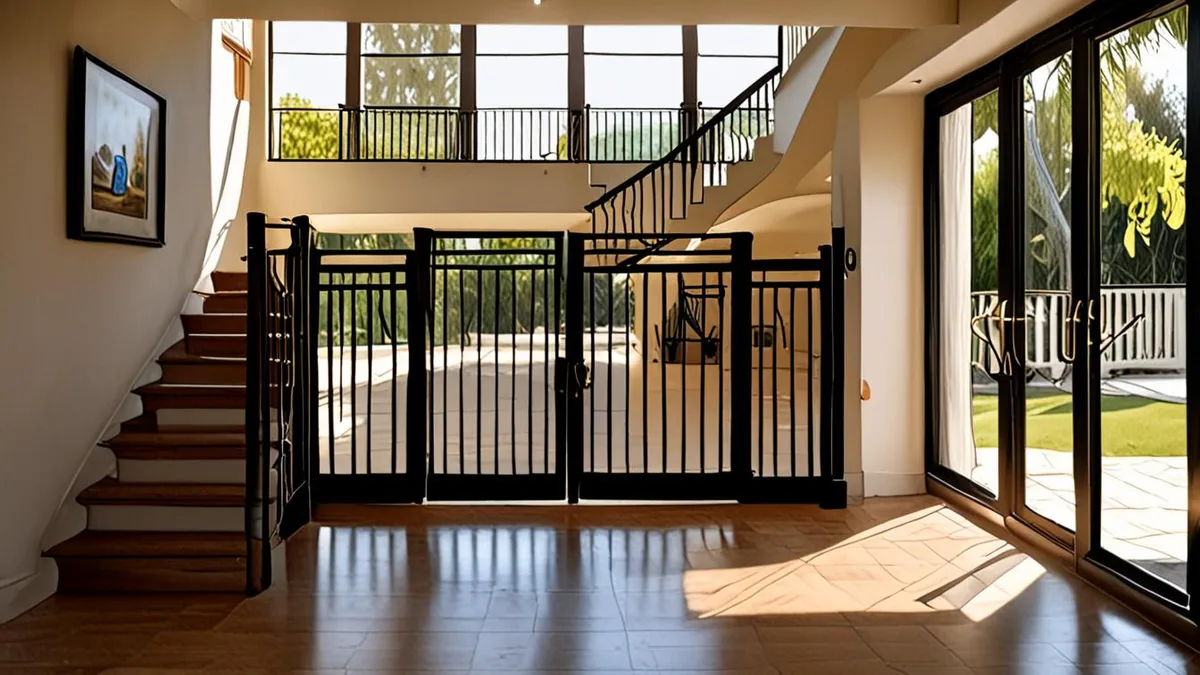
Once you step inside a villa, the layout itself becomes the safety question. Staircases are the first thing to ask about, because open-plan designs popular with adult travelers often mean wide treads, glass panels and no railings low enough for small hands. Request stair gates for both the top and the bottom of any staircase, not just one end. A gate only at the top leaves a toddler climbing halfway up and falling back down; a gate only at the bottom does nothing once a determined climber reaches the landing.
If the host cannot provide gates, ask whether you can bring your own portable model. This matters more than it sounds, because some banisters and railings have shapes that make mounting a pressure-fit gate impossible, and you want to know that before you pack one. Also ask directly whether a ground-floor bedroom exists. Families with toddlers can sidestep the stair issue entirely by sleeping on the same level as the kitchen and pool access, and hosts can usually answer this in one sentence.
Balconies and windows deserve the same scrutiny, especially in multi-story villas where bedrooms sit above patios, pools or stone terraces. Before you commit, run through this checklist:
- Measure balcony railings against the 3.5 feet (1 m) minimum. Older or decorative railings in some villa markets sit lower, and horizontal rails act like a ladder for climbing feet, so ask for photos of the full balcony, not just the view.
- Check the gaps between balusters. Spacing under 4 inches (10 cm) keeps a child’s body from slipping through; wide gaps in modern glass-and-steel designs are a common weak point.
- Ask whether windows open more than a few inches. Locks or restrictors on upper-floor windows are standard in some countries and absent in others, so confirm rather than assume.
- Request furniture placement details for upper rooms. A low windowsill combined with a bed, chair or dresser beside it gives a toddler the exact stepping stool they need to reach the glass.
Questions to Ask the Host Before You Pay
Photos can hide a lot, and listing descriptions rarely mention hazards at all. A wide-angle shot of a gorgeous infinity pool tells you nothing about whether the gate actually latches, and no host volunteers “the balcony rails are a bit low” in their description. That is why the most reliable way to vet a villa is to put your questions in writing and get answers you can refer back to. Written replies carry more weight than a quick phone call, they create a record if anything is disputed later, and they give a host the chance to check the property before answering instead of guessing. Here is how to do it before you hand over any money.
- Send a written checklist. Cover pool fencing, stair gates, balcony rails and outlet covers in a single message. Keep the host’s replies in your email or booking platform messages so you have a record if anything is disputed later.
- Ask for recent photos of the exact safety features. A shot of the infinity pool at sunset tells you nothing about whether the gate latches. Request close-up photos of the pool fence, the stair gates and the balcony railings as they look today.
- Confirm the cancellation policy protects you. Ask directly whether you can get a refund if promised safety features are missing at check-in. A host who hesitates to put that in writing is telling you something.
- Book 3-6 months ahead for peak season. In Mexico and the Caribbean, that means the December-April window. Family-suitable villas with proper safety features get claimed early, so waiting until the last minute narrows your options considerably.
Treat the whole exchange as a test of the host, not just of the villa. Someone who answers promptly, sends clear close-up photos and puts commitments in writing is usually someone who maintains the property well between guests. Vague or evasive answers are just as informative, and catching them before you pay a deposit gives you time to look elsewhere without pressure. If a host says a feature “should be there” rather than confirming it is, follow up until you get a straight answer or decide to move on.
Choosing Kid-Friendly Villa Destinations
The right destination makes villa safety easier, because terrain and water conditions vary enormously. A villa that is perfect for a family with a toddler in one setting can be a poor match in another.
Beach towns versus jungle and mountain settings
Beach destinations like Tulum and Playa del Carmen have a large supply of family villas, but not all beachfront is equal. Compare specific areas for calm swimming conditions versus surf before you book, and remember that villa pools there typically have no lifeguards, so supervision is entirely on you.
Jungle settings such as Costa Rica add wildlife and terrain hazards to the usual pool concerns. Ask the host about insect screens on bedrooms, sturdy railings on jungle decks, and whether paths around the property are guided or clearly marked. Uneven ground and steep drops are common in these settings.
Lake and mountain villas, like those around Bariloche or the Canadian lakes, need clear rules about unsupervised water access. Confirm whether the shoreline is fenced, how far the water is from the house, and how steep the bank is.
Match the destination to your kids’ ages
Calm beach towns suit toddlers best: flat ground, shallow water and short distances. Older kids can handle more adventurous settings, including jungle lodges and mountain lakes, as long as you set expectations about wildlife and water rules before you arrive.
Packing Backup Safety Gear
Even a well-vetted villa will have gaps, because most private rentals are simply not childproofed the way a family home might be. A small kit of backup gear weighs little in a suitcase and covers the most common shortfalls you are likely to encounter. The idea is layering: no single device replaces active supervision, but each one buys you precious seconds when you need them most. Pack these items before your trip and you will arrive prepared for the things no listing photo can show you.
- Portable door alarm or pool alarm ($20-$100). These act as a second layer if the villa lacks built-in alerts on pool-access doors. A door alarm sounds the moment a child opens it toward the pool, giving adults nearby an instant warning.
- Travel stair gate. Look for a pressure-mounted model you can install and remove without tools, and measure doorways from the listing photos or ask the host for widths before you pack so the gate actually fits.
- Outlet covers and cabinet locks. Villas in other countries often use different outlet styles, so bring covers that fit multiple socket types rather than one design.
- Well-fitting swim vests. Carry one for each non-swimmer instead of relying on inflatable toys, which can deflate, drift away or flip a child face-down in the water.
Before you leave home, agree on family pool rules with everyone who will be on the trip, including grandparents and other adults who may not be used to watching kids around water. Set supervision ratios so someone is always the designated watcher, and establish no-swimming hours such as after dinner or before parents are awake. Kids follow rules better when the whole family states them together, and adults know exactly when it is their turn to watch the water.
Wrapping Up Your Villa Safety Check
A villa can look perfect online while hiding exactly the hazards that worry parents most: a private pool with no fence, an open staircase and a balcony a toddler could climb. Unlike a resort, no lifeguard, front desk or daily inspection team is checking these things for you, so the checklist has to come from you. Pool fencing, stair gates and balcony rails top the list, and getting written confirmation from the host before you pay a deposit turns vague promises into something you can hold them to.
Timing and a small bag of gear close the remaining gaps. Reserving your villa well before the high-season rush means the genuinely family-safe options haven’t already been snapped up by other parents, and a kit of portable alarms, a travel stair gate and well-fitting swim vests covers what most private rentals leave out. Do that, and the villa you booked becomes the relaxing family stay you actually pictured. If this checklist helped you, share it with another planning parent or leave a comment with your own villa tips.