Most travelers picture the same thing: waking up in a Tuscan countryside villa, cypress trees outside the window, a glass of Chianti on the terrace. Then reality sets in. Which area should you choose? When should you book? And how do you avoid paying peak-season prices for a villa that doesn’t suit your trip?
This guide walks you through the decisions that matter. We compare the best areas for wine country stays, from Chianti Classico to Val d’Orcia, explain when to book and visit for the best rates, and break down what Tuscan countryside villas actually cost per week. You’ll also find practical advice on choosing the right property, getting around Tuscany’s winding country roads, and planning a stay that balances winery visits with time by the pool. Whether you want short drives between tastings or postcard hills far from the crowds, the sections below will help you book with confidence.
Why Choose a Tuscan Countryside Villa for a Wine Country Stay
A town hotel puts you within walking distance of restaurants and shops, but it also puts you behind walls. A villa in the Tuscan countryside places you directly among the vineyards and olive groves you came to see. Step outside in the morning and the rows of grapes start at your doorstep, not a twenty-minute drive away.
That setting changes the rhythm of a wine trip. Instead of rushing back to a city hotel after your last tasting, you can linger over a long lunch, swim in your private pool in the afternoon, and open a bottle bought that morning over dinner cooked in your own kitchen. Many villas offer outdoor dining areas with views over the vines, and the larger properties have genuine space for groups of friends or extended family traveling together.
Scenic drives instead of daily commutes
Staying rural also means every drive between wineries is part of the experience rather than a chore. The roads through Chianti and the Val d’Orcia wind past cypress-lined lanes, stone farmhouses and hilltop villages. Base yourself in the countryside and your daily commutes disappear; the scenery starts the moment you pull out of the gate. For a slow, wine-focused holiday, that difference is hard to overstate.
Best Areas for Tuscan Countryside Villas
Tuscany’s wine country is bigger than most first-time visitors expect, and the right area depends on what you want from your stay. The three regions below suit slightly different travelers, from convenience seekers to scenery hunters.
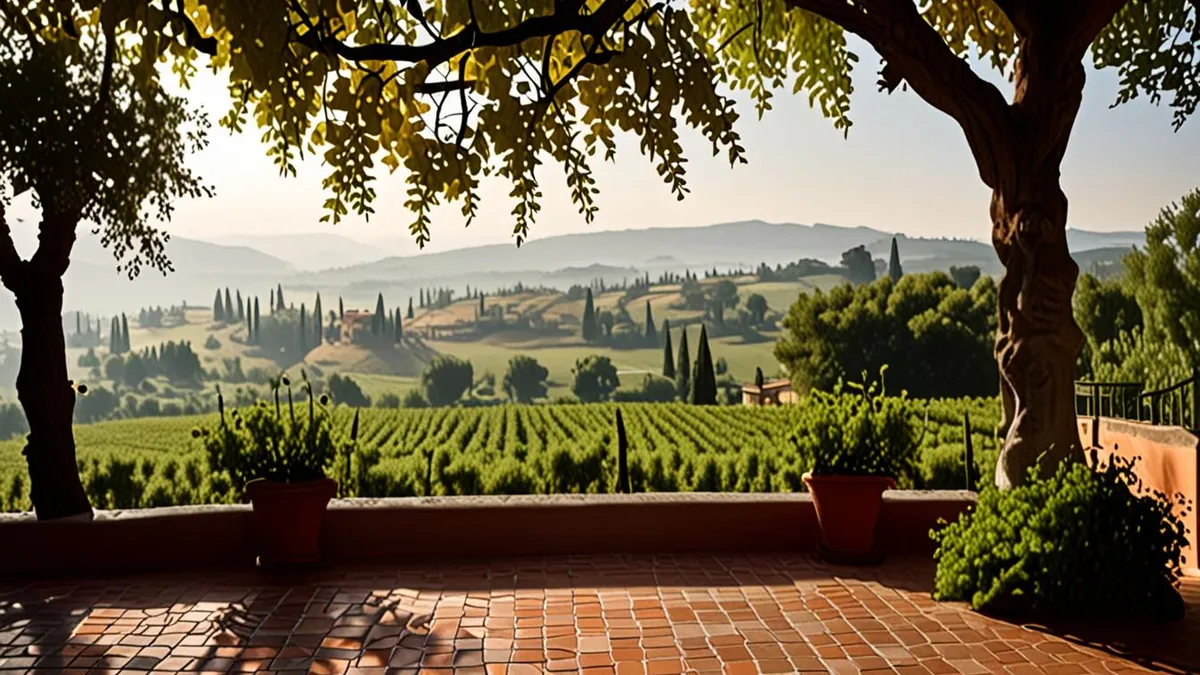
The Chianti Classico region sits between Florence and Siena, and it delivers the classic vineyard scenery most people picture when they imagine Tuscany. Drives to either city are short, which makes it easy to combine winery visits with a day of city sightseeing. The Val d’Orcia, near Montepulciano and Montalcino, offers the postcard hills you’ve seen in photographs and puts you in Brunello wine country. San Gimignano and the surrounding Vernaccia hills give you dramatic hilltop towns, white wine country and generally fewer crowds than central Chianti.
Quick comparison
- Chianti Classico: home to historic wine estates where you can often taste Chianti Classico and Supertuscan wines at their source, with villages like Greve and Castellina in hand for markets and casual lunches.
- Val d’Orcia: beyond Brunello, the area around Pienza is known for pecorino cheese, so a single day trip can combine a winery visit with a cheese tasting.
- San Gimignano area: the town’s medieval towers make it a striking base for evening walks, and its Vernaccia vineyards are close enough that some cellars are reachable on foot from the walls.
If you’re torn, consider how much driving you want to do. Chianti rewards short hops between estates; the Val d’Orcia rewards travelers happy to cover more ground for bigger views.
When to Book and Visit Tuscan Countryside Villas
Timing shapes both the price and the feel of a villa stay in Tuscany. High season runs from June to August, and that’s when rates peak and availability is thinnest. The weather is hot, the pools are at their best, and every good property books out months in advance. If you want a July or August week at a popular villa, assume you’re competing with everyone else who had the same idea.
The shoulder season sweet spot
May and the stretch from September to October are the best-kept secret of Tuscan villa travel. The weather is mild, prices drop noticeably from summer levels, and the countryside is at its most atmospheric. September and early October bring the harvest season, the vendemmia, when tractors rumble between the vines and many wineries are actively working. Watching a harvest from your villa’s terrace is an experience July can’t match.
How far ahead to book
For a summer stay, book six to nine months ahead. The best pool villas in Chianti and the Val d’Orcia go early, and by spring your choices are limited to what others have passed over. For shoulder season trips, three to four months is usually enough, though harvest weeks in September can fill faster than you’d expect. If your dates are flexible, ask hosts about availability across a few weeks rather than a single fixed week; that flexibility often unlocks better properties at lower prices.
What Tuscan Countryside Villas Cost
Villa pricing in Tuscany varies widely, but most weekly rates fall between €1,500 and €6,000 depending on the size of the property, whether it has a private pool, and the area you choose. That range covers everything from simple farmhouses to polished estates with panoramic pools, so knowing where your priorities sit helps you set a realistic budget before you start searching.
What you get at each end of the range
At the lower end, smaller two-bedroom farmhouses offer plenty of charm without the premium. These properties often sit on working wine or olive estates, and while they may have simpler furnishings, they still give you the rural setting that makes a wine country stay special. At the top of the range, large pool villas near Chianti command the highest prices, thanks to their proximity to Florence and Siena and the demand for classic vineyard views.
Timing matters just as much as the property itself. A shoulder season week in May or in September to October can cost noticeably less than the identical villa in July or August, when demand peaks and owners charge their highest rates. If your dates are flexible, shifting your stay by a few weeks is often the single easiest way to save, with the added bonus of harvest activity in the vineyards during early autumn.
Keep in mind that rates change from year to year, so treat these figures as a general guide and confirm current pricing with the owner or agency when you enquire.
How to Choose the Right Villa for Your Wine Trip
The right villa depends on how you plan to spend your days. If you want easy access to both Florence and Siena for a mix of city days and winery lunches, Chianti works well, with most of the region sitting 30 to 60 minutes by car from either city. Val d’Orcia offers more dramatic scenery and Brunello country, but expect roughly 1.5 to 2 hours of driving from Florence, so it suits travelers who prefer to settle in and explore locally rather than commute.
Before you commit to any booking, make a short list of the practical features that will shape your stay. A checklist conversation with the host or agency saves disappointment later, especially for properties photographed at their very best angle.
- Private pool: Confirm it is for your exclusive use, open during your travel dates, and check whether it is heated if you are traveling outside high summer.
- Outdoor dining space: Ask whether there is a covered terrace or pergola with a proper table and grill, since many evenings in wine country are best spent eating at home with a bottle from the day’s tasting.
- Parking: Verify you have on-site parking for your rental car, ideally shaded or level, as some farmsteads have tight gravel approaches.
- Train access: If you plan to mix driving with rail trips, look for villas within 20 to 40 minutes of a station so you can leave the car behind for city visits.
Finally, read the most recent reviews rather than the overall score. Look for comments on host responsiveness, accuracy of the listing photos, and how the property held up in real conditions. The same habit of checking recent guest feedback applies wherever you book, whether you are comparing villas in Tuscany or browsing vineyard villa stays in Argentina.
Getting Around Tuscany’s Wine Country
A rental car is essential for a countryside villa stay in Tuscany. Local buses rarely serve the small roads where villas and wineries are located, and taxis are scarce once you leave the towns. Book the car for your entire stay and pick it up at your arrival airport to keep things simple, and confirm with your villa host that there is parking on site before you commit.
Driving between wineries
Tuscan country roads are often narrow, winding and lined with cypress trees or stone walls, which makes for beautiful driving and slow progress. Distances that look short on a map can take longer than expected, so allow extra time between tastings rather than stacking appointments back to back. Two or three winery visits per day is a realistic pace, and it leaves room for a long lunch or an unplanned stop at a viewpoint.
It goes without saying that someone in your group should stay below the legal alcohol limit, so consider alternating who drives each day or booking a driver for your biggest tasting day. Ask your host or the wineries directly; many can recommend local drivers, and splitting the cost between a group is often reasonable. Check current drink-driving rules before your trip, as limits and enforcement can differ from what you are used to at home.
One base, many day trips
Resist the temptation to move between properties. Unpacking once, learning the road to your nearest town, and taking day trips in every direction is far less stressful than shuttling luggage across the region. If you have rented villas elsewhere, the same logic of settling into one base applies, as explained in this guide to choosing a villa rental in Mexico. A single well-chosen villa turns your week into a rhythm of morning markets, afternoon tastings and slow dinners at home.
Planning Your Tuscan Countryside Villa Stay
Booking a villa in the Tuscan countryside comes down to three decisions made in order. First, settle on your area: Chianti for convenience between Florence and Siena, or Val d’Orcia for the classic rolling hills and Brunello wine country. Second, pick your season. May and September to October bring mild weather, lower rates and harvest atmosphere, while summer means higher prices and thinner availability.
Third, reserve far enough in advance: 6 to 9 months ahead for a summer stay, with a weekly budget of roughly €1,500 to €6,000 depending on size, pool and location. You will need a rental car, since the nearest train station is typically a 20 to 40 minute drive from most rural properties, and it works best to plan day trips from one base rather than moving between villas. If this guide helped you plan your own wine country stay, leave a comment or share it with a fellow traveler.