Booking a villa because of the pool photo is easy. Knowing whether that pool will actually suit your group is harder. Private villa pools vary enormously in size, depth, heating and upkeep, and unlike a hotel pool, there is usually no lifeguard, fence or alarm to back you up. Many travelers only discover these details after check-in, when it is too cold to swim or the shallow end is shallower than expected.
This guide walks you through what private villa pools are really like, from typical dimensions and styles to heated, saltwater and unheated options. It also covers how cleaning and maintenance usually work, the safety basics every group should cover on arrival, extra precautions for kids and non-swimmers, and how to choose a villa where the pool genuinely fits your plans. A short wrap-up at the end pulls the key points together so you can book with confidence.
What Private Villa Pools Are Actually Like
Most private villa pools are smaller than they look in listing photos. A typical pool runs around 8–12 meters long with a depth of roughly 1.2–1.8 meters, which is deep enough for a proper swim but shallow enough that most adults can stand in the deep end. Many villas also include a shallower shelf or ledge area along one side, designed for lounging in a few centimeters of water rather than swimming.
Style varies far more than size. Understanding the common types helps you match a villa to how your group will actually use the pool.
Common pool styles you will encounter
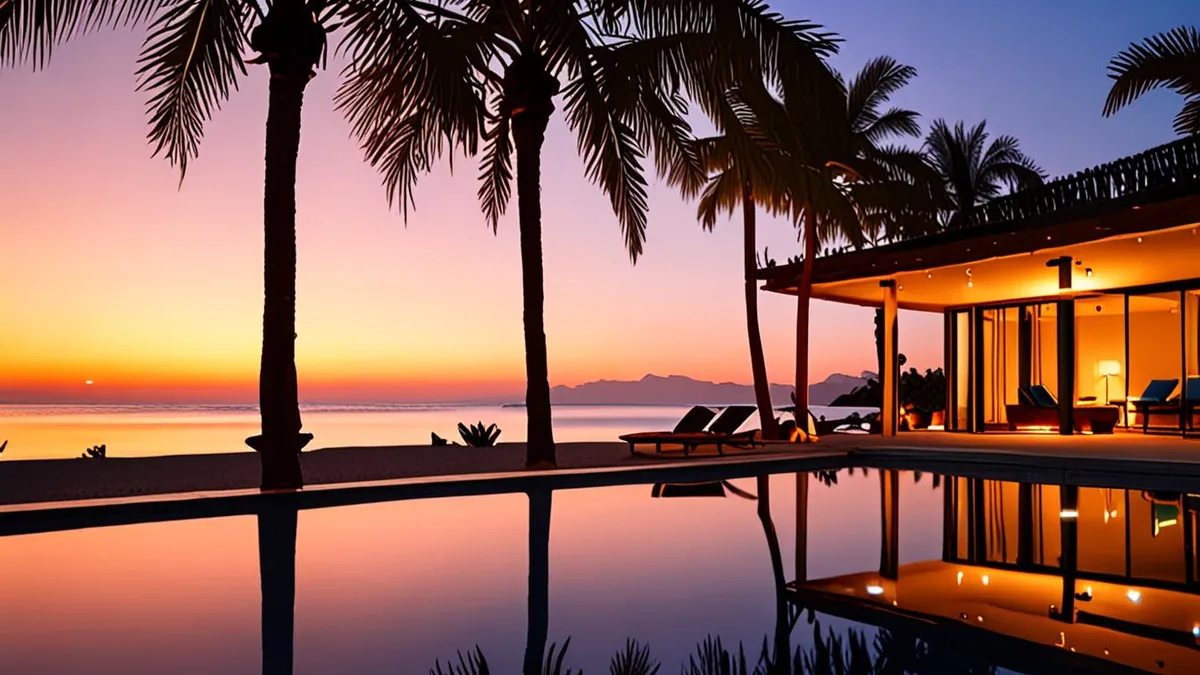
Infinity-edge pools are the signature look of hillside and coastal villas, with water spilling over one edge for that seamless horizon view. They photograph beautifully, but the visual edge can make depth harder to judge, which matters if children are in your group. Plunge pools are compact, often just a few meters across, and built for cooling off rather than swimming laps. Lap pools are long and narrow, ideal for fitness-minded travelers, while family pools usually feature wide steps or graduated entry points that make getting in and out easier for all ages.
Beyond the pool itself, shared features differ widely between listings. Some villas offer sun shelves with in-water loungers, built-in seating along one edge, or a full poolside terrace with shade and outdoor dining. Others provide little more than the pool and a strip of decking. Look closely at the photo gallery rather than relying on the description, since these extras often make the difference between a pool you use all day and one you only dip into.
Heated, Saltwater or Unheated: Pool Options to Check Before Booking
Not every villa pool is swimmable year-round, and the details that decide this are rarely prominent in the listing. Heating is the big one. In many destinations, pool heating is an optional extra rather than a standard feature, and it typically adds roughly $30–$80 per day to your booking cost. Over a week-long stay, that is a meaningful line item, so decide before you book whether your group will actually swim enough to justify it.
Temperature matters just as much as the heating fee. An unheated outdoor pool in winter can drop to around 20–24°C, which sounds tolerable until you try to swim in it. At that range, most people find it too cold for comfortable swimming beyond a quick plunge, and children tend to exit within minutes. If swimming is central to your trip, ask the host for typical winter water temperatures rather than guessing.
Water treatment systems are the third detail worth confirming. Saltwater and chlorine pools feel different on the skin and involve different maintenance routines, and hosts often have a preference for one or the other. Before booking, it helps to clarify a few specifics:
- Saltwater systems: generally gentler on eyes and skin, which families with sensitive swimmers often prefer, but the generator cell still needs periodic servicing by the host.
- Chlorine systems: the most common setup, with a stronger smell and feel, but simpler and cheaper to maintain in most climates.
- Heating type: heat pumps, solar covers and electric heaters warm water at different speeds, so ask how long the pool takes to reach a comfortable temperature after switching the heating on.
- Who pays: confirm whether heating is charged per day, per stay or included in the rate, and get it in writing before you arrive.
A short message to the host covering these points takes minutes and prevents the most common pool-related disappointments in villa rentals.
Cleaning, Maintenance and What the Host Provides
Pool maintenance is one of those details that separates a well-run villa rental from a frustrating one. In most rentals, expect the pool to be cleaned 2–3 times per week, usually early in the morning before guests wake. The cleaner typically skims the surface, empties the skimmer baskets, brushes the walls, checks chemical levels and runs the vacuum. If you are a light sleeper or an early riser, it is worth knowing this schedule so the sound of the pump or a quiet worker at the pool edge does not come as a surprise.
What the host usually provides
Provided poolside items vary more than most travelers expect. Towels, loungers and umbrellas are common inclusions, though the quantity does not always match your group size, so ask if you need extras. Floats and pool toys often are not provided, and in some rentals they are explicitly excluded because they clog filters or damage finishes. If floats matter to your trip, either confirm with the host or plan to buy cheap ones locally and leave them behind.
Equipment failures are the other scenario worth preparing for. Pumps, filters and underwater lighting all occasionally fail mid-stay, and a green or cloudy pool can develop within a day or two when circulation stops. Before check-in, ask the host exactly who to contact if something stops working, whether that is the host directly, a local property manager or a maintenance service. Get a phone number or messaging contact, and ask how quickly issues are typically resolved. A responsive host will usually have a technician out within a day; a slow one can leave you with an unusable pool for the rest of your stay, which is worth knowing before you book rather than after.
Safety Basics Every Group Should Cover on Arrival
The biggest difference between a villa pool and a hotel pool is who is watching. At a resort, there is usually a lifeguard on duty, a fenced pool area and sometimes an alarm system. At most private villas, none of that exists. Many villa pools lack fences, alarms or lifeguards, which means supervision is entirely your group’s responsibility from the moment you arrive.
This is not a reason to avoid villa pools, but it does change how you need to behave around them. Treat the pool like you would a friend’s backyard pool rather than a managed facility. The first hour after check-in is the best time to set expectations, especially if children are in your group or if some guests are not strong swimmers.
Before anyone gets in for the first swim, walk the pool area together and check a few practical things. Do this in daylight, and again after dark if you plan to swim in the evening.
- Depth markings: Many villa pools have no painted depth numbers, so ask the host or property manager for the deep-end depth and the shallow-end depth in writing before your stay.
- Slippery edges: Test the coping and tiles around the edge with your hand or foot; wet stone and polished tile can be far slicker than they look, especially on curved or stepped edges.
- Night lighting: Check whether the pool has underwater lighting and whether the terrace around it is lit; an unlit pool edge at night is one of the most common causes of falls.
- Poolside furniture placement: Note where loungers, planters and steps sit, so guests moving around after dark do not trip into the water unexpectedly.
Pool Safety for Kids and Non-Swimmers
Villa pools are rarely designed with small children or weak swimmers in mind, so a few ground rules go a long way. Unlike a resort, there is no signage, no pool ladder at regular intervals and no staff watching over your group. The good news is that these rules take minutes to agree on and work for any pool style, from a compact plunge pool to a long family pool with steps. Agree on them before anyone gets wet, and write them down if you have a big group.
- Use proper flotation devices for anyone who cannot swim. Bring or rent Coast Guard–approved flotation devices such as vests or swim jackets. Pool noodles and animal-shaped inflatables are toys, not safety equipment, and they can shift or flip without warning.
- Set a buddy-system rule. Agree that no one swims alone, at any time of day. This matters most in deep pools and infinity-edge pools, where the drop-off can be hard to judge from the water and where an edge wall may be low or missing.
- Establish a no-running, no-diving rule for shallow pools. Many villa pools have sections shallower than 1.5 meters, which is far too shallow for diving. Running on wet terraces is the other frequent cause of injuries, so make both rules clear to kids and adults on day one.
- Assign a supervising adult for every swim session. Rotate the role so the person watching the water is not distracted by a phone, a drink or a conversation, and knows the rule that supervision means eyes on the swimmers, not nearby.
Talk these rules through with the whole group before the first swim, not after an incident. Evening swims deserve special attention: outdoor lighting around villa pools is often dim or uneven, so agree that night swimming only happens with the pool lights on and at least two people present. If you are traveling with other families, agree on the same rules together so children hear one consistent message from every adult. It also helps to point out the pool’s deep end, steps and any sunken seating on a quick walk-around when you arrive. A short conversation on arrival day is usually all it takes to make the pool the highlight of the trip rather than the source of a scare.
Choosing Villas Where the Pool Fits Your Group
Not every villa pool suits every group, and the pool is often the reason you booked the villa in the first place. Before you commit, match the pool’s design to who is actually traveling. If you are weighing a villa against a hotel for your group, it can help to read a comparison of privacy, space and cost for group travel first, then come back to the pool details below.
If you have toddlers or young children
Prioritize villas with shallow entries, wide steps or sun shelves rather than pools with a single deep basin. Ask the host directly whether the pool has any barrier, gate or removable fence, and whether a temporary barrier can be arranged. Remember that many villa pools have no fence or alarm at all, so a barrier is something you should confirm rather than assume. Photos rarely show the drop-off from shallow to deep water, so ask for the depth at the point where the shelf or steps end.
If you want to swim outside the warm season
Unheated outdoor pools can get too cold for comfortable swimming in winter, so if swimming is the main point of the trip, book a heated pool. Hosts who offer heating often have a limited number of heated units or need lead time to arrange it, so plan winter stays 3–6 months ahead. Confirm whether heating is included in the rate or charged as an extra, and check the current cost with the host before booking.
Finally, go beyond the listing photos. Read recent guest reviews and search them specifically for mentions of pool condition, water temperature and cleanliness. A villa with a stunning pool photo but reviews complaining about a green, unheated or rarely cleaned pool is telling you something the gallery will not.
Wrapping Up Your Private Villa Pool Stay
So, what will your villa pool actually be like? Most private villa pools run 8–12 meters long and 1.2–1.8 meters deep, with cleaning typically happening 2–3 times per week. That’s usually plenty of space for laps, lounging and kids splashing around, but the exact setup varies from listing to listing, so it pays to check the details before you book.
Cost and safety are the two things worth double-checking. Heating can add roughly $30–$80 per day, so confirm it before booking a winter stay if warm water matters to your group. And since many villa pools lack the fences, alarms or lifeguards you’d find at a hotel, adult supervision and a few basic water rules make all the difference once you arrive. If this helped you plan your trip, leave a comment or share the article with your travel group.