Safari tents in summer look effortlessly breezy in the photos: wide mesh windows, a shaded deck, a king bed under canvas. Then you arrive on a 90°F July afternoon, unzip the door, and walk into a wall of trapped heat. Canvas that felt cozy in spring can hold the day’s sun like an oven wall, and without air conditioning it’s tempting to write the whole experience off.
Don’t. Staying comfortable comes down to a handful of habits, not expensive gear. Below you’ll learn why canvas heats up in the first place (and why it can still work in your favor), how to pick a shaded, breezy site, the ventilation routine that replaces AC, how to time your day around the heat, what to change about your bedding and nighttime setup, and how to book the coolest tents before they’re gone. Master these and a canvas tent becomes one of the most pleasant places to spend a hot summer night.
Why Safari Tents Heat Up in Summer (and Why Canvas Can Still Work)
Canvas is a heat sponge. Unlike thin nylon, a heavy canvas wall absorbs solar energy all morning, stores it in the fabric, and then radiates it inward for hours. Leave a tent zipped shut in direct sun and by mid-afternoon the interior can run 10–15°F hotter than the shaded air outside. That’s the “oven effect” that catches first-time glampers off guard — the tent isn’t broken, it’s just been collecting heat all day with nowhere for it to go.
Why safari tents have a real advantage
The good news is that quality safari tents are designed for exactly this problem. Where a nylon camping tent has one small vent and a lot of solid fabric, a well-built safari tent typically offers full mesh window panels, high ceilings that let hot air rise away from your bed, and often a raised wooden deck that keeps air moving underneath the floor. Those features do most of the cooling work for you — but only if you use them deliberately.
That’s the real mindset shift here. You don’t need portable air conditioners, ice machines or elaborate gadgets. You need to control three things: how much sun hits the canvas, how much air moves through the tent, and when you’re actually inside it. Get those three right and canvas behaves less like an oven and more like the breathable, shade-making material it was designed to be. The sections below break each one down into simple, repeatable habits.
Choose a Site and Tent Setup Built for Hot Weather
The single biggest factor in how hot your tent gets isn’t the tent at all — it’s where it sits. A canvas tent under mature trees or on the shaded side of a ridge can stay noticeably comfortable through the afternoon, while an identical tent in open sun will struggle no matter what you do. Afternoon shade matters far more than morning sun, because that’s when the canvas is absorbing the heat it will radiate all evening. If you’re new to evaluating sites, our guide to choosing the right glamping site for your first trip walks through the basics.
Water helps too. Sites near lakes or rivers typically stay a few degrees cooler than open grassland sites during the peak summer season, and you get a swim spot out of the deal. Once you’ve narrowed down the location, compare the tents themselves — the design details make a real difference in hot weather:
- Full mesh door panels let you leave the entire doorway open to air while staying bug-proof, effectively doubling your ventilation at the tent’s main opening.
- Opposing windows positioned across from each other create a cross-breeze that pulls air through the tent instead of letting it stagnate.
- Elevated platforms allow cooler air to circulate beneath the floor, so the tent isn’t sitting directly on heat-soaked ground.
- Reflective or light-colored canvas absorbs less solar energy than dark green or brown fabric, keeping the outer layer itself cooler.
Finally, ask the host one direct question before booking: does the tent face the prevailing afternoon breezes? In many US regions, a southwest-facing opening catches the evening wind right when you need it most. Hosts know which of their tents breathe well and which sit stifling in the height of summer — most will answer honestly if you ask specifically.
Master Airflow: Ventilation Habits That Replace AC
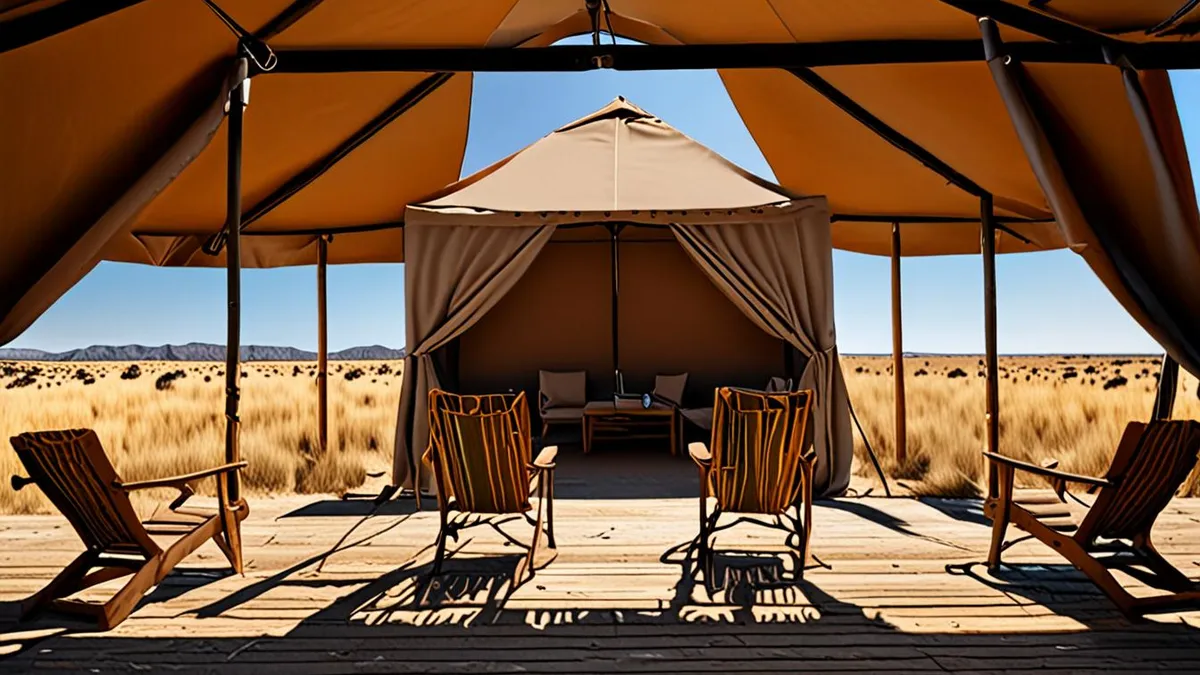
Ventilation is the closest thing safari tents have to air conditioning, and it works on a simple schedule: flush heat out early, block sun at peak, keep air moving all night. Done consistently, this routine keeps the interior within a few degrees of the shaded outdoors instead of letting it climb into oven territory. It also pairs naturally with cross-ventilation through opposing mesh windows, which can lower the perceived interior temperature by several degrees on its own. Here’s the sequence that works.
- Open everything at sunrise. As soon as you’re up, unzip the opposing mesh windows and both doors. Overnight, the canvas has been releasing its stored heat, and a full morning flush clears the last of it before the sun starts working. Ten minutes of open windows in the cool early air saves you hours of stuffiness later.
- Zip the canvas, keep the mesh, from roughly 11 AM to 4 PM. During peak sun, close the solid canvas panels to block radiant heat, but leave the mesh layers zipped underneath. You lose almost no airflow, keep bugs out, and stop the fabric from soaking up more heat than it has to.
- Add a small fan at window height overnight. A battery-powered or rechargeable fan set in the stream of an open mesh window dramatically improves cross-ventilation while you sleep, when even a mild breeze makes a noticeable difference. Charge it during the day if your site has power, and bring a spare power bank as a backup for longer trips.
- Never leave the tent fully zipped shut during the day. Even a few hours of sealed canvas traps hot air with no escape path, and that trapped air is exactly what turns the interior into an oven. If you’re heading out, mesh zipped and canvas open beats everything buttoned up.
The habit takes less than five minutes a day, and it compounds: a tent that never overheats at midday cools down fast at sunset, which makes the next morning’s flush even more effective. It also works hand in hand with your daily schedule — keep the tent closed during peak heat, then let the evening breeze do the heavy lifting while you sleep. Stick with the routine and you’ll stop missing the AC entirely.
Time Your Day Around the Heat
One of the biggest mistakes glampers make in summer is treating a safari tent like a hotel room they can return to at any hour. It doesn’t work that way. Canvas soaks up heat all day, so the smartest move is to plan your outings around the sun and let the tent rest closed during peak heat. Save hikes, swimming holes and sightseeing for before 10 AM or after 5 PM, when both you and the tent are at their best.
The golden hours inside a canvas tent
The most comfortable tent hours are roughly 5–8 AM and after sunset, when canvas releases its stored heat and the air inside finally cools down. Early mornings are genuinely lovely — birdsong, coffee on the deck, mesh windows still open from the night. If you want to enjoy your tent rather than merely survive it, build your day around these windows.
Midday, roughly 11 AM to 4 PM, is when you should be anywhere but inside the canvas. This is the time to use the site’s shared amenities instead. Most safari tent resorts put real thought into their shaded communal areas, and they’re often the best-equipped spaces on the property.
- Take your midday shower at the communal bathhouse rather than in a tent’s private bathroom, since bathroom stalls inside canvas hold steam and heat long after you’ve finished.
- Eat lunch at a shaded picnic pavilion or covered lodge kitchen, where tables sit under a solid roof and often catch a breeze the tent never gets.
- Read, nap in a hammock or work remotely on the site’s shaded deck or lounge area, where hardwood or composite decking stays far cooler than canvas under direct sun.
Think of the hot midday window as someone else’s problem to solve — the hosts have already solved it with shade, solid roofs and open-air spaces. Your job is simply to be in the right place at the right time. Do that, and you’ll walk back into your tent at 5 PM to find it ready for the evening instead of radiating the afternoon’s accumulated heat back at you.
Sleep Cool: Bedding, Clothing and Nighttime Setup
Good daytime habits keep a safari tent livable, but a good night’s sleep is what makes or breaks a summer glamping trip. The good news: a few small changes to your bedding, clothing and evening routine make a warm canvas tent genuinely comfortable, even on nights when the outside air barely cools.
Start with the bedding. Most safari tent hosts supply duvets and flannel-style linens year-round, which is wonderful in October and miserable in July. Message your host before you arrive and ask whether lightweight bedding is available — many will happily swap in a cotton or linen sheet instead. If they can’t, bring your own flat sheet and leave the duvet folded at the foot of the bed.
Small setup changes that pay off overnight
- Slide your bed a foot or two away from the canvas wall, since canvas that absorbed sun all afternoon keeps radiating heat into the small gap between wall and mattress well past midnight.
- Angle the bed so it sits in the path of the cross-breeze between two open mesh windows — even a faint draft moving across the mattress makes a noticeable difference in how warm you feel.
- Replace a synthetic sleeping bag with a silk or cotton sleep liner, which weighs almost nothing in your bag and gives you a breathable layer you can kick off or pull over you as the night changes.
- Hang a damp cotton bandana or lightweight towel near an open mesh window, where moving air passing through it creates a mild evaporative cooling effect at the bedside.
Clothing matters more than most people expect. Wear loose, breathable sleepwear — a cotton t-shirt and shorts beat anything synthetic, which traps sweat against your skin and makes you feel hotter, not cooler. Skip the temptation to sleep in whatever you hiked in.
Finally, end the day with a lukewarm shower before bed. It sounds counterintuitive when the air is warm, but a lukewarm rinse lowers your core body temperature without triggering the rebound chill that a cold shower can cause. Step out of the shower, walk to your tent, and you’ll find falling asleep in a warm canvas room dramatically easier than it would have been otherwise.
Book Smart: When and Where to Reserve Summer Safari Tents
A safari tent stays cool in summer only if it’s set up well — shaded, breezy and thoughtfully positioned. That means the single most important booking decision isn’t the price or the dates. It’s picking a host whose best tents actually suit hot weather, and getting there before someone else does.
Timing your reservation
Booking summer safari tent weekends often requires 3–6 months of lead time, especially for July and August. The reason is simple: the best-shaded tents — the ones under mature oaks or tucked against a north-facing slope — are a small subset of any property’s inventory, and repeat guests snap them up first. If you wait until June to book a July weekend, you’ll likely be choosing from whatever’s left, which tends to be the most sun-exposed sites.
There’s a cheaper path, too. If your schedule is flexible, target the shoulder weeks of the glamping season rather than peak July. You’ll find warm weather nearly identical to midsummer, with better tent availability and noticeably lower rates.
What to expect and what to ask
Summer safari tent rates in the US typically range from $150–$400 per night, with weekends and holidays sitting at the higher end of that range. Midweek stays are usually the value sweet spot — same tents, same weather, smaller bill.
Before you confirm, message the host directly with three specific questions:
- How much direct afternoon sun does the tent receive, and is there tree shade or a ridge protecting it from roughly 2 PM onward?
- Does the tent have opposing mesh windows or full mesh door panels that allow a cross-breeze, and are the openings positioned to catch the prevailing afternoon wind?
- Are fans provided in the tent, and if not, is there an outlet where a small rechargeable fan could be charged and used?
Hosts answer these questions honestly and often enthusiastically — a property proud of its hot-weather setup will tell you exactly which tent to request. A vague answer is useful information too. Either way, asking before you book is what separates a comfortable summer tent trip from a sweaty one.
Staying Cool in Safari Tents in Summer: The Takeaway
A safari tent can look effortlessly breezy in photos, yet on a 90°F July afternoon the same canvas can feel like an oven. The difference between the two experiences comes down to choices you make before and during your trip. Pick a shaded, breezy site, and manage airflow deliberately — open the mesh early, keep solid panels closed through peak sun, and never let the tent sit fully zipped shut all day.
Ventilation habits, smart daily timing and lighter bedding handle the heat that canvas alone cannot, and booking 3–6 months ahead for June or late August gets you the coolest setups at lower rates than peak July weekends. If you’ve glamped in a safari tent through a hot stretch, share what worked for you in the comments — or pass this along to a friend planning a summer trip.