Many first-time safari travelers book their stay at a bush lodge and then realize they have no idea how the days will actually unfold. When does the alarm go off? What happens between drives? What should you pack for a morning that starts in the cold and ends in the heat? That uncertainty makes planning and packing harder than it needs to be.
This guide walks through a typical day at African bush lodges, hour by hour. We cover the early wake-up call and first game drive, the long midday rest, afternoon tea and sundowners, evenings around the fire, and what meals and amenities are usually included. We also look at how to plan your safari rhythm around seasons, costs and booking windows, then wrap up with a quick summary. By the end, you will know exactly what to expect from sunrise to lights-out.
Early Morning: Wake-Up Calls and the First Game Drive
Your safari day starts earlier than almost any vacation you have taken. Between 5:00 and 5:30 am, a staff member knocks softly or gives a quiet call on the radio, and light coffee or tea arrives with rusks, a South African style of dry biscuit that holds up well in the bush. Eat standing up, brush your teeth, and be ready to move.
Why the drive starts so early
The first game drive departs between 5:30 and 6:30 am, before temperatures rise. This is when predators are most active: lions may still be finishing a night hunt, leopards are moving toward thick cover, and hyenas are on their way back to the den. Cool air also means animals are out grazing rather than hiding from the heat.
Drives usually last 3 to 4 hours, with a mid-drive coffee break. Your guide picks a scenic spot, sets out thermoses and biscuits, and gives everyone a chance to stretch and compare sightings. It sounds like a small thing, but a coffee stop in open savanna, with elephants possibly visible in the distance, often becomes the moment people remember most.
How to dress for the morning
Dress in removable layers. Mornings can be near 10°C, and the open vehicle makes it feel colder as you move, yet the same day often warms past 25°C by mid-morning. A fleece or light jacket over a t-shirt, with a warm layer you can peel off and stash under your seat, handles both extremes. A beanie and gloves sound excessive until your first hour on the vehicle.
Midday at African Bush Lodges: Brunch, Rest and Down Time
Back in camp, a full brunch or breakfast is served, usually between 9 and 10 am. This is no light snack: expect eggs cooked to order, fruit, pastries, bacon and strong coffee after three or four hours on the vehicle. Most travelers agree this meal is earned.
What to do with the midday hours
From roughly 11 am to 3 pm, the schedule is deliberately empty. This is rest time, and the lodges plan it that way because animals are least active when the sun is high. Predators sleep in the shade, herds retreat into thickets, and driving around in heat to look at sleeping impala helps no one. So the midday drive is skipped rather than forced.
How you spend the window is up to you. Many guests swim or read on the deck, book a massage if the camp has a spa, or simply siesta in their tent with the canvas flaps open to the breeze. Others join a guided bush walk or a birding session around camp, which many lodges offer during these hours. Walking with an armed guide at a slower pace teaches you about tracks, plants and smaller creatures you miss from a vehicle.
A tip for the heat
Use this time to shower, charge camera batteries and repack your day bag for the afternoon. The midday lull is part of the safari rhythm, not dead time, and guests who fight it usually regret it by the evening drive.
Afternoon Tea, Second Drive and Sundowners
The afternoon restarts gently. Around 3:30 to 4 pm, the lodge serves afternoon tea before boarding the vehicle: think cake, sandwiches, coffee and a chance to greet the guides again. It feels odd to eat again so soon after a late brunch, but by the time you return after dark, you will be glad of it.
The second drive
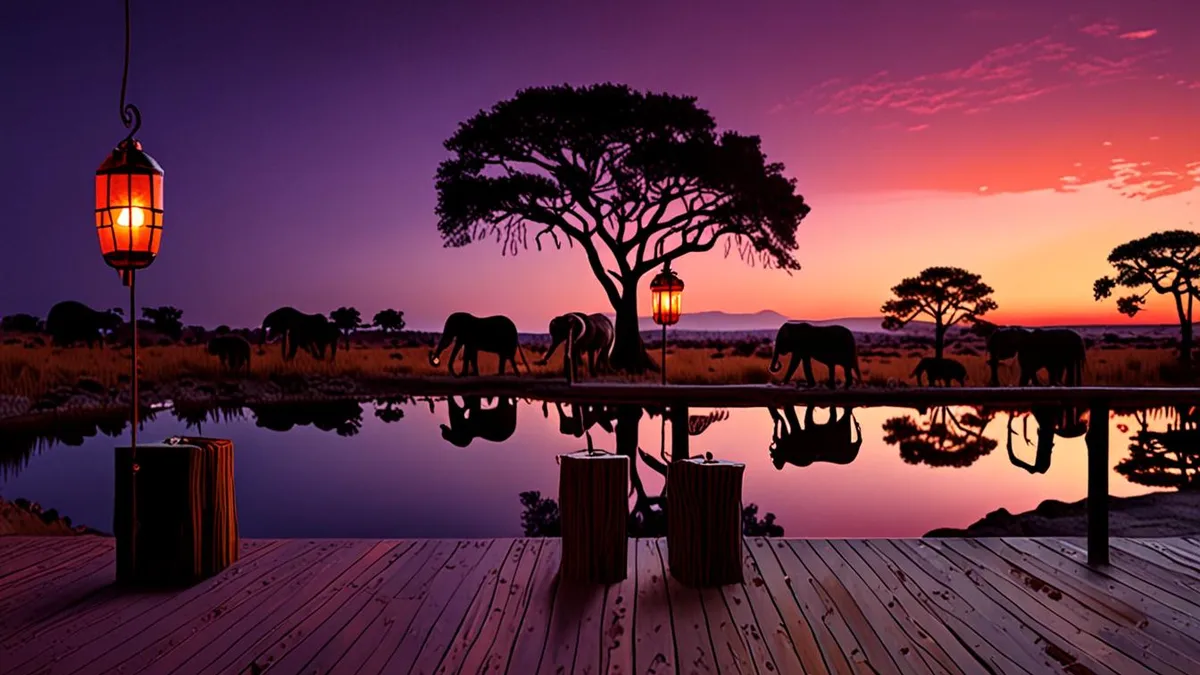
The afternoon drive focuses on animals gathering at waterholes and rivers. As the heat breaks, elephants come down to drink, buffalo herds move toward water, and antelope emerge from the shade to graze. Predators start to stir too, so guides often position near known water sources as the light softens. Photography is at its best in these golden hours.
Drives end with sundowners around 5:30 to 6 pm, a classic safari ritual. The vehicle pulls over at a scenic spot, and the guide sets out drinks and snacks while the sun drops. Gin and tonic is the traditional choice, but there is always a non-alcoholic option. Order yours early on the drive so the guide can plan the stop.
Getting back before dark
You return to camp by dark, since driving after nightfall is restricted in most reserves. Where night drives are permitted, typically in private concessions, the vehicle uses spotlights to pick out nocturnal species such as bushbabies, genets, owls and possibly hunting leopards. If your lodge offers this, it is a completely different experience from a daytime drive and well worth doing at least once. Otherwise, the evening is spent around camp, which is where the next part of the day begins.
Evenings: Dinner, Boma Fires and Star Gazing
Dinner at an African bush lodge is usually served between 7:30 and 8:30 pm, and at many camps it takes the form of a three-course set menu rather than an à la carte list. Menus change daily, and you might find anything from grilled local fish to a hearty oxtail stew. Some lodges seat everyone at one long table, which is a great way to swap stories about the day’s sightings, while others offer private tables for couples who prefer a quieter evening.
The boma fire
Many camps gather guests around a boma, an outdoor fire pit enclosed by a low wall, after or before dinner. It is the social heart of the lodge: guides tell stories about close encounters with leopards or elephants, staff may sing local songs, and drinks keep flowing under the stars. You are never required to join, but most travelers find it one of the most memorable parts of the trip.
One thing that surprises first-time visitors is how dark the camp is after sunset. Lighting is kept minimal to avoid disturbing wildlife, so a member of staff will walk you to and from your tent whenever it is dark. Never wander alone at night; hippos and buffalo sometimes graze between the tents.
Plan on early nights. With the next wake-up call arriving within 12 hours, most guests are asleep by 9:30 or 10 pm, and honestly, after a 3 to 4 hour morning drive, your body will be ready for it.
What Meals and Amenities Are Included at African Bush Lodges
Most African bush lodges operate on a fully inclusive basis, which means your rate covers all meals, two daily game drives and house drinks. This makes budgeting simple: aside from tips, premium wines and optional extras like spa treatments, you rarely open your wallet during the stay. If you want a fuller picture of how lodge stays work, this guide to amenities, meals and activities at a lodge covers the basics in more depth.
Food is a bigger part of the experience than many travelers expect. You will sit down to three proper meals a day, plus the afternoon tea that precedes the second game drive. Breakfasts are generous, lunches are lighter, and dinners tend to be the highlight. Vegetarian, vegan, gluten-free and other dietary needs are routinely catered for, but mention them when you book rather than on arrival.
Wi-Fi deserves a special note: it is often limited to the main lodge areas or entirely absent in remote camps. Treat the disconnect as part of the experience, and let family know you may be out of reach.
- Swimming pool – usually the center of midday life, with loungers and shaded decks facing the bush or a waterhole.
- Lounge and bar area – a comfortable space for reading, board games and coffee between drives.
- Curio shop – sells souvenirs, sunscreen, batteries and last-minute toiletries, often at remote-area prices.
- Spa or gym – available at some, not all, lodges; check before booking if these matter to you.
Planning Your Safari Day Rhythm: Seasons, Costs and Booking
Timing shapes everything about a safari. The dry season, roughly May to October, delivers the most reliable game viewing because vegetation thins out and animals gather at permanent water sources. Mornings are also at their crispest, so pack for cold starts even in the middle of the African winter.
What to budget
For mid-range fully inclusive lodges, plan on around $250 to $600 per person per night, covering your tent, all meals, drinks and both daily game drives. Rates climb steeply at the most famous reserves, so if a name-brand park is out of budget, private concessions and less famous reserves often offer similar wildlife at lower prices.
Booking ahead matters
Peak season, especially June to September, fills up early. Book 6 to 12 months ahead to secure your preferred camp and the best rates, and be flexible with dates if you can. It is also worth reading a detailed guide on how to book a lodge stay, including costs and booking tips before you commit a deposit.
Families should check minimum age rules carefully. Most lodges welcome children on shared game drives from age 6 or 8, though some camps run family-only vehicles or private villas for younger kids. Ask before booking rather than assuming, as policies vary widely between camps.
A Day at African Bush Lodges, Summed Up
A day at an African bush lodge follows a rhythm that quickly becomes second nature. Two game drives anchor everything: one at dawn, when predators are most active, and one in the late afternoon, ending with sundowners before dark. In between, the lodge takes care of the rest, with meals, drinks and downtime arriving on a predictable schedule you can plan around.
Knowing this structure makes packing and planning far easier. Aim for the dry season months, roughly May to October, for the best wildlife viewing, and book early to secure your preferred lodge and rates. Once you arrive, the only real decision is how you spend the long midday rest. If this guide helped you picture your first safari day, leave a comment or share it with a fellow traveler.