If you have ever slept in a tent on a chilly night, the idea of booking a geodesic dome in winter can feel like a gamble. Will a rounded, tent-like structure really hold heat once the sun goes down and temperatures drop? That worry keeps a lot of travelers from trying dome stays, even though modern builds are far more capable than the canvas tents they resemble.
The short answer: glamping domes stay warm when they are built for it. This guide explains how dome insulation actually works, compares the three most common heating systems, and tells you how cold is too cold for a comfortable night. You will also get the exact questions to ask before booking a winter dome, plus packing and budgeting tips for a cold-weather trip. By the end, you will know whether a snowy dome night belongs on your calendar — and how to make sure it is a cozy one.
Yes, Glamping Domes Stay Warm — Here’s How
Let’s start with the reassuring news: a well-built dome with proper insulation and an active heater typically holds interior temperatures 30-40°F warmer than the air outside. When it is 15°F at midnight, that can mean a toasty 50-55°F inside — warm enough to sleep comfortably in regular pajamas rather than a parka.
The dome’s shape is a big part of why this works. Unlike a rectangular cabin or wall tent, a sphere presents no flat surfaces for wind to slam against, so cold air flows around it instead of stripping heat away. That same curved shell sheds snow rather than letting it pile up and press against the walls, which keeps the structure sealed and reduces heat loss through the night.
The three ingredients of a warm dome
Warmth in a dome comes down to three things working together. First, the shell needs insulation to slow heat escaping through the walls. Second, the floor needs insulation too, because a cold platform underneath pulls warmth out of your body all night. Third, you need an active heat source — a stove, heater or heat pump — actively adding warmth as the outside temperature drops.
Remove any one of those three and the whole system struggles. A heated dome with no floor insulation feels cold from below, and an insulated dome with no heater simply drifts toward the outside temperature. When all three are in place, the dome behaves more like a small cabin than a tent.
How Dome Insulation Works
The insulation inside a four-season dome is not the fabric you see from outside — it is a separate liner layer hung inside the shell. Most purpose-built winter domes use insulated liners with an R-value of 13-19 in both the walls and the floor, which is comparable to a modestly insulated home wall. That liner is what makes the 30-40°F gap between inside and outside temperatures possible.
Not all domes are built this way, though, and the difference matters enormously once temperatures drop below freezing. Single-skin canvas domes without a liner lose heat fast: the fabric itself has almost no insulating value, so every degree your heater produces leaks straight out. For a genuine winter stay, these are best avoided. If you want help picking the right time of year, a month-by-month guide to glamping seasons in the US can show when cold-weather comfort is realistic in your region.
When you compare dome listings, look for these construction details:
- Double or triple-layer covers: multiple fabric layers with air or insulation trapped between them slow heat transfer far better than a single skin.
- Sealed thermal bridges at the frame: the metal or wooden struts of a geodesic frame conduct cold straight through if not insulated, so ask whether joints and struts are wrapped or thermally broken.
- An insulated subfloor: a raised platform with insulation beneath it stops the ground from pulling heat out through the floor, which is where many dome stays lose comfort.
A dome that ticks all three boxes will feel dramatically different from a budget summer model, even at the same outside temperature. Combined with a reliable heater, that construction quality is what turns a fair-weather tent into a unit operators can book year-round.
Heating Systems Compared: Wood Stove, Propane and Electric
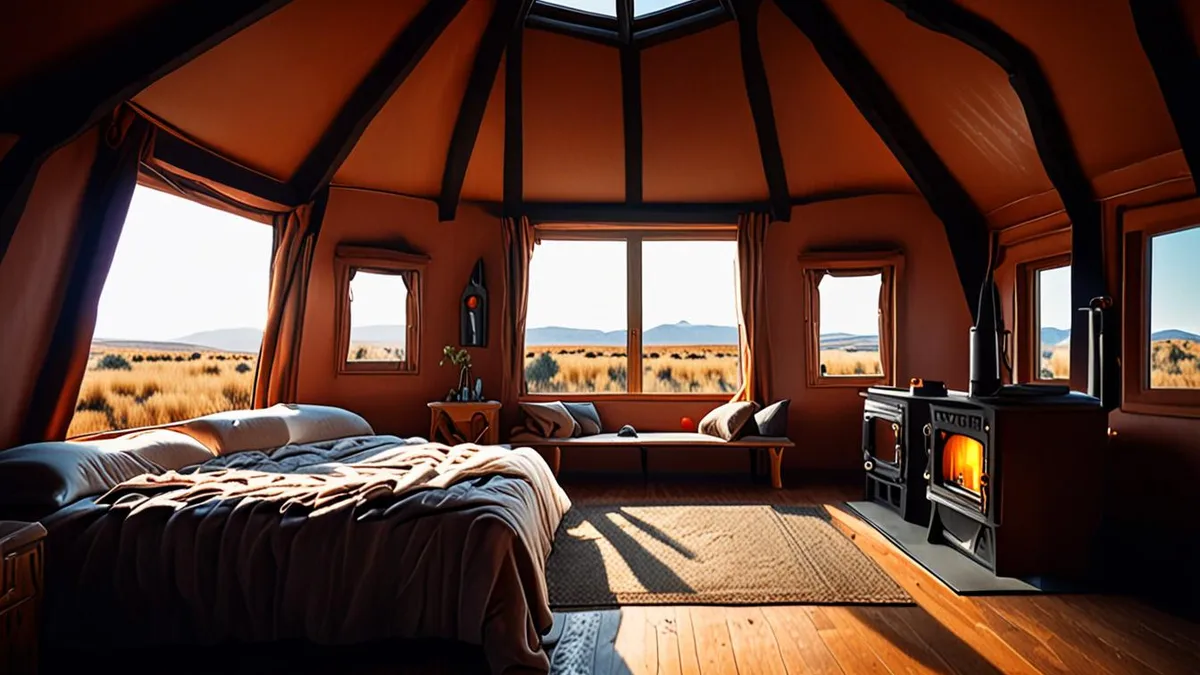
Heating is where dome stays differ most from ordinary cabins, and each of the three common systems comes with real trade-offs. Wood stoves are the classic choice: they pump out strong radiant heat, the firelight is genuinely pleasant, and they keep working during a power outage. The catch is that a stove needs reloading every few hours, so unless you set an alarm, the fire — and the temperature — drops overnight.
Propane heaters take the opposite approach. They deliver steady, thermostat-controlled heat with no refueling by guests, which means you set a temperature at bedtime and wake up warm without touching anything. Electric heat pumps are the third option: they work well in mild climates but lose efficiency below roughly 20-30°F, which is exactly when you need them most in deep winter.
Beyond the basics, here is what separates a good heating setup from a risky one:
- A backup heat source: the best dome setups pair a primary heater with a secondary one — for example, a wood stove plus a propane heater — so a single failure does not leave you cold at 2 a.m.
- Overnight heat supply: ask whether propane tanks or firewood are sized to last the full night, since a heater that runs out at midnight is worse than no heater at all.
- Safety features: look for carbon monoxide detectors, proper ventilation around combustion heaters and clear operator instructions, especially in a small, sealed space.
When a dome combines two heat sources with solid insulation, the overnight temperature drop that worries most first-timers simply does not happen.
How Cold Is Too Cold for a Dome Stay
Here’s the honest answer: a well-insulated dome with a working heater stays comfortable when nighttime lows sit around 0-10°F. Inside, you’ll typically feel temperatures 30-40°F warmer than what’s happening outside, which means a 5°F night feels like a normal cozy bedroom. Below that range, comfort gets shakier — expect to sleep in an extra layer, wake up once or twice to add wood to the stove, and notice cold creeping in near the floor by early morning.
That doesn’t mean deep-cold trips are off the table. Some travelers love a genuinely frigid night for the snowscapes and silence, as long as they go in with realistic expectations. If you’re chasing guaranteed warmth rather than adventure, check a destination’s typical January lows before booking and match them to your tolerance.
When to Book for the Coldest Nights
December to February is peak dome season in snowy regions, and the calendar fills fast. For holiday weekends like New Year’s, book 2-3 months ahead or you’ll likely be choosing between leftover dates or a different property entirely.
If your dates are flexible, shoulder months are the sweet spot. October, March and April often deliver frosty mornings, wood-stove evenings and snowy views with far fewer crowds — and you’re less likely to hit the extreme lows that turn a night’s sleep into a test of endurance.
Questions to Ask Before Booking a Winter Dome
The fastest way to end up shivering in a beautiful dome is to assume “glamping” automatically means “warm.” It doesn’t. Two domes that look identical in photos can perform completely differently at 15°F, and the difference always comes down to construction and heating details that no listing photo will show you. A short email or phone call before you book saves a lot of misery, and it’s worth pairing these questions with the basics covered in how to choose the right glamping site for your first trip.
Start with the structure itself. Ask directly whether the dome is rated for four seasons — some operators close or downgrade units in winter because the shell simply isn’t built for it. Then ask what R-value the insulation has: a specific answer in the R-value 13-19 range tells you the operator knows their product, while a vague “it’s pretty warm” tells you something too.
- Heating specifics: Find out whether the heat source is a wood stove, propane heater or electric system, because each behaves differently overnight — a wood stove needs reloading, while propane can run on a thermostat without you lifting a finger.
- Overnight heat and backup: Confirm that heat actually runs all night rather than shutting off on a timer, and ask what backup source kicks in if the primary heater or the power fails at 2 a.m.
- Bathroom logistics: Check whether the bathroom is en-suite or in a separate shared building, because a midnight walk across an icy path in slippers changes the whole character of the trip.
- Winter access: Ask whether roads and walkways are cleared after snowfall, whether a regular car can reach the property or you’ll need all-wheel drive, and what the plan is during a power outage — generators, staff response or just candles.
Operators who answer these questions quickly and specifically are usually the ones who have genuinely winterized their domes. Hesitant or evasive answers are useful information as well — just not the kind you want to discover on arrival.
Packing and Budgeting for a Cold-Weather Dome Trip
Cold-weather dome trips reward light packers who think in layers rather than suitcases. The dome itself will be warm, but the ten steps between your bed and the bathroom — or between the parking area and the dome — are where the cold gets you. Pack thermal base layers, wool socks and a pair of dedicated slippers for inside the dome, since floors are usually the coldest surface even in well-insulated units. A hot water bottle slipped under the covers ten minutes before bed is the cheapest luxury you’ll bring.
For a full rundown of what else belongs in the bag, this complete glamping packing checklist covers the essentials season by season. The list below covers the cold-specific items that dome veterans never leave behind.
- Hand warmers: Tuck a few disposable pairs in your jacket pockets — they’re invaluable for the walk to a shared bathhouse and for reviving cold fingers while you feed the wood stove in the morning.
- Headlamp: Dome sites are usually dark by design, so a headlamp with fresh batteries beats a phone flashlight for hands-free walking between the dome and shared facilities after dark.
- Insulated bottle: Fill it with hot water or tea before turning in; it stays warm through the night and doubles as a bedside heat source if the temperature dips before dawn.
Here’s the good news on cost: winter dome rates often run 20-40% below peak summer prices, so the coziest nights of the year are frequently the cheapest. The biggest savings show up in January and February, once the holiday rush fades and operators compete for the hardy travelers who remain. If your schedule allows a mid-winter weekday stay, you’ll often pay a fraction of the summer rate for the same view — with snow on it.
The Bottom Line on Dome Warmth
So, do glamping domes stay warm? Yes — provided the three essentials are in place: a properly insulated shell, quality insulation in the walls and floors, and a reliable heater that runs through the night. With that combination, a well-built dome typically holds interior temperatures 30-40°F warmer than the air outside, which turns a snowy night into a non-issue rather than a dealbreaker.
Comfort generally holds down to outside lows of around 0-10°F, which is exactly why December to February has become a genuine dome season in snowy regions rather than an off-limits period. The difference between cozy and cold usually comes down to asking four targeted questions before you book — about insulation, heating, the bathroom situation and winter access. If this helped you plan your own dome stay, leave a comment or share the article with a fellow traveler.