Planning your first safari usually brings a question that brochures make surprisingly hard to answer: should you book a safari lodge or a tented camp? Both promise game drives and nights under African skies, but the day-to-day experience, comfort level and price can differ far more than most travelers expect. A solid-walled lodge and a canvas tent in the same reserve can feel like two entirely different trips.
This guide breaks down the safari lodge vs tented camp decision piece by piece. We compare the core differences in design and size, the comfort and amenities you can realistically expect, what each stay type typically costs, and how location and wildlife access set them apart. We also look at which stay type suits different travel groups, share practical booking tips, and finish with a simple way to settle the choice — including the popular option of mixing both on one trip.
Safari Lodge vs Tented Camp: The Core Differences
The most obvious difference is construction. A safari lodge is a permanent building with solid walls, real doors, a roof and full facilities — think pools, restaurants and lounges that stay put year-round. A tented camp, by contrast, is built from canvas, and that canvas ranges enormously: some camps are simple safari tents with shared bathrooms, while ultra-luxurious versions come with king beds, clawfoot bathtubs and private plunge pools.
Size separates them just as clearly. Lodges usually host somewhere between 20 and 60 guests at once, which means fuller dining rooms, more vehicles heading out on game drives and a busier social atmosphere. Tented camps stay intimate, often with just 6 to 15 tents, so dinner can feel like eating with friends rather than at a hotel buffet.
Fixed or mobile?
Many tented camps can relocate seasonally, packing up and moving to follow wildlife migrations — a flexibility no permanent lodge can match. Lodges sit in one spot all year, which is why they tend to be built near reliable game-viewing areas.
Sound and privacy differ too. Canvas walls mean you will likely hear hyenas whooping or hippos grunting at night — thrilling for some, unsettling for others. A lodge’s solid walls muffle the bush, so you sleep in quiet comfort while the wilderness carries on outside.
Comfort and Amenities Compared
If comfort is your priority, lodges are the safer bet. Across all price tiers, they reliably offer pools, spas, gyms, Wi-Fi and air conditioning — the kind of facilities you would expect from a full-service hotel dropped into the bush. Many also have on-site restaurants, bars and lounge areas where you can relax between game drives without ever leaving the property. If you want a detailed picture of what a typical stay looks like day to day, our guide to lodge amenities, meals and activities covers it in depth.
Tented camps vary more. At the luxury end, they match lodge comfort almost entirely: en-suite bathrooms, hot showers, fine dining and attentive butler-style service. Mid-range options usually still include private bathrooms and solid beds, so you lose little in practice. Budget camps, however, may ask you to share bathroom blocks and accept simpler meals, so read the descriptions carefully before booking.
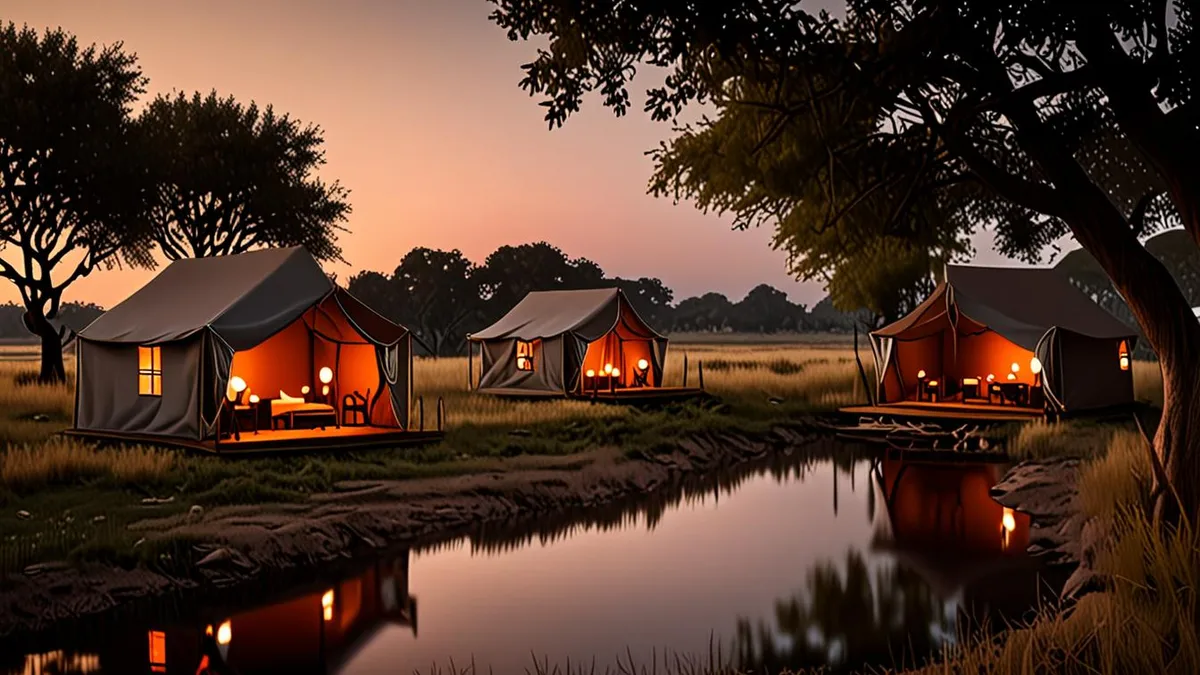
What camps trade in amenities, they gain in atmosphere. Canvas walls, lantern light and the sounds of the bush just outside your tent create an immersion that no air-conditioned room quite replicates. Waking at dawn to birdsong, with coffee delivered to your tent flap, is a memory many safari-goers treasure most. For many travelers, that is the whole point of a safari.
Before choosing, think honestly about how you sleep and travel. The right answer depends less on luxury level than on your personal priorities.
- Families with toddlers: lodges are usually easier, with enclosed rooms, fenced grounds in some cases, kids’ menus and babysitting services that a small tented camp rarely provides.
- Couples seeking romance: small camps often win, with private dinners under the stars, outdoor bucket showers and far fewer other guests around.
- Light sleepers: remember that in a tent, a hippo grazing ten meters away will sound like it is in the room with you — some people love this, others don’t sleep a wink.
What Each Stay Type Costs
Price ranges overlap, but the centers of each range differ. Lodges typically run from about $250 to over $1,500 per person per night, usually including meals and game drives. Tented camps span roughly $150 to $1,000 per person per night depending on their luxury level, so the entry point for a camp is generally lower than for a lodge.
Where the value sits
Mid-range tented camps are often the best value in the safari market. They typically deliver game drives and full board for less than a comparable lodge, and you still get the atmosphere of sleeping in the bush. If you are weighing rates, seasons and booking strategy, our guide on how to book a lodge stay, including costs and seasons walks through the details.
Timing matters as much as stay type. Green-season travel in April-May or November can cut rates by 20-40 percent at both lodges and camps, making a property that felt out of budget in peak season suddenly attainable.
Finally, confirm exactly what is included before you book. Park fees, drinks and airport or airstrip transfers vary widely between properties, and a nightly rate that looks cheap can grow once these extras are added. Ask for a full cost breakdown in writing so you can compare properties on equal footing.
Wildlife Access and Location
Where you sleep shapes what you see. Migratory tented camps in Tanzania and Kenya physically relocate across the year, shifting between the Serengeti and Masai Mara so guests stay close to the wildebeest herds wherever they roam. If witnessing the migration is your top priority, a moving camp is hard to beat, since it puts you near the action without long daily drives.
Permanent lodges and their fixed advantages
Lodges cannot move, but they were usually built in proven prime spots in the first place — often beside a waterhole or river that draws game year-round. That reliability matters, especially for shorter stays where you cannot afford a slow day. Many lodges also position their dining areas and pools to face these animal highways, so sightings continue between game drives.
Small camps inside private conservancies offer something neither can: night drives and off-road tracking. Most lodges inside national parks must stick to park roads and daytime hours, while conservancy camps can follow a leopard off-trail or spotlight nocturnal predators after dinner.
Season also changes the equation. During the dry season from June to October, wildlife concentrates around remaining water sources, so even a less perfectly located property delivers strong sightings. In the green season, animals disperse and location matters far more. For a fuller breakdown of how each season affects game viewing, see this guide to the best time of year to visit lodges by season and region.
Which Stay Type Fits Your Travel Group
The right stay type depends heavily on who is traveling with you. Lodges and tented camps serve very different group dynamics, and choosing wrong can make an otherwise great safari feel awkward or exhausting. Before you fall in love with a property’s photos, think honestly about your group’s ages, energy levels and expectations, then match the stay type to the people actually going.
Matching the stay to your group
Multi-generational groups tend to thrive at lodges. With 20-60 rooms, there is genuine variety — family rooms, interconnecting doors, and spaces where grandparents and grandchildren can each find their own pace. Pools give kids an afternoon activity between game drives, and communal dining areas keep the whole group together at mealtimes. If someone needs a nap or a quiet corner, a larger property makes that easy without anyone feeling left out.
Honeymooners and couples usually get more exclusivity at small tented camps, where 6-15 tents mean quiet evenings, private dinners and staff who remember your names by day two. The atmosphere is naturally intimate, and many camps can arrange special touches like bush dinners that a busy lodge simply cannot manage for every guest.
Solo travelers often find camps friendlier too. Shared dinner tables and time with the same small guide team make it easy to meet people, while large lodges can feel anonymous by comparison.
- Travelers with mobility needs: favor lodges with level pathways, ramps and accessible rooms — canvas tents often sit on raised decks reached by steps, which can be difficult with walkers or wheelchairs.
- Groups with teenagers: lodges with gyms, Wi-Fi and pools give older kids downtime options between drives, reducing safari fatigue on longer trips.
- Small friend groups: booking several adjacent tents in a small camp can effectively give you a private property feel at a shared price.
How to Book the Right Safari Stay
Booking a safari stay rewards early decisions more than almost any other trip type. The best properties in the best locations are small, and demand consistently outstrips supply during peak months. A lodge with 20-60 rooms has more flexibility, but a tented camp with 6-15 tents can fill from a single family reunion or a couple of tour groups. A clear process helps you avoid overpaying or settling for a leftover option nobody else wanted.
- Set your priority first. Decide whether comfort, intimacy or migration timing matters most to you, then filter by stay type before you fall in love with a specific property. A lodge suits comfort-focused travelers; a small camp suits intimacy; a migratory camp that moves seasonally suits those chasing the herds across the Serengeti and Masai Mara.
- Book 9-12 months ahead for peak season. June to October and December to March fill fastest, and small camps with under 20 tents sell out first — sometimes nearly a year in advance. If your dates are flexible, shoulder and green seasons (April-May, November) can cut rates by 20-40 percent and make last-minute planning far easier.
- Scrutinize what the rate includes. Some properties are fully inclusive with drinks, park fees and transfers; others charge per activity. Two similar-looking prices can differ by hundreds of dollars per day once extras are added, so ask for a sample invoice before you commit.
- Read tent vs room descriptions carefully. “Tented camp” can mean a simple canvas room with shared facilities or a suite with a plunge pool — check bathroom details, power setup and tent size before committing. Ask about charging points, lighting and whether the camp has Wi-Fi if staying connected matters to you.
- Consider mixing both. Many itineraries pair 2 nights in a lodge with 2-3 nights in a camp, giving you facilities and atmosphere in one trip. This also spreads your budget across two price tiers and lets you compare styles before a future booking.
One final habit worth building: email the property or your operator directly with your must-haves before paying a deposit. A short exchange confirms availability, clarifies inclusions and often surfaces seasonal rate reductions that websites do not advertise. Mention any dietary needs, mobility concerns or celebration plans at the same time — small camps in particular appreciate the heads-up and can often accommodate requests that would be impossible to arrange after arrival.
Wrapping Up Your Safari Stay Choice
So, lodge or tented camp? If you want guaranteed facilities, more rooms to choose from and a reliable, hotel-style stay, a lodge is the safer pick. If you want intimacy, atmosphere and the chance to sleep closer to the action — sometimes right on the path of the migration — a tented camp delivers what walls simply can’t. Neither is better; they just suit different travelers.
For most people, three factors settle it: your budget, your group type and the season you’re traveling in. Weigh those honestly and the right stay type usually becomes obvious. And if you genuinely can’t decide, remember that many itineraries mix both — a few lodge nights followed by a few camp nights gives you the best of each on a single trip. Which one are you leaning toward? Tell us in the comments, or share this article with a travel partner who’s still deciding.