Booking your first glamping trip usually comes with one nagging question: will the bathroom feel like a real one, or will you be squatting over a latrine in the dark? It’s a fair worry. The gap between a luxury tent with a proper en-suite bathroom and a basic site with a long walk to a communal shower is bigger than most first-timers expect.
The good news is that a glamping bathroom and shower setup is usually far more comfortable than people imagine, but it varies a lot from site to site. In this guide, we’ll break down what different setups typically include, how the choice between en-suite and shared facilities affects price, how toilets, hot water and water pressure actually work, and how to check the details before you book. We’ll also cover when en-suite options are most widely available and what’s actually worth packing. By the end, you’ll know exactly what to look for and can book with confidence instead of crossed fingers.
What a Glamping Bathroom and Shower Setup Usually Includes
Glamping bathrooms generally fall into three tiers, and knowing which one a site offers tells you most of what you need to know about your stay. The top tier is a private en-suite bathroom built inside the unit itself, whether that’s a safari tent, cabin, or dome. The middle option is a private bathroom in a separate structure just steps from your accommodation, reserved for your unit alone. The most basic tier is a shared bathhouse serving multiple tents or cabins.
What en-suite setups typically include
An en-suite glamping bathroom usually feels close to a boutique hotel room. Expect a flush toilet, a sink with running water, and a walk-in or rainfall shower behind a proper door or curtain. Many sites add a hairdryer as well, so you can leave yours at home if the listing confirms it’s provided.
What separate and shared facilities look like
If your unit doesn’t have its own bathroom, the site will typically offer a bathhouse nearby. These are usually much nicer than the word suggests: rather than open communal showers, most glamping bathhouses have private shower rooms with locking doors, so you get real privacy even in a shared building. At most mid-range and luxury sites, linens, towels, soap and shampoo come standard, so the experience feels closer to a hotel than a campground. Check the individual listing, since budget-oriented sites may handle toiletries differently.
En-Suite vs Shared Facilities: How the Choice Affects Price
Price is where the en-suite question gets real. Comparable units at the same site or in the same area typically differ by $50-$150 per night depending on whether the bathroom is inside your tent or down the path in a shared bathhouse. Over a three-night stay, that premium can add up to a meaningful chunk of your budget, so it’s worth deciding in advance how much privacy matters to you.
Check the walking distance before you book
Shared facilities usually mean a 1-5 minute walk from your tent or cabin, but that range covers everything from a paved path a few steps away to a trail across the property. Look at the site map before booking and check where the bathhouse sits relative to the units you’re considering. A bathroom that looks “nearby” on a photo can be a soggy five-minute trek in the rain.
Who should pay for the en-suite?
For couples and special occasions like anniversaries or honeymoons, the privacy of an en-suite often justifies the premium. Stepping straight from bed to your own shower, with no shoes, no headlamp and no waiting, is part of the luxury experience you’re paying for. For families, a nearby bathhouse can work perfectly fine, especially with older kids, and the savings can go toward a longer stay or a bigger unit. If you’re weighing comfort against cost more broadly, our guide to glamping versus camping costs and comfort puts these trade-offs in context.
Toilets, Hot Water and Water Pressure Explained
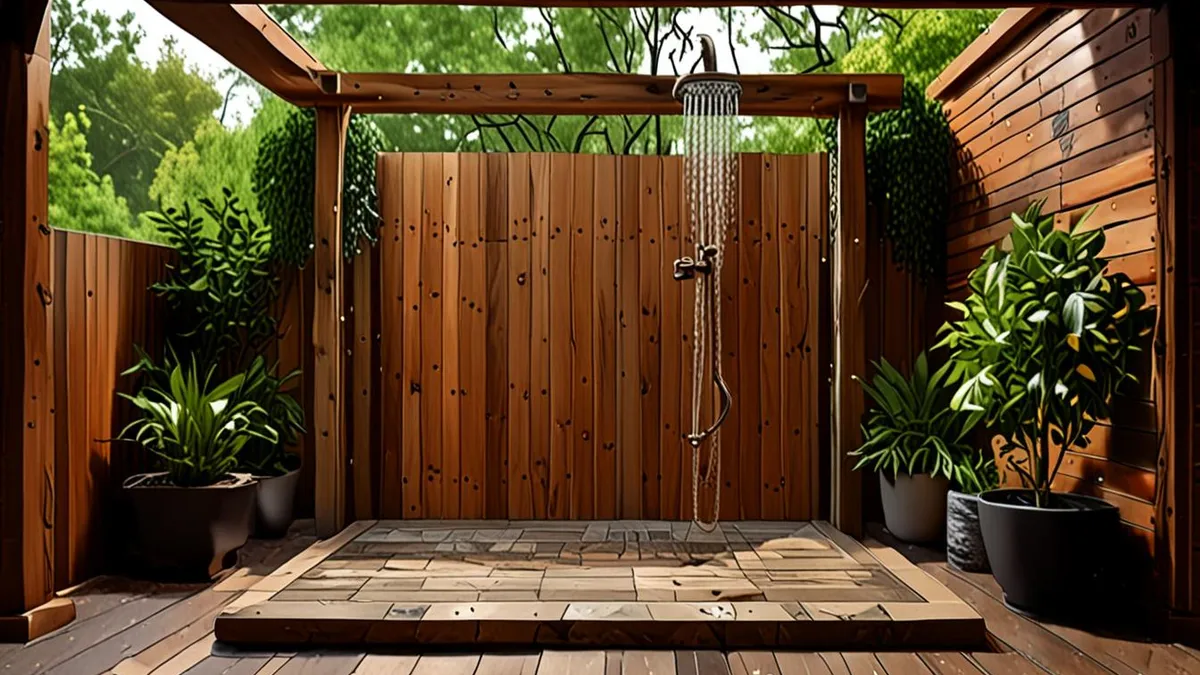
Toilets at glamping sites come in two main flavors: flush and composting. Flush toilets behave exactly like the ones at home, and most en-suite units have them. Composting toilets are common at eco-focused and off-grid sites, and while they can feel unfamiliar to first-timers, modern models are odorless when used correctly. The key is following the posted instructions, usually adding a scoop of covering material after use and keeping liquids and solids separated in the right units.
Hot water is the next thing to understand. Most glamping showers are heated by propane or solar systems rather than a big municipal water heater, which means supply can dip during peak evening hours when everyone showers after a day of hiking. Water pressure is another difference: eco-focused sites often run lower pressure than your bathroom at home to conserve water, and some off-grid units use low-flow showerheads by design. It’s still a hot shower, just a gentler one. Timing matters more than anything else, and if you’re planning around weather and crowds, our month-by-month guide to glamping seasons in the US helps you pick the right window.
- Shower early in the morning, when propane tanks are full and solar-heated water has had all night to warm, so hot water is generally strongest before other guests draw from the system.
- Keep showers short at solar-powered sites, since a cloudy day can leave the tank cooler than usual by evening.
- Ask whether the site staggers hot water across units, because some smaller properties heat one tank at a time rather than serving every bathroom at once.
How to Check Bathroom Details Before You Book
The fastest way to avoid a bathroom disappointment is to read the listing carefully and ask a few direct questions before you pay. Hosts are usually happy to answer, and their answers tell you far more than the photos do. Photos can make a tiny washroom look spacious or hide the fact that the shower sits in a separate building across the site. A simple routine of ten minutes covers all of it, and it works whether you are booking a luxury safari tent or a rustic cabin.
- Scan the listing for specific wording. Look for the words en-suite, private bathhouse or shared facilities. If the description stays vague, phrases like “modern amenities nearby” often mean you will be walking to a shared building, so treat unclear wording as a sign to dig deeper. Check the site map too, since some listings show exactly where each unit sits in relation to the facilities.
- Message the host with three questions. Ask what type of toilet the unit has, how far the shower is from your tent or cabin, and whether towels are provided. These three answers tell you almost everything about your daily routine at the site, and they also give you a sense of how responsive the host will be if something goes wrong during your stay.
- Read recent reviews with bathroom radar. Filter or search reviews for mentions of cleanliness, hot water and bathroom wait times. A pattern of complaints about cold showers or long lines matters more than one glowing comment from years ago. Pay attention to reviews from guests who stayed in the same type of unit you are considering, since facilities can differ between tents on the same property.
- Confirm seasonal availability. Some glamping bathrooms close or become limited outside the main season, so if you are planning a cold-weather trip, ask directly what stays open and how water is handled. Off-grid units in particular may operate differently in winter than they do in summer.
If you are still weighing your options, our guide on how to pick the right glamping site for a first trip walks through the booking process step by step. A few careful questions up front are the difference between a smooth stay and a soggy surprise.
When En-Suite Glamping Bathrooms Are Most Available
Timing matters more than most first-time glampers realize. Luxury tents with private bathrooms are most widely available from May through October across most of the US, because that is when water systems stay reliable and demand is highest. Outside that window, en-suite options shrink fast, especially at smaller, eco-focused sites.
Why shoulder months are the sweet spot
May, September and early October offer a rare combination: en-suite tents are still open, the weather is milder, and the crowds are thinner. You get the same private bathroom and rainfall shower for the same style of stay, often with more peaceful surroundings and easier booking. If your schedule is flexible, these months usually deliver the best overall experience.
How far ahead to book
For summer weekends at popular en-suite sites, plan on booking two to three months ahead. Weekend slots in July and August go quickly at well-known properties, and the units with private bathrooms are usually the first to fill. Midweek stays are much easier to secure, often just a few weeks out, and they tend to feel quieter too. If you have your heart set on a specific tent for a special occasion, book early rather than hoping for a late opening.
Packing for a Glamping Bathroom: What You Actually Need
Here is the good news: most glamping sites provide towels, soap and shampoo, so packing your own is rarely needed. Your toiletry bag can stay small, which leaves room in the car for things that actually matter. That said, a few small items can make a real difference depending on your setup, especially if your unit relies on a shared bathhouse instead of a private bathroom. Think of this as a short add-on list rather than a full packing guide, because the site itself covers the basics.
- Flip-flops or shower sandals. If your unit uses a shared bathhouse, sandals protect your feet on shared floors and on the path between your tent and the building, which can be gravel, grass or damp boardwalk.
- A quick-dry towel. Even when towels are provided, a compact quick-dry towel is handy for a dip in a lake, a sweaty hike or an extra shower, and it dries overnight in a tent where airflow is limited.
- A small headlamp. At sites where the bathroom is a short walk away, paths are often unlit to preserve the dark-sky feel. A headlamp keeps your hands free for the gate, the door and your toiletry bag.
- A small toiletry pouch. Since soap and shampoo are usually supplied, a slim pouch with just your toothbrush, medications and any personal items is all you need on the walk to the shower.
One caveat: skip packing a hairdryer or full-size toiletries only if the listing confirms they are not supplied. Many en-suite units include a hairdryer, and duplicating provided items just wastes space. Check the amenities list before you finalize your bag.
A little preparation goes a long way here. Because bathroom setups vary so much from one property to the next, the smartest move is to match your bag to your booking: a private en-suite tent needs almost nothing extra, while a stay that depends on a walk to a bathhouse rewards you for packing light but packing clever. Ten minutes spent rereading the listing before you leave home will tell you which of these items actually apply to your trip, and it will save you from hauling gear you never touch.
Your Glamping Bathroom, Summed Up
Worried the bathroom will feel like a campsite latrine? In most cases it won’t. Glamping bathrooms range from a full en-suite with a flush toilet and rainfall shower to a short walk to a private bathhouse with a locking door, and even the simplest setups usually include towels, soap and shampoo.
The main trade-off is price and convenience: en-suite privacy typically costs $50-$150 more per night. Before booking, check the toilet type, the shower distance from your unit and whether towels are provided, and aim for May-October when luxury tents with private bathrooms are easiest to find. Have you stayed somewhere with a bathroom worth bragging about, or a booking you regret? Leave a comment or share this article with a friend planning their first glamping trip.