Many travelers with limited mobility have experienced the same frustration: a lodge that looked accessible online turns out to have a gravel parking lot, a raised threshold at the front door, or a bathroom they cannot actually use. Photos rarely show these details, and a single vague mention of “accessible” in a listing is not enough. This guide to accessible lodges shows you how to dig deeper before you book.
We will cover what makes a lodge truly accessible, how to search for properties that describe their features honestly, and the specific questions worth asking before you commit. You will also find advice on timing your reservation, choosing lodge types and locations that suit limited mobility, and planning activities that work with your energy and abilities. By the end, you will have a clear checklist for finding a stay that works in practice, not just in the listing.
What Makes a Lodge Truly Accessible
Accessibility means far more than a ramp at the front door. A lodge that is genuinely usable for a wheelchair user or someone who struggles with stairs will have a step-free entry, a ground-floor room or one served by an elevator, and doorways of at least 32 inches (81 cm) wide so most wheelchairs can pass through comfortably. Missing any one of these can turn a promising stay into a difficult one.
The most common gaps at lodges are the details nobody photographs. Gravel parking areas are hard or impossible to cross with a wheelchair or walker. Raised thresholds at doorways block smooth entry. Sunken lounges, split-level dining rooms and bathrooms with a step up into the shower are all frequent problems, especially at older properties built before accessibility became a priority.
Marketing claims versus real audits
Be careful with the phrase “ADA-friendly” in marketing copy. It often means the lodge has added a ramp or a grab bar, not that the property has been professionally assessed. A lodge that has actually been audited or certified will usually say so specifically and can describe its features in detail. When a listing stays vague, treat that vagueness as information and ask direct questions before you book.
How to Search for Accessible Lodges
Booking platforms are a reasonable starting point because most now include an accessibility filter. Treat that filter as a starting point rather than a guarantee, though. Filters only reflect what the lodge has self-reported, and they rarely capture details like threshold heights or bathroom layout. Once you have a filtered list, read the property descriptions closely and look for lodges that advertise step-free access, roll-in showers and accessible parking in specific terms. A listing that describes its accessible features in concrete, specific language deserves more trust than one that simply says “accessible room available” and leaves it at that.
Shortlist the properties that describe their features in detail, then go a step further with these checks:
- Check the property’s age or renovation history. Newer builds and recently renovated lodges are far more likely to have elevators, wide doorways and level floors, while older lodges often have stairs, narrow passages and split-level layouts that no listing photo reveals. A quick look at the lodge’s own website or a message to the owner can tell you when major upgrades were last done.
- Look at guest reviews from other travelers with mobility needs. Search review text for words like “wheelchair,” “shower” or “ramp” to find firsthand accounts of how the lodge actually works in practice. Pay attention to recent reviews in particular, since a change of management or a renovation can alter accessibility significantly.
- Study the photos with a critical eye. Look beyond the lobby and pool to the entrance, parking area and bathroom. If photos of the accessible room itself are missing, that is a signal to ask for them directly before you commit to a booking.
Doing this extra layer of research takes an hour or two, but it dramatically improves your odds of booking a lodge that works when you arrive. It also gives you a much stronger basis for the direct conversations you should have with the lodge before paying a deposit.
Questions to Ask Before You Book
Once you have a shortlist, a short phone call or email to each lodge will tell you more than any listing page can. Front desk staff usually know exactly which rooms have which features, and how they answer your questions tells you a lot about how seriously the property takes accessibility. Some reservations teams will happily describe the bathroom layout in detail, while others give vague answers that suggest they are reading from a script. Work through the following steps before you hand over any money.
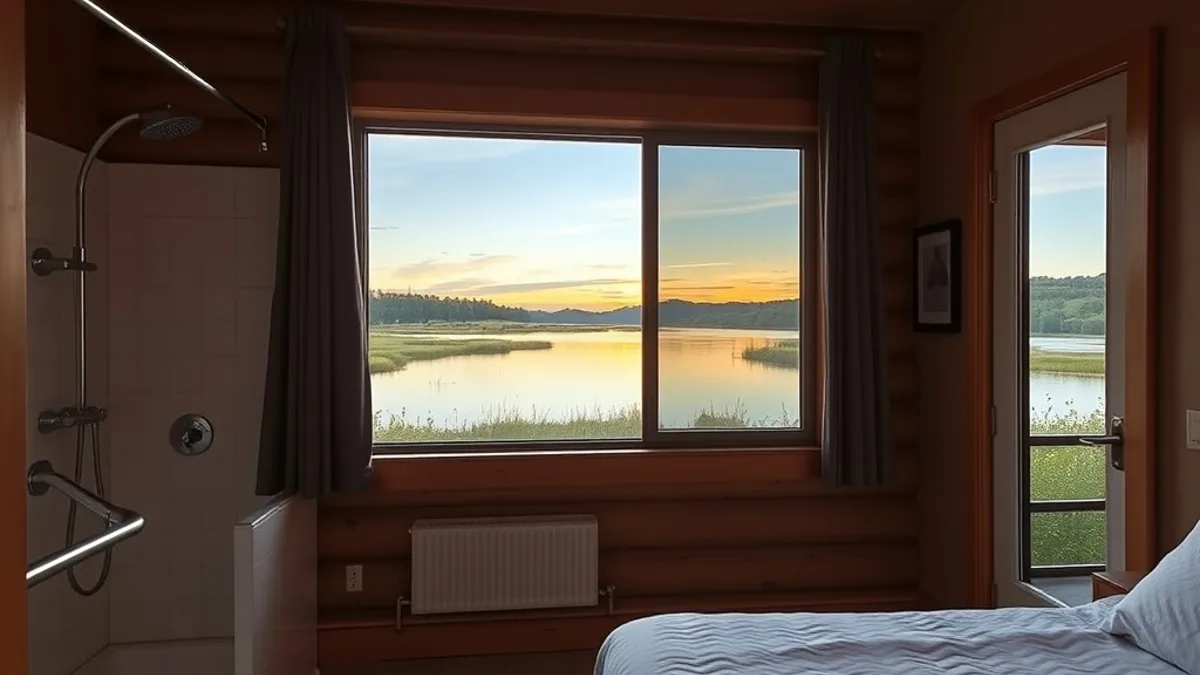
- Ask about the bathroom in detail. Confirm the accessible bathroom has a roll-in shower, grab bars and a bench or fold-down seat. A tub with a grab bar is not a substitute if you cannot step over the edge. Then request photos or a video walkthrough of the exact room you would be staying in, not just the lodge exterior or a model room.
- Confirm the path from accessible parking to the entrance. Ask about the distance, the surface underfoot, and whether the route is lit at night. A gravel lot or an unlit path across a lawn can be as limiting as a staircase, and it is far easier to change rooms or lodges now than after you arrive.
- Check the common areas. Ask whether the restaurant, lounge and activity areas are reachable without stairs, since a ground-floor room is little help if dinner is only reachable down a flight of steps.
- Ask about practical support. Confirm whether staff can assist with luggage and whether they can help with anything else you anticipate needing during your stay, such as storing a wheelchair securely or recommending an accessible taxi service nearby.
Write down the answers, including the name of the person you spoke with, so you have something to refer back to if anything differs on arrival. If a promise about the room matters to you, ask for it in writing by email. A lodge that answers these questions patiently and specifically is usually one that has hosted guests with limited mobility before and knows what works, while hesitation or guesswork is a signal to keep looking.
Timing Your Booking for Accessible Rooms
Here is the single most important timing rule in accessible travel: accessible rooms are usually the fewest in number at any lodge. A property might have forty standard rooms and only one or two that are truly step-free, which means they sell out long before everything else. For high-season dates, reserve 2-3 months ahead rather than hoping something opens up closer to your trip.
Reconfirm before you go
Booking early is only half the job. Call or email the lodge directly 4-6 weeks before arrival to reconfirm your room type and any assistance you requested, such as luggage help or a specific bathroom setup. Front desk staff change, notes get lost, and a written reconfirmation gives you a chance to fix problems while alternatives still exist. Ask them to email a summary of what they have promised so you have it in writing.
It also pays to think about when you travel. Avoid peak holiday weeks when accessible rooms sell out first and prices are highest. A shoulder-season stay often means the same lodge, a calmer atmosphere and far less pressure on the limited accessible inventory. For a broader view of how seasons and rates work, this guide on how to plan and time a lodge booking covers the basics in more depth.
Choosing Lodge Types and Locations That Suit Limited Mobility
The type of lodge you choose matters as much as the room you book. Lakefront and resort-style lodges more often offer flat, paved grounds than remote wilderness or hillside lodges, where gravel paths, boardwalk stairs and sloped terrain are common. That does not mean a wilderness lodge is off the table, but expect to verify every path and entrance carefully before committing. Ask the lodge directly, ideally 4-6 weeks before arrival, whether the route from the parking area to your door is paved and step-free, since even a short stretch of loose gravel can be a real obstacle with a wheelchair or walker.
Multi-generational and family-oriented lodges are another promising category. Because they regularly host grandparents alongside young children, they tend to have elevators, wider corridors and more single-level layouts. If you are traveling as a group, our article on choosing a lodge for a multi-generational group trip goes into this in more detail. These properties are also used to handling special requests, from ground-floor rooms to extra seating in the dining room, so mention your needs early rather than at check-in.
Finally, look beyond the lodge itself. If you plan to leave the property, the surrounding area should work for you too. A beautiful room matters little if every excursion turns into an ordeal. Before booking, check:
- Nearby trails: look for parks and nature areas that publish maps of paved or firm-surface routes suitable for wheelchairs and walkers, and save those maps to your phone before you travel.
- Viewpoints and attractions: many popular overlooks have accessible parking and ramped viewing platforms, but some are reachable only by stairs or steep gravel paths, so confirm the approach for each stop on your route.
- Town centers: if you want restaurants or shops nearby, confirm that sidewalks are intact and main entrances are step-free rather than assuming small towns will be easy to get around. A quick call to a restaurant or visitor center can save you a frustrating detour.
Taking an hour to research the area this way means you arrive knowing exactly which outings will be comfortable and which to skip.
Planning Activities Around Your Mobility Needs
A beautiful accessible room is only part of the experience. What you actually do each day matters just as much, so ask which on-site activities are step-free before you commit to a lodge. Boat cruises, guided drives and flat nature walks are common examples, and many lodges will happily describe them in detail if you ask. A lodge with a great roll-in shower but no activities you can join will quickly feel limiting.
Researching the area around your lodge
If you are staying near a national park, do some homework on the park itself. Many overlooks and visitor centers have paved accessible routes, while others involve stairs, uneven terrain or steep grades. When browsing lodges located near America’s national parks, pair your lodging choice with a short list of park sites you know you can reach comfortably.
Just as important, build rest days into your itinerary. Long transfers between activities are one of the most exhausting parts of any lodge trip, and they are harder still when boarding, transfers and uneven surfaces take extra effort. Plan a lighter day after a big excursion, keep daily driving distances reasonable, and let the lodge’s own grounds, pool or lounge be the activity on quieter days. A slower pace is not a compromise; it is usually what makes the trip enjoyable for everyone.
Wrapping Up Your Accessible Lodge Search
Too many travelers with limited mobility arrive at a lodge only to find stairs where a ramp should be, gravel where pavement was promised, or a bathroom they simply cannot use. The good news is that this disappointment is avoidable. Finding accessible lodges comes down to verifying features directly, not trusting filters alone.
Book early, ask for photos of the exact room, and confirm paths, bathrooms and common areas step by step. With the right questions asked 4-6 weeks ahead, a lodge stay with limited mobility can be comfortable and stress-free. If this guide helped you plan your trip, leave a comment or share it with a fellow traveler.