Scroll through any booking site and you’ll see the words “luxury cabin” and “glamping tent” used almost interchangeably. One listing promises a cozy retreat under the stars; the next offers a canvas suite with a king bed. The problem? They’re very different products, and the difference matters when you’re deciding what to actually pay for.
A luxury cabin is a permanent structure with solid walls, plumbing and climate control. A glamping tent is furnished canvas that brings you closer to the outdoors, with fewer guarantees on comfort. In this guide, we’ll break down exactly what each one is, how they compare on amenities and price, when to book each option, and how to choose the right fit for your trip. By the end, you’ll know precisely what you’re getting before you click “reserve.”
What Is a Luxury Cabin, Exactly?
A luxury cabin is a solid, permanent structure, not a temporary shelter. Think wood or stone walls, real windows and a lockable door. It’s built on a foundation and stays put year-round, which is the single biggest distinction between a cabin and any kind of tent, no matter how fancy the tent is.
Most luxury cabins range from 200 to 600 square feet. That’s compact, but it’s a real living space: you’ll typically find a full bathroom with hot running water, a kitchen or kitchenette, and heating or air conditioning. In practice, that means you can cook a meal, take a shower and sleep at a comfortable temperature regardless of what’s happening outside.
Where you’ll find them
Luxury cabins often sit on resort or glamping grounds rather than on isolated private land. That placement comes with perks: shared amenities like fire pits, hot tubs and sometimes pools or trails are steps from your door. You get the privacy of your own lockable structure with the social and practical benefits of a managed property, such as staff on site and maintained grounds.
When you browse listings, look for those three markers: permanent walls, a private bathroom and built-in climate control. If a “cabin” lacks any of them, read the description carefully, because it may be a cabin-style tent or a shed conversion rather than a true luxury cabin.
What a Glamping Tent Looks and Feels Like
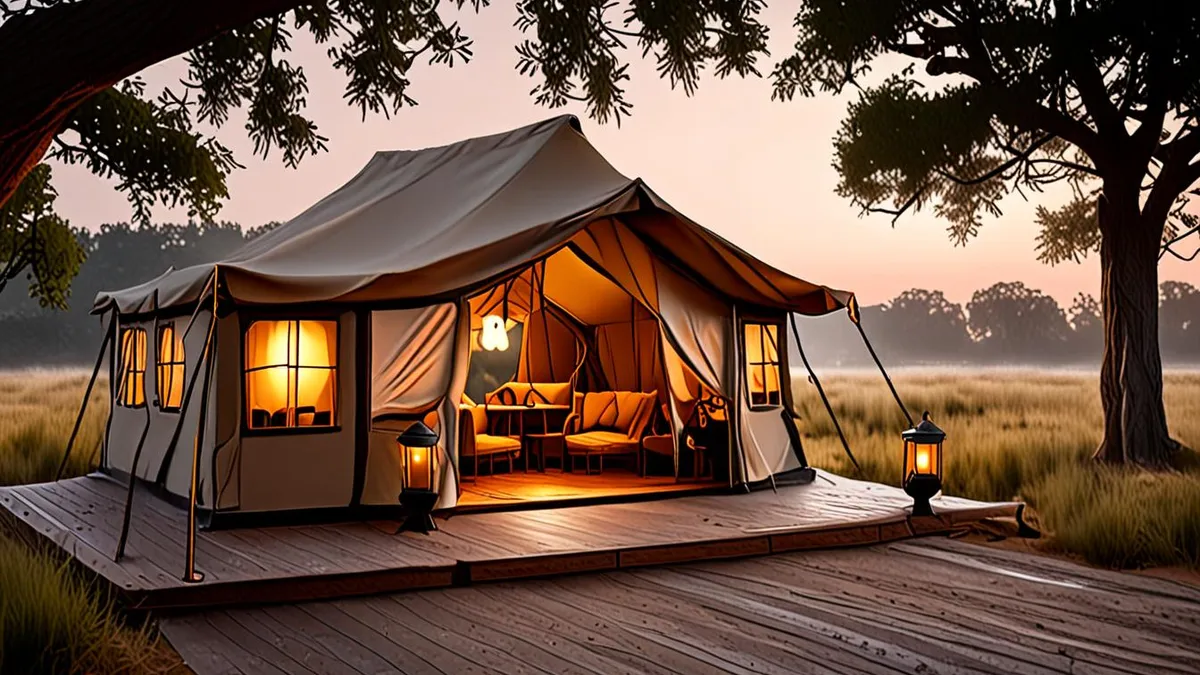
A glamping tent starts with canvas. The most common styles are safari tents with wooden frames, round yurts and geodesic domes, and nearly all of them sit on raised platforms to keep you off the damp ground. Sizes usually fall between 100 and 300 square feet, so you’ll have room for a bed and a seating area, but not much more.
Step inside and it feels closer to a furnished studio than a campsite. You’ll typically get a real bed with proper linens, furniture, lighting and often decorative touches like rugs and string lights. It’s a genuine step up from sleeping bags and coolers.
The trade-offs to know before booking
The biggest compromise is the bathroom. Many glamping tents don’t have private plumbing, so you’ll walk to a shared bathhouse, often a short distance down a path. Check the listing carefully, because a few high-end tents do include an en-suite bathroom, but they’re the exception rather than the rule.
Climate control is the second limit. Tents usually rely on portable heaters or fans rather than built-in heating or AC, which means your comfort depends heavily on the weather during your stay. A cool night can be part of the charm; a cold snap or heat wave can test it. Timing matters a lot with canvas, so it helps to plan around the best months for glamping in the US before you lock in dates.
Luxury Cabin vs Tent: Comfort and Amenities Compared
On paper, both options promise an outdoor getaway, but the day-to-day experience differs sharply. A cabin gives you a private bathroom, a kitchen or kitchenette and insulated walls that hold a steady temperature. A tent gives you something cabins can’t: the feeling of being in nature, with canvas between you and the sounds of the night.
That closeness comes with exposure. Noise, bugs and temperature swings affect tents far more than cabins. Rain drums on canvas, a chilly night filters through thin walls, and insects can find their way in when you unzip the door. A cabin’s solid construction mutes all of that, which is why the two options suit different trip lengths: cabins work well for longer stays and remote work, while tents shine as a one-or-two-night experience.
Quick comparison
- Bathroom access: in a tent, a midnight trip may mean shoes, a flashlight and a walk to a shared bathhouse; in a cabin, it’s down the hall.
- Cooking: a cabin’s kitchenette lets you prep real meals on a week-long stay, while most tent setups limit you to a kettle, a grill or nearby lodge dining.
- Weather resilience: a storm that would rattle a tent all night is barely noticeable from inside an insulated cabin.
- Packing needs: cabin stays require little specialty gear, whereas tent stays reward layers, sleep socks and bug spray.
If you want a broader look at how these options stack up against traditional camping too, this guide to glamping versus camping, including costs and comfort covers the full spectrum.
Price Differences and What You Get for the Money
Price is usually the clearest dividing line between these two options. In the US, luxury cabins typically run $200-$500 per night, while glamping tents typically cost $100-$300 per night. That means a cabin can cost double the price of a tent on the same property, sometimes even more during busy weekends.
So what does that premium actually buy you? Less than you might think comes down to location. Cabins and tents often sit side by side on the same resort grounds, with the same views, trails and fire pits. What you’re really paying for is privacy, plumbing and climate control: your own bathroom instead of a shared bathhouse, a kitchen or kitchenette instead of a cooler, and heating or AC instead of a portable heater that struggles on a cold night.
When the Price Gap Narrows
Here’s a tip that can save you real money: book a cabin in the shoulder season. Outside of peak summer and fall weekends, cabin rates can drop close to tent prices, especially midweek. You get the full bathroom, solid walls and kitchen for not much more than canvas walls and a communal shower. If your travel dates are flexible, check shoulder-season cabin rates before settling for a tent in peak season, and always confirm current pricing directly with the property since rates change often.
When to Book Each Option
Both cabins and glamping tents follow a similar seasonal rhythm, with peak season running roughly May through October. The difference is how far in advance you need to plan. Cabins, with their limited inventory on most properties, disappear first, especially for summer weekends when families, couples and remote workers all compete for the same handful of structures. Tents turn over faster and there are usually more of them per property, which gives you a bit more breathing room.
- Decide on your dates and flexibility first. Before you search, know whether your trip dates are fixed or movable. If you can shift your stay by a few days or travel midweek, you’ll have far more options for both cabins and tents, and midweek rates tend to be friendlier too.
- Book cabins 2-6 months ahead for summer weekends. Popular cabin properties often sell out their prime summer weekends months in advance, so mark your calendar and reserve as soon as your dates are set rather than waiting for a deal that may never come.
- Reserve tents 1-3 months ahead. Glamping tents usually have more inventory per property and slightly more flexible turnover, so a shorter lead time often works. Still, holiday weekends fill quickly, so don’t leave those to the last minute.
- Target shoulder months for better rates and availability. May, September and early October typically offer milder weather, lower prices and open calendars at properties that are packed in July. These months are the sweet spot for spontaneous trips.
- Confirm current details before paying. Availability, minimum stays and rates change from year to year, so check the property’s current booking terms rather than relying on last year’s information.
A little lead time goes a long way, especially for cabins. If your heart is set on a specific property or a summer weekend date, booking early is the safest way to lock it in, while shoulder-month travelers can often afford to be more spontaneous. If you miss the window entirely, ask about cancellations or waitlists, since plans change and prime dates do open up now and then.
How to Choose Between a Luxury Cabin and a Tent
The right choice comes down to your trip style, your travel dates and who’s coming with you. Pick a cabin for cold-weather trips, long stays of several nights or more, and any traveler who needs a private bathroom, whether that’s for comfort, mobility or simply preference. Pick a tent for fair-weather months, shorter one-or-two-night getaways and a more immersive outdoor feel, where you hear the wind and the crickets through canvas walls rather than insulated ones.
Before you book either one, read the listing carefully and match the site to your group. If you’re browsing options, it helps to choose the right glamping site for your first trip with a few basics in mind. Here’s what to check in every listing:
- Bathroom type. Confirm whether the unit has an en-suite bathroom or relies on a shared bathhouse, and how far that bathhouse is from your tent or cabin. A two-minute walk in the rain changes the experience considerably.
- Heating and cooling. Look for whether the unit has built-in heating or AC versus portable heaters or fans. Portable solutions work fine in mild weather but struggle on cold nights, so this matters most for spring and fall trips.
- Square footage. Cabins usually range 200-600 sq ft and tents 100-300 sq ft, so a family of four that fits comfortably in a cabin may feel cramped in a tent. Check the stated size and bed configuration, not just the photos.
- Group fit. Match the site to your group’s needs: families with young kids and older relatives generally do better with solid walls and private bathrooms, while groups of friends on a short summer trip often prefer the campfire-centered, tent-style setup.
Ten minutes of listing-reading saves a lot of disappointment on arrival. When in doubt, message the property directly and ask about bathroom access, heating and exact unit size before you commit.
The Bottom Line on Cabins vs Tents
The next time a listing calls something a “luxury cabin,” you’ll know what to check: solid walls, real windows, a lockable door and a private bathroom. A luxury cabin is a permanent, insulated structure, usually 200-600 sq ft, while a glamping tent is a furnished canvas stay, often with shared bathhouses and portable heating. Both can be wonderful, but they are not the same product.
Cabins cost more, typically $200-$500 per night versus $100-$300 for tents, but that premium adds plumbing, climate control and space you can actually live in. Both options book easiest in the May-October window, and cabins need the longest lead time, so plan accordingly. If this helped you sort out the difference, leave a comment or share the article with a friend who’s planning a trip.