You’ve found the perfect villa online: private pool, ocean view, and “air conditioning” listed in the amenities. Then you arrive, sweaty and hopeful, and discover a single weak wall unit in the living room, a $25-per-day electricity surcharge, and two bedrooms that never had cooling at all. This scenario plays out constantly, because villa air conditioning is one of the least standardized amenities in vacation rentals.
Unlike hotels, where every room comes with working cooling, villa listings vary enormously. Some have central systems, some have split units in only certain rooms, and some offer fans and little else. This guide walks you through what actually matters before you book: why villa cooling is different from hotel cooling, how to identify the system type in a listing, which fees and coverage questions to ask, what backup power means for coastal stays, how to match cooling to your destination and season, and the exact questions to send your host before you pay a deposit.
Why Villa Air Conditioning Matters More Than in a Hotel
When you book a hotel, cooling is a solved problem. Every room, from the cheapest standard to the top-floor suite, comes with functioning air conditioning as part of the room itself. You don’t research it, you don’t ask about it, and you don’t worry whether the second bedroom will be comfortable.
Villas work completely differently. A listing can say “air conditioning” as an amenity without telling you which rooms are covered, what type of units are installed, or whether using them costs extra. One villa might have ducted cooling throughout the entire property, while a similarly priced villa down the street has a single aging split unit in the living room and nothing in the bedrooms. The two listings can look identical online.
Where weak cooling hurts the most
This matters most during the peak heat of May through October in Mexico and the Caribbean, when daytime temperatures can make midday lounging miserable and nighttime sleep nearly impossible without reliable cooling. A villa that feels charming in photos can become exhausting if you spend your vacation sweaty, sleepless, and hiding from the afternoon sun. Since villas are usually chosen for space and comfort, poor cooling undermines the very reason you booked one. That’s why it pays to dig into the details before you commit, starting with the type of system the villa actually has.
Check the Cooling System Type in the Listing
The single most useful thing you can do when evaluating a listing is figure out what kind of cooling system is actually installed. Amenity icons tell you almost nothing; the equipment itself tells you everything. Central or ducted air conditioning is the gold standard, cooling the entire villa through hidden vents, and it’s typical in luxury properties. Budget listings, on the other hand, often offer fans only, so the absence of any unit photos is itself a clue.
Most villas fall somewhere in between, relying on wall-mounted split units. These are the white boxes you see high on a wall in individual rooms, and each one typically cools a single room of about 15-25 m2. That means a three-bedroom villa needs at least three units plus one for the living area to be fully covered. Here’s how to read what you find:
- Count the units against the bedrooms. If photos show two split units in a three-bedroom villa, at least one bedroom has no cooling, no matter what the amenity list claims.
- Check for a unit in the living area. Open-plan living and kitchen spaces are often skipped, which turns afternoon downtime into the hottest part of your day.
- Look at the unit’s age and condition. Yellowed plastic, visible rust or an obviously older model suggests a unit that may struggle or break down mid-stay.
- Consider fans-only listings carefully. If the villa sits above roughly 1,500 m elevation, ceiling fans alone are usually adequate, so a fan-only listing can be perfectly comfortable there.
If the listing photos only show the pool and the view, ask the host directly for photos of the actual cooling units in each room. Any host with functioning equipment will send them without hesitation.
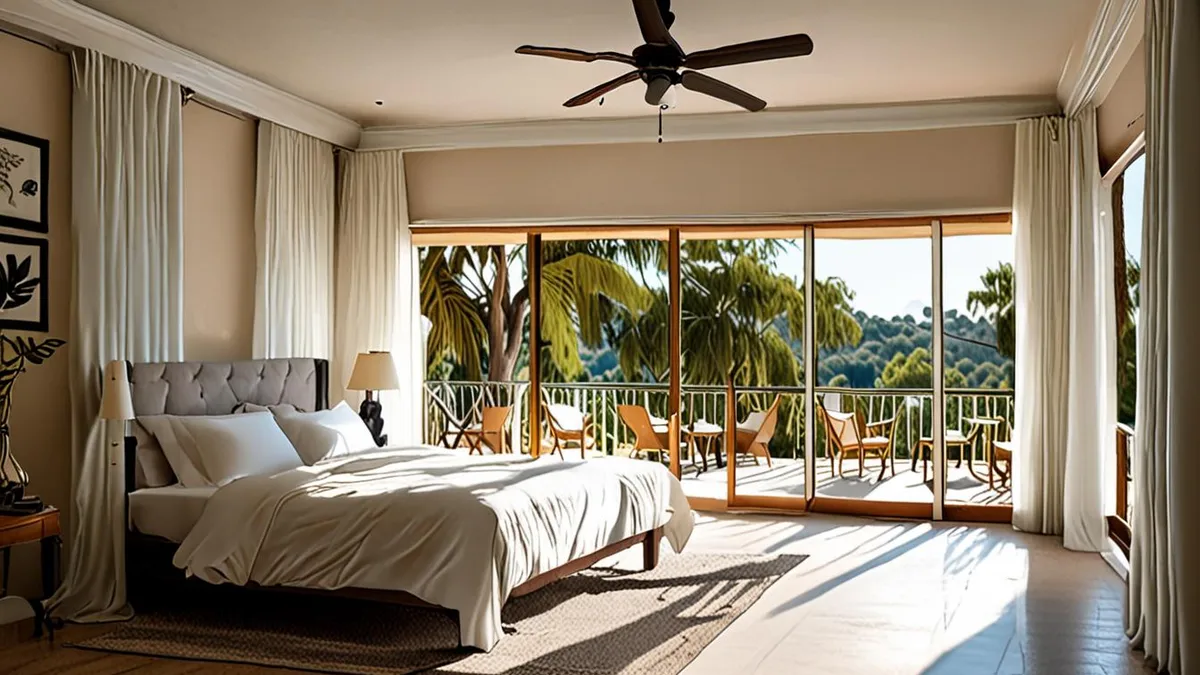
Ask About Coverage, Fees and Electricity
Once you know a villa has cooling equipment, the next step is confirming exactly where it is, what it costs to run, and when you’re allowed to use it. These details rarely appear in the listing description, so it’s on you to ask. A short message before booking can save you from surprise fees and sweaty nights, especially during the peak cooling season in Mexico and the Caribbean, which runs roughly May to October. A host who answers clearly before you pay is far more likely to answer clearly if something goes wrong mid-stay. Here’s a simple process to follow:
- Confirm room-by-room coverage. Ask specifically whether every bedroom and the main living area have air conditioning, not just one room. Get the host to name which rooms have units and which type, so you can picture where you’ll actually be comfortable.
- Ask about electricity surcharges. Some hosts charge extra fees of $10-30 per day for AC use, especially in destinations where power is expensive. Ask whether the quoted nightly rate includes unlimited cooling or whether a surcharge applies, and how it will be calculated and settled.
- Clarify usage limits. Some villas restrict units to certain hours or shut them off overnight. If you need cool air to sleep, confirm in advance that the units can run all night without interruption or extra cost.
- Get everything in writing. Ask the host to restate the fee terms and any usage limits in the booking platform’s messaging before you pay the deposit, so you have a record if a dispute arises later.
Most hosts answer these questions honestly and quickly, and a clear written summary protects both sides. It also makes check-in smoother, since you can refer back to the agreed terms if anything feels different from what was promised. If a host dodges the coverage question, gives vague answers about fees, or hesitates to confirm the terms in writing, treat that as useful information about what your stay would actually be like. There are plenty of villas with straightforward owners, so you can afford to book the one that answers plainly.
Backup Power and Coastal Reliability
In many coastal and jungle destinations, power outages of 1-4 hours are common, and they rarely announce themselves in advance. A villa that cools beautifully on grid electricity can turn uncomfortable fast when the power drops during an afternoon storm or an evening heat wave. This is one of the most overlooked details in villa bookings, especially in tropical regions where cooling is not a luxury but a necessity.
Before you pay a deposit, ask the host directly whether the villa has a generator or a battery backup system, and whether that backup actually runs the air conditioning. Some properties can only power lights, fans and Wi-Fi during an outage, which helps but does little for a bedroom that has been cooling all day. A generator that supports the AC units is a meaningful difference in comfort and often a sign of a well-run property.
What ceiling fans can and cannot do
Ceiling fans are a useful second line of defense. During a short outage, a fan keeps air moving and makes a warm room bearable, especially once the sun goes down. They will not replace air conditioning in a hot lowland climate, but a villa with both AC and good fans gives you flexibility when the grid fails. If a listing shows no backup power and no fans, treat that as a warning sign for a hot coastal stay. If you are considering a jungle setting, it helps to read up on what to expect from villas in Costa Rica’s jungle regions before you book.
Match Cooling to Destination and Season
The right amount of cooling depends heavily on where you are going and when. A villa that feels perfect in the highlands can be miserable in a lowland beach town during the same month, so match your expectations to the destination rather than assuming every listing needs the same setup. Let climate shape your shortlist before you start comparing amenities.
In desert regions and lowland beach destinations, full air conditioning is essential during the hottest months, which run roughly May to October in places like Mexico and the Caribbean. This is where a stay in a desert villa, such as the properties covered in Arizona desert villas for scenic escapes, is a very different proposition from a mountain town rental: the desert heat demands reliable, whole-villa cooling, and a listing with fans only will not cut it in summer.
How to match cooling to your trip
- Highland destinations: towns at higher elevations often have cool evenings, and ceiling fans alone are typically adequate above roughly 1,500 m elevation, which can save you from paying for AC you never use.
- Jungle villas: these need strong AC plus screened and sealed rooms, since humidity makes even warm temperatures feel heavier and insects are part of the environment.
- Shoulder-season trips: if you travel just before or after peak heat, you may be comfortable with split units in bedrooms only, leaving the living area fan-cooled.
Timing matters as much as equipment. For high-season dates in hot regions, book 3-6 months ahead so you have a real choice of villas with proper cooling, rather than settling for whatever is left. A little planning here pays off every afternoon you spend indoors escaping the heat.
Questions to Send the Host Before Booking
Hosts and property managers respond well to specific questions, and the answers tell you far more than any amenity icon on a booking page. Send a short list of questions before you pay a deposit, and treat vague or evasive replies as useful information in themselves. A host who knows their villa will answer quickly and in detail, while hesitation often signals that cooling is patchy or expensive. Keep your message short and numbered so nothing gets skipped. Four questions cover the essentials, and each one targets a different failure point: coverage, cost, reliability and maintenance.
Ask these in a single message rather than dragging the conversation out over a week. Most hosts reply within a day or two, and you can compare answers across several villas before committing. Written replies also give you something to point back to if the reality does not match the listing.
The four questions that matter
- Which rooms have AC, and what type of units are installed? Ask whether the living area is covered too, and whether the units are central or wall-mounted splits, since that tells you how many rooms are realistically cooled.
- Are there usage fees, time limits or meter readings? Some hosts charge electricity surcharges, so ask exactly how the cost is calculated and whether you will see the meter yourself.
- Is there backup power for the cooling system? Ask whether a generator or battery backup runs the AC or only lights and fans, and how long that backup typically lasts.
- When were the units last serviced? A split unit that has not been cleaned in years cools poorly and may leak or blow dusty air, so a recent service date is a good sign of an attentive host.
If the answers come back in writing and match the listing, you can book with confidence. If they do not, keep looking; there are plenty of villas where cooling is handled properly, and a host who answers these four questions clearly is usually one worth trusting with your deposit.
Wrapping Up Your Cooling Checklist
That single word “air conditioning” in a villa listing can hide a lot: a single weak wall unit, a daily surcharge you never budgeted for, or bedrooms that stay hot while only the living area cools down. A few direct questions before you pay the deposit prevent all three.
Confirm the system type, which rooms are covered and any daily fees in writing. If you’re heading to a hot coastal area, ask about backup power for outages. And match the cooling level to your destination and travel season, since a highland villa needs far less than a lowland beach one. If this checklist saved you from a sweaty surprise, share it or leave a comment below.