You love the idea of a luxury camping escape, but there’s a catch: you only have a weekend, and the thought of spending half of it behind the wheel makes you want to stay home. The good news is that glamping near cities has exploded in recent years, and you can often find a safari tent, dome or cabin within an easy drive of your front door.
This guide walks you through the whole process. You’ll learn why a short drive is actually the easiest kind of escape, how to search within a 50-100 mile radius of home, which stay type fits your season, when to book, and what to check before you pay. We’ll also cover smart packing for a short trip and wrap up with a quick route to your first city-side getaway. By the end, you should be able to plan a proper outdoor weekend without using a single vacation day.
Why Glamping Near Cities Is the Easiest Weekend Escape
The biggest advantage of glamping close to home is what you don’t have to do. No flights to book, no airport lines, no rental car paperwork. A 1-2 hour drive means you can throw a bag in the trunk after work on Friday and be grilling dinner under string lights before the sun goes down. And since you’re not flying, you don’t need to burn precious vacation days on travel itself.
Two full days outdoors, zero rush
Near-city sites change the math of a weekend. Arrive Friday evening, settle in, and you still wake up Saturday with two complete days ahead of you for hiking, paddling or simply reading in a hammock. On Sunday, you can often check out late and still be home in time for a relaxed dinner. Compare that with a trip that requires a flight, where half of Saturday can disappear into logistics.
Your budget works harder, too. With no airfare, no baggage fees and minimal fuel costs, more of your $120-$350 per night budget goes toward the stay itself. That difference can be the gap between a basic tent and a premium safari tent with a private deck, or between a simple yurt and a heated dome with a wood stove. If you’re flexible on dates, weekday nights can cost 20-30% less than weekend ones, stretching that budget even further.
How to Search for Glamping Sites Within 50-100 Miles of Home
The easiest way to start is with dedicated glamping booking platforms. Most of them have a map view where you can set your home city as the center and filter results by a 50-100 mile radius. From a major city, that radius usually yields multiple options, so you can compare stay types, prices and settings side by side instead of settling for the first listing you find.
Search terms matter more than most people realize. A generic query can bury great sites pages deep, while a specific one surfaces them immediately. Try phrases like these:
- “Glamping near [city]” — the fastest starting point, since it pulls in sites hosted by private landowners just outside city limits that never appear under park searches.
- “Safari tent [region]” — useful when you know you want a specific stay type, such as a safari tent in wine country or the foothills.
- “Dome [state park name]” — many state parks list their own yurts and cabins separately from booking platforms, so searching by park name can uncover inventory others miss.
Beyond the platforms, check state and national park concessionaires directly, as well as wineries and farms. These hosts often run sites just outside city limits and book through their own pages, sometimes with availability that never shows up in aggregated listings. Timing also matters when you search: availability and prices shift a lot between peak season and quieter months, so it helps to have a sense of how the calendar works — a month-by-month guide to glamping seasons in the US is a good place to start.
One last step that saves real disappointment: cross-reference every shortlisted site with a maps app. A site might be only 60 miles away as the crow flies, but winding rural roads can turn that into a 2.5 hour drive. Confirm the actual drive time, not just the distance, before you book.
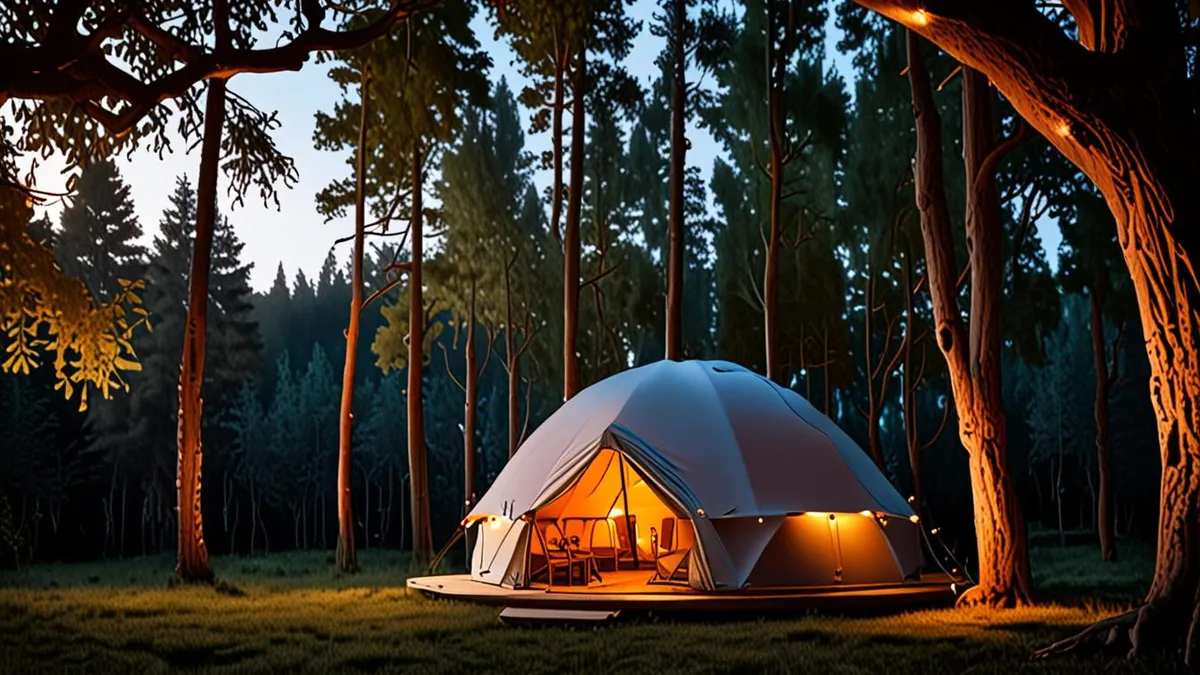
Choosing the Right Stay Type for a Short Trip
For a short trip, the stay type you pick matters even more than usual, because you won’t have days to make up for a bad night’s sleep or a cold tent. The season should drive your choice first, comfort second.
Warm-season picks: safari tents and yurts
Safari tents and yurts are the classics for a reason. They suit warm-season trips from May through October, when nights are mild and you’ll spend most of your waking hours outside anyway. They also usually sit at the lower end of the typical price range for near-city sites, which leaves extra room in your budget for a nice dinner in a nearby town or an extra night.
Cold-weather picks: domes and cabins
Once temperatures drop, look at domes and cabins instead. Both typically offer heating — often a wood stove or electric heater — which makes them the better pick for shoulder-season or winter escapes. There’s something special about watching frost form on a transparent dome panel while you stay warm inside, and a cabin gives you a proper base to return to after a chilly hike.
Treehouses and Airstreams are the romantics’ choice: compact, characterful and perfect for a couple’s weekend. The catch is popularity. Near popular cities, these stay types often book out furthest in advance, sometimes many months ahead for summer weekends. If your heart is set on one, search early and be ready to grab a cancellation. If you’re unsure how to weigh all these factors, this guide to choosing the right glamping site for your first trip walks through the decision step by step.
Timing Your Trip: Seasons and Booking Windows
One of the biggest perks of glamping close to home is that peak season works in your favor. Between May and October, most near-city sites run their full calendar, so you’ll find the widest choice of safari tents, yurts, domes and cabins during these months. The trade-off is price and demand: weekend nights in summer sit at the top end of what sites charge, and the most popular spots fill up fast.
For summer weekends, plan on booking 2-3 months ahead. That lead time gives you real choice in stay type and location instead of settling for whatever is left. If your dates are flexible, even shifting a trip by one weekend can open up more options and better rates, especially around holiday weekends when demand spikes.
Shoulder season is easier on short notice
Outside the May-October window, availability loosens up considerably. For shoulder-season dates, booking 2-4 weeks ahead is often enough, and you may find premium stay types like heated domes available much closer to your travel date. Just remember that cooler months call for a stay type with proper heating, so double-check the amenities before you commit.
The weekday advantage
If your schedule allows it, weekday nights are the smartest way to cut costs. Many sites charge 20-30% less than weekend rates, and last-minute weekday openings are far more common. A Monday or Tuesday night after work can feel like a mini-vacation without touching a single weekend day, and you’ll often share the site with fewer neighbors too.
What to Check Before You Book a Site Close to Home
Booking a site an hour from home still deserves the same scrutiny as a far-flung trip. Start with the basics: what exactly is included? Some safari tents come with a private bathroom and a small kitchen setup, while others rely on shared bathhouses and communal cooking areas. Neither is wrong, but you should know before you arrive, especially if you’re paying for a premium setup.
Then think about the environment around the site. Properties close to cities sit near the infrastructure that comes with them, and a beautiful meadow can still mean a distant highway hum or a train line running through the valley. Recent reviews are the best source here, since photos rarely capture sound.
- Facilities setup: Ask whether the bathroom and kitchen are private to your unit or shared with other guests, and how far a shared bathhouse is from your tent or yurt.
- Noise sources: In reviews, search for words like “road,” “train” or “highway” and check whether recent guests mention them as a real disturbance or a minor detail.
- Connectivity: If you plan a workation, ask the host directly about cell coverage and Wi-Fi reliability, and confirm whether the Wi-Fi reaches your actual unit rather than just the common area.
- Check-in timing: If you’re driving straight from work on a Friday evening, ask whether late or self-service check-in is possible, since some sites close check-in early or require an in-person welcome.
A quick message to the host before booking solves most of these questions in one go. Hosts of well-run sites answer these routinely, and their response speed is itself a useful signal of how the stay will go.
Packing Light for a One-Hour Drive
One of the quiet perks of driving to a glamping site instead of flying is that your car becomes an extension of your packing list. There’s no weight limit and no baggage fee, so you can toss in a cooler with proper food, a couple of board games, extra blankets and your own pillows from bed. Real pillows alone can make a canvas tent feel far more luxurious than the compact travel versions ever will.
Dress for the evening drop in temperature
Near-city meadows and forests cool down quickly once the sun sets, even on days that felt warm when you left home. Pack layers rather than one heavy jacket: a light fleece for dinner outside, a warmer layer for sitting by the fire, and something windproof for early mornings. Closed-toe shoes with decent grip are worth bringing too, since grass and forest paths can hold dew well into the morning.
Food is another place where driving beats flying. You can bring a full cooler with fresh ingredients, a cast-iron pan and real coffee supplies instead of settling for dehydrated meals. Check with your host first about kitchen access or fire pits, then plan simple one-pan dinners that feel like a treat outdoors.
If you want a complete rundown of what to bring, this glamping packing checklist covers everything from bedding to kitchen gear.
Keep one bag ready for adventure
Many near-city sites sit right at the edge of hiking trails or bike routes, so you can head out straight from your tent without driving anywhere. Keep a small daypack loaded with water, snacks, sunscreen and a light rain layer, and it’s ready to grab whenever the mood strikes. That kind of spontaneity is exactly what a short, close-to-home trip is made for.
Your Quick Route to a City-Side Glamping Getaway
The whole idea is simple: you don’t need a flight or a long road trip to sleep somewhere beautiful. Pick a spot close enough that you can cap the drive at 1-2 hours, and you can be grilling dinner under string lights just a couple of hours after leaving work on Friday. That’s a real weekend, not a travel day with a view.
Match the stay type to the season, book 2-3 months out for summer weekends, and expect to pay $120-$350 per night depending on what you choose. If your calendar allows it, shifting to a weekday night can trim 20-30% off the price. Have you tried glamping close to home, or are you planning your first trip? Share your experience or questions in the comments, and pass this along to a friend who needs a weekend plan.