Booking a lodge stay comes down to one uncomfortable trade-off: do you pay noticeably more to have the whole place to yourself, or do you share the dining table, the fire pit and the deck with strangers to keep the price down? That’s the heart of the private lodge vs shared lodge decision, and neither answer is right for everyone.
This guide breaks the choice into practical pieces. We’ll start with the core differences between the two styles, then compare what you actually pay, since the gap is bigger than most travelers expect. From there, we’ll look at when a private lodge makes sense, when a shared lodge is the smarter pick, and how your group size changes everything. We’ll also cover booking timing and seasonal pricing, because a private lodge booked at the wrong moment can cost far more than it needs to. By the end, you’ll know which type of lodge fits your trip, your budget and the way you like to travel.
Private Lodge vs Shared Lodge: The Core Differences
The most basic difference comes down to who else is there. A private lodge means you have exclusive use of the entire property, typically hosting just 2-12 guests, which usually means your own group and nobody else. A shared lodge, by contrast, rents out individual rooms to travelers who don’t know each other, with the property commonly accommodating 20-60 guests at a time. That single difference shapes nearly everything else about your stay.
Staff, meals and daily rhythm
Private lodges usually come with dedicated staff who work around your schedule. You can eat breakfast at ten, skip dinner entirely or ask for a late-night snack without worrying about anyone else’s plans. Shared lodges run on fixed schedules instead: communal dining happens at set hours, most often a dinner window of 7-8 pm, and activities follow a set daily rhythm that all guests join together.
Who gets the pool and the deck?
Privacy doesn’t stop at your room. At a private lodge, the pool, the decks and the walking trails are yours alone for the whole stay. At a shared lodge, these spaces rotate among guests, so that quiet morning coffee spot or sunset lounge chair depends on who got there first. If uninterrupted downtime is the reason you’re booking a lodge at all, this is the difference that matters most.
Cost Comparison: What You Actually Pay
Let’s talk numbers, because this is where the decision gets real. Shared lodges commonly run $80-200 per person per night, which makes them accessible to most travel budgets. Private lodges range from $250-600+ per night for the whole property, a figure that sounds steep until you remember it covers everyone in your group, not one person.
For a couple, the math usually favors the shared lodge. Per person, a private lodge for two can cost 30-60% more than a shared room in the same region. That’s a significant premium for exclusivity, and it’s worth deciding honestly whether privacy is worth that much to you. Before you compare quotes, it helps to understand how lodge pricing works overall, which we cover in our guide to booking a lodge stay, including costs and seasonal tips.
There’s also the question of what’s actually included. Shared lodges bundle meals and activities into the rate more often, so the sticker price comes closer to your final bill. Private lodges may quote a lower base rate, then add charges separately. Watch for these common extras:
- Cook or chef services: some private lodges include a self-catering kitchen and charge extra if you want staff to prepare meals for you.
- Guided excursions: hikes, boat trips or wildlife outings that would be part of a shared lodge’s package are often booked and paid for individually at private properties.
- Housekeeping and firewood: smaller private lodges sometimes bill daily cleaning or heating supplies as add-ons rather than rolling them into the nightly rate.
One exception flips the math entirely: large groups of 6-10 people can split a private lodge buyout and sometimes match or even beat shared per-person rates. If you’re traveling with enough people, exclusivity can end up being the cheaper option.
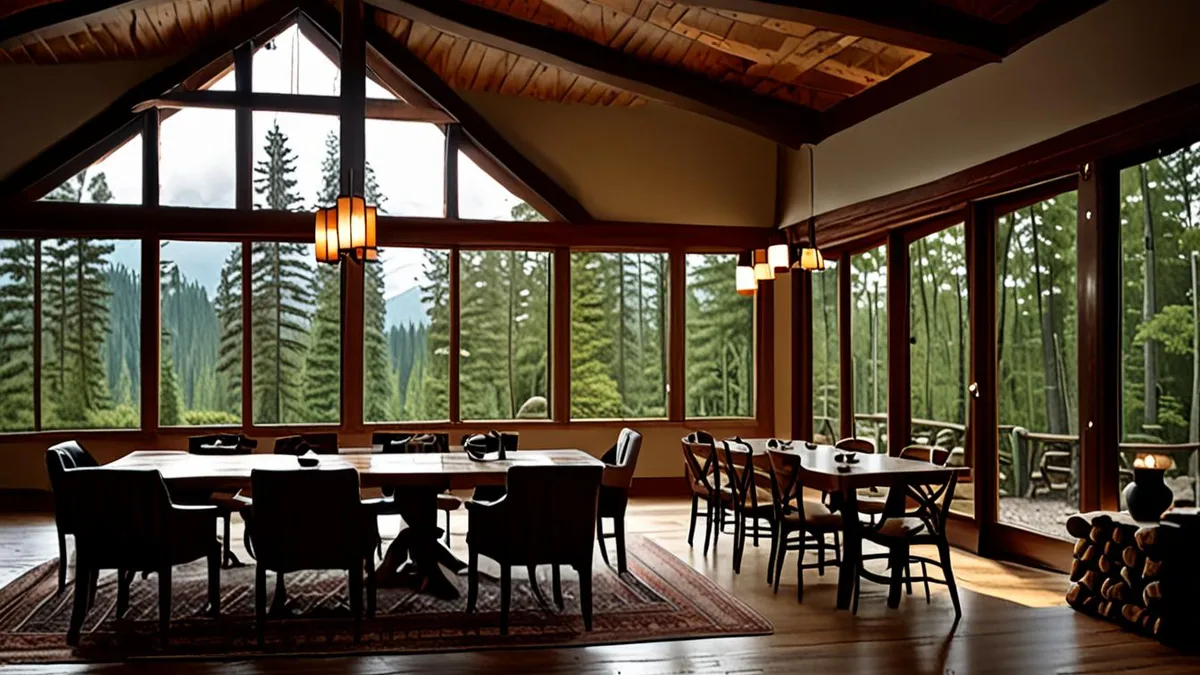
When a Private Lodge Makes Sense
Some trips simply work better when nobody else is around. If the whole point of your getaway is time with the people you came with, a private lodge removes the small frictions of shared travel: no fighting for the breakfast table, no small talk when you’d rather read, no other guests’ kids waking up before yours. For milestone occasions, the exclusivity itself becomes part of the memory.
Flexibility is the other big draw. Private lodges let you set your own rhythm, which matters more than most travelers realize until they’ve eaten at 7-8 pm every night of a trip because that’s when the kitchen serves. At a private lodge, brunch at eleven and dinner at nine are nobody’s problem but your own.
A private lodge is usually the right call if your trip fits one of these situations:
- Anniversaries and milestone birthdays: having the whole property to yourselves turns a celebration into a truly private event rather than one shared with a dining room full of strangers.
- Lakefront and wilderness honeymoon-style stays: when seclusion is the entire appeal, a shared lodge with 20-60 other guests undercuts the reason you chose such a remote spot.
- Small family reunions or retreats: a buyout gives your group a common space to gather, and kids and grandparents can follow their own schedules instead of a fixed lodge routine.
- Work-focused getaways: writers, remote workers and small creative groups often need quiet blocks of time that a fixed shared schedule makes difficult.
The trade-off, of course, is price and planning. You’ll typically pay more per person than you would for a shared room, and you’ll need to book further ahead. If those two things don’t bother you, the privacy is hard to beat.
When a Shared Lodge Is the Smarter Choice
Shared lodges are the budget-friendly workhorse of lodge travel. If you want the fireplace, the trail access and the remote setting without the premium price tag, a shared room keeps costs down because you pay for your own bed rather than an entire property. For solo travelers especially, this is almost always the smarter financial choice, since there is no buyout option to shoulder alone.
There is also a social argument that many travelers underestimate. When you stay somewhere shared, the evening routine comes built in: you don’t have to plan your nightlife or hunt for conversation. Communal dinners and shared fire pits turn strangers into dinner companions within a night or two, and many long-term travel friendships start exactly this way.
First-time visitors get another practical benefit. Lodge staff typically organize group activities and run fixed itineraries, which means you don’t need to research guides, transport or trail conditions on your own. Everything is arranged, scheduled and announced at dinner, so you can simply show up.
Hikers and outdoor travelers should pay close attention here. Guided group outings are frequently included in a shared lodge’s rate, or offered at low cost to guests. Arranging the same hikes privately, with a dedicated guide just for you, can add significantly to a trip’s cost.
- Built-in travel companions: if your partner or friend can’t join the trip, communal dining gives you people to swap trail stories with every evening.
- Safety in numbers: group hikes and shared transport arranged by staff reduce the logistics and risks of heading into unfamiliar terrain alone.
- Local knowledge on tap: staff who host guests daily usually know which viewpoints are best at which hour, and they share this freely at communal meals.
- Lower commitment: if a shared lodge disappoints, you’ve lost one booking, not an entire property rental.
How Group Size Changes the Decision
Group size is often the factor that quietly decides this whole debate. A group of 6-10 people sits in a sweet spot: small enough to share a private lodge comfortably, large enough to make a buyout financially sensible. Many small private lodges offer group discounts for exactly this scenario, which means your group can enjoy total exclusivity, sole use of the pool and decks, and meals on your own schedule, often at or near shared-lodge per-person prices.
Run the math before assuming a private lodge is out of reach. Divide the nightly rate for the whole property by your headcount, then compare it against the per-person rate you’d likely pay at a shared lodge in the same region. For larger groups, the gap can shrink dramatically or even disappear. Get a written quote that itemizes everything: cleaning fees, a cook, guided excursions and gratuities. Some private lodges charge these separately, and they add up quickly if you only discover them after booking.
Multi-generational trips
Families traveling with both young kids and grandparents face a scheduling problem that shared lodges handle poorly. Communal dinners at fixed hours rarely suit toddlers who eat early and elders who prefer quiet evenings. A private lodge solves this with flexible meal times and a kitchen that works around your family, not the other way around. For a deeper look at this scenario, see our guide on how to pick a lodge for a multi-generational group trip.
When the group gets bigger
Once your party grows beyond roughly 12 people, you’ve outgrown most private lodges, which typically accommodate 2-12 guests. At that point a shared lodge, or booking two or more private properties side by side, usually fits better. Ask the lodge owner directly: some neighboring properties regularly host split groups and can coordinate meals and activities across both houses.
Solo travelers should be realistic here too. With no one to split a buyout with, a shared lodge is almost always the economical route, and it comes with a bonus: built-in company. Communal dinners and shared fire pits make it easy to meet fellow travelers, something a private buyout can’t offer by definition.
Booking Timing and Seasonal Pricing
Timing matters more for private lodges than for almost any other accommodation type. Because you’re booking an entire property, availability is limited by definition, and peak season windows fill early. For the busiest periods, June-August in North America and December-February in Patagonia, plan to book a private lodge 3-6 months ahead. Wait longer than that and you’ll likely be choosing from whatever leftovers remain.
Shoulder season is where patient travelers win. Rates can run 20-40% lower than peak season, and because demand drops, private lodges are far easier to secure on shorter notice. You trade some weather reliability for lower prices, quieter trails and more flexible booking. If you’re unsure which window suits your destination, it helps to read up on the best time of year to visit lodges by season and region before locking in dates.
Shared lodges are more forgiving. Individual rooms tend to stay available closer to your arrival date, so a spontaneous trip is more realistic. Don’t get complacent, though: peak weekends, holidays and school-break periods still sell out early even at shared properties.
One question travelers forget to ask: minimum stays. Private lodges often require 2-3 nights minimum, especially in high season, which can reshape a short itinerary.
- Ask about cancellation terms early: a whole-property booking is a bigger financial commitment than one room, so understand refund deadlines before you pay a deposit.
- Midweek stays stretch further: if your dates allow a Tuesday-Thursday visit, private lodge availability improves and rates often soften compared to weekends.
- Confirm what “peak” means locally: school holidays, festivals and wildlife-viewing windows can create surprise demand spikes outside the usual high season.
- Book shared lodges around meal seating: popular communal dinner seatings at 7-8 pm fill first, so mention any dietary needs when you reserve.
The Bottom Line on Choosing Your Lodge
So which lodge is right for you? Private lodges suit couples and small groups who value exclusivity and can pay 30-60% more for the whole property. Shared lodges win for solo travelers, budgets of $80-200 per night, and anyone who enjoys communal dining with new people.
Three factors settle the choice: your group size, the season you’re traveling in, and your booking lead time of 3-6 months for peak dates. Weigh those against how much privacy matters to you, and the decision usually makes itself. If this helped you sort out your own lodge dilemma, leave a comment or share this article with a travel partner.