You booked a luxury camping getaway months ago, and now the forecast has turned gray, wet and unmistakably rainy. Before you start drafting a cancellation email, take a breath: glamping in the rain can be genuinely enjoyable, as long as you plan for it instead of hoping the clouds will politely move along.
This guide walks you through the whole process, step by step. We’ll start with why a wet weekend can actually be a highlight rather than a washout, then cover how to choose a rain-proof structure and site, when to book for flexibility, what to pack, how to keep your tent and gear dry, and which rainy-day activities and meals work best. We’ll finish with a simple checklist for wrapping up your rain-ready plan. Follow along, and that gray forecast might just become the coziest trip you take this year.
Why Glamping in the Rain Can Still Be a Great Trip
There’s a reason so many glamping sites seem designed with wet days in mind. A covered deck with a couple of chairs, a wood stove crackling in the corner and panoramic windows looking out over a misty valley turn rainfall into entertainment rather than an obstacle. Instead of crouching under a tarp with a damp sleeping bag, you get to watch the storm from somewhere warm and dry.
Light rain also tends to thin out the crowds. Popular sites that book up solid during dry summer weekends often have last-minute openings when the forecast looks gray, so a flexible traveler can sometimes snap up a prime spot on short notice. You’ll share the trails with fewer people, and the whole site feels quieter and more private.
The key is in the planning
None of this happens by accident, though. The difference between a cozy rain retreat and a soggy disappointment comes down to two things: choosing the right structure and planning ahead. A hard-sided cabin with good drainage behaves very differently from a canvas tent pitched on low ground during a downpour. The rest of this guide covers both, step by step, from picking a rain-proof site to packing the gear that keeps everyone dry and comfortable.
Choosing a Rain-Proof Glamping Structure and Site
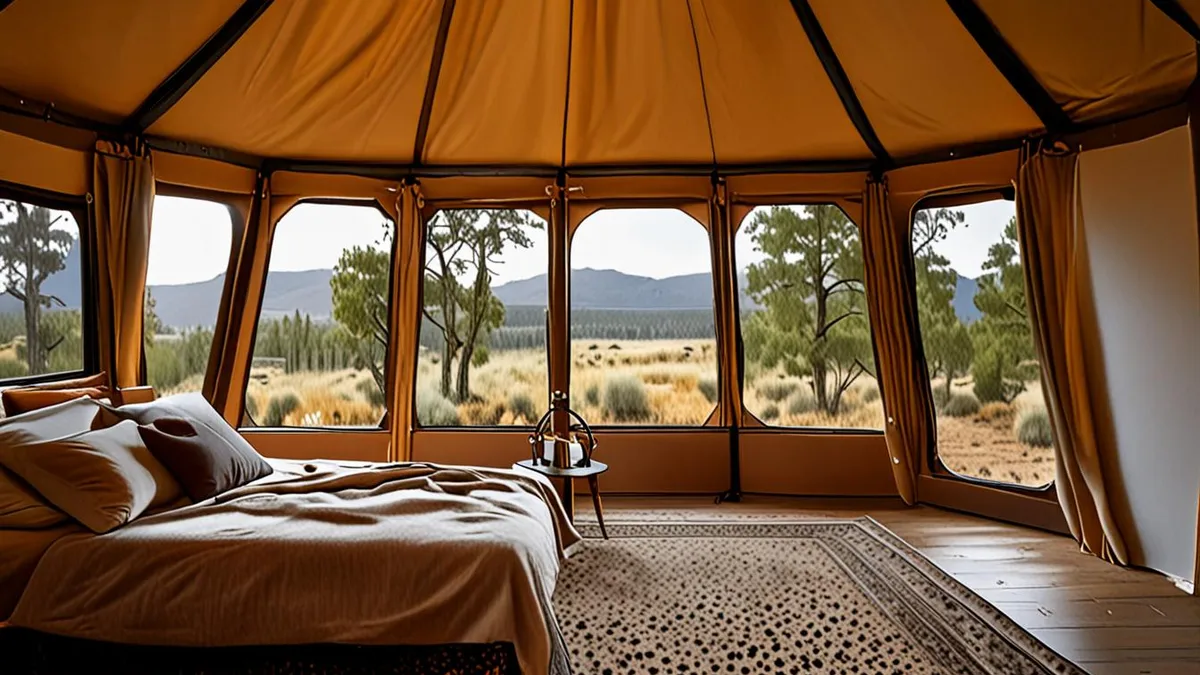
The single biggest upgrade you can make for wet weather is choosing a hard-sided stay. Cabins, A-frames, yurts and geodesic domes all handle rain far better than traditional canvas tents. Their walls don’t soak through, their floors sit above the ground, and their solid roofs mean you never wake up to that telltale drip. If rain is anywhere in your forecast, start your search by filtering for these structure types.
Look at the entry areas, not just the accommodation
Photos of a beautiful dome mean little if you have to wade through mud to reach it. Check the listing for a covered porch, a raised platform and elevated walkways, all of which keep your entry area out of the muck. These details matter more in wet weather than almost anything else on the property.
Don’t be shy about messaging the host, either. Ask directly about drainage around the structure, whether the site sits on elevated ground, and if decks are sited under tree cover or on open ground. A host who answers these questions clearly is usually a host who has dealt with rain before.
Finally, read reviews with an eye for season. Summer guests can tell you the site is lovely in July; what you need are comments from people who stayed through a storm. If you’re new to this kind of trip, this guide to choosing the right glamping site for your first trip walks through the basics of comparing locations and hosts in more detail.
When to Go and How to Book for Wet-Weather Flexibility
Timing matters when rain is part of the plan. In many US regions, the heaviest rainfall typically falls between March and May, so if you’re aiming for a spring trip, book a rain-ready site 2 to 3 months ahead. Hard-sided structures like cabins and domes are popular precisely because they handle wet weather well, and the best ones go early. For a broader view of what each month brings across the country, check out a month-by-month guide to glamping seasons across the US.
Book for flexibility, not just price
A cheap non-refundable rate is a poor bargain if a week of storms rolls in. Most glamping sites offer full refunds or rescheduling only when you book with flexible rates and make changes 7 or more days before arrival, so choose that option whenever the forecast is uncertain. The small extra cost buys you an exit route.
Before you lock anything in, watch the 10-day forecast as your arrival approaches, and avoid finalizing non-refundable plans until the picture looks reasonably stable. Whatever the booking site tells you, confirm the cancellation and rescheduling policy with the host in writing, ideally in your booking messages. A screenshot of that confirmation is worth far more than a verbal promise if the weather turns and you need to move your dates.
What to Pack for Rainy Glamping Days
Rainy glamping days are won or lost in your duffel bag, and the first thing to get right is your outerwear. A waterproof jacket and a pair of rain boots usually run $50 to $150 per item at mid-range retailers, and that mid-range is where you want to be. Cheaper budget options often soak through within a few hours of steady drizzle, which leaves you cold, damp and stuck inside with nothing dry to change into.
Beyond clothing, think about how you will manage wet gear once you are on site. A soggy pile of jackets and boots in the corner of a yurt makes everything smell musty and keeps the floor dangerously slick. A little kit dedicated to wet-weather management solves most of that before it starts. If you want a broader rundown of what else belongs in your bag, this complete glamping packing checklist covers the essentials season by season.
Here are the rain-specific items that earn their space in the car:
- Heavy-duty tarp: pack one larger than you think you need, so it can cover a cooking area, a gear pile or a seating nook without everything crowding under the edges.
- Spare tent-safe clothesline: bring a second line so damp socks and gloves can dry in one spot while the first line holds raincoats, and check that the line’s material won’t damage delicate canvas or mesh if you tie it inside a structure.
- Quick-dry towels: pack several small ones rather than one large bath towel, since small towels dry faster overnight and can be rotated for wiping boots, seats and windowsills.
- Waterproof dry bags: use them to separate one full set of dry clothes per person, so nobody has to dig through damp layers to find something clean to sleep in.
- Slip-resistant footwear: wet wooden walkways and muddy paths get treacherous, so pack a pair with real tread rather than smooth-soled sneakers.
- Headlamp: rainy days darken early and wet walkways get slippery fast, so having hands-free light for evening trips to the bathroom or fire pit matters more than it does in summer.
Keeping Your Tent and Gear Dry On Site
Once you arrive, the way you organize your space in the first hour matters more than anything you do later. Rain finds every weak point in a camp setup, and most moisture problems start with wet gear being carried inside and left where it drips onto bedding, rugs and furniture. A simple routine, repeated daily, keeps a glamping tent dry and comfortable for the whole stay. It takes less than ten minutes a day, and it saves you from the musty smell and damp sleeping bags that can ruin a wet-weather trip.
- Set up a wet-zone at the entrance. Designate the doorway area, porch or vestibule as the only place boots and raincoats live. Nothing wet should cross into the sleeping area, where damp fabric takes ages to dry and can soak bedding overnight.
- Run a clothesline under the tarp. String it in the driest covered spot you have and hang damp items there rather than draping them over furniture or bed rails, where moisture transfers to everything nearby.
- Crack windows and vents. Interior condensation builds up fast when people sleep in a sealed space, especially with a stove running or several people breathing inside. Leaving vents slightly open keeps air moving and stops droplets forming on the ceiling and walls.
- Wipe down canvas and zips daily. A quick pass with a dry cloth each morning removes the moisture that would otherwise sit overnight and turn into mildew by the time you check out. Pay extra attention to zippers, which corrode quickly when left wet.
- Seal electronics and spare batteries in dry bags. Phones, headlamps and power banks stored loose in backpacks absorb ambient moisture and can fail mid-trip, so keep them zipped in their own sealed bags instead.
None of these steps takes more than a few minutes, and together they form a rhythm you can run through each morning and evening. The payoff is a tent that stays fresh, gear that works when you need it, and no unpleasant surprises with the host at checkout. Do a final sweep the night before you leave so packing up wet gear goes smoothly.
Rainy-Day Activities and Meals at a Glamping Site
A rain-soaked day at a glamping site can be genuinely enjoyable when you treat wet weather as part of the plan rather than bad luck. The trick is to build your days around things that work just as well indoors, so a change in the forecast never leaves the whole group staring at each other with nothing to do. Think of rainy hours as the slow, cozy part of the trip rather than a disruption to it.
Indoor comforts worth planning for
Bring board games sized to your group, and download films or podcasts before you lose signal in remote areas. Journaling works well on a rainy morning, and if your site has a covered deck, set up a proper rain-watching spot with chairs angled toward the weather and a thermos of something hot. A hard-sided stay with panoramic windows makes this especially rewarding, since you get the full show without a drop of water on you.
Easy meals for wet weather
Cooking outside in the rain is miserable, so favor meals that need minimal wet-weather effort. One-pot dinners cooked on a camp stove inside or under cover keep prep short and dishes minimal. Pre-made food that only needs heating on site is even easier, and it means nobody has to stand in the rain tending a grill. Shop for these before you leave home, because small-town grocery stores near remote sites often have limited stock.
It also pays to ask your host about backup outings before you arrive. Many hosts know covered attractions, hot springs or indoor venues within a 30 to 60 minute drive that never make it onto the usual tourist lists. Having one or two of these in your back pocket turns a washout day into a spontaneous side trip instead of a wasted one.
Wrapping Up Your Rain-Ready Glamping Plan
So the forecast turned gray and wet, and your luxury camping getaway suddenly looks less relaxing. The good news is that rain does not have to ruin the trip. A rain-ready plan comes down to three things: pick a hard-sided stay such as a cabin, yurt or dome, book with flexible terms, and pack for wet days before you leave home. If you are aiming for the rainy March-to-May window, reserve your site 2 to 3 months ahead and confirm the rescheduling terms in writing before you pay, since most sites only offer refunds or changes with flexible rates booked well before arrival.
Once you are on site, keep the wet zone at the door, make sure everyone has a spare set of dry clothes sealed in waterproof bags, and have indoor-friendly activities ready to go. With those pieces in place, bad weather becomes part of the experience rather than a reason to cancel. Have you glamped in the rain? Share your story or tips in the comments, or pass this article along to a fellow traveler.