You want to see brilliant autumn colors without giving up comfort, but timing and location make or break a foliage trip. Miss the peak by a week and you’re staring at bare branches; book the wrong region and the show is already over. A well-planned glamping trip around fall foliage solves both problems, letting you wake up under a canopy of red and gold without sacrificing a warm bed.
This guide walks you through the whole process. You’ll learn when color peaks in different regions, which parts of the country deliver the best autumn displays, and how to pick a stay that keeps you comfortable on cold nights. We’ll also cover why these trips sell out months in advance, what to pack for chilly evenings and muddy trails, and how to plan each day around short daylight hours and unpredictable weather. By the end, you’ll have a clear plan for catching the season at its brilliant best.
When Fall Foliage Peaks: Timing Your Glamping Trip
Fall foliage is a moving target, and the biggest mistake foliage travelers make is assuming one date works everywhere. Color starts in the north and rolls southward through the season, so the right week depends entirely on where you’re headed.
The regional peak windows
New England peaks late September through mid-October. This is the classic foliage window, when Vermont and New Hampshire maple forests hit their most vivid reds and oranges. If you want the earliest color of the season, this is your window.
Farther south, the Mid-Atlantic and the Blue Ridge peak mid-October through early November. These regions give you a longer runway, which is helpful if you missed the New England peak or want to plan a later trip with milder daytime temperatures.
Tracking the color as it moves
Here’s a useful rule of thumb: foliage color moves from north to south at roughly 30-50 miles per day. That means a peak forecast for northern Vermont one week will show up in southern New England shortly after. Because weather shifts the timing every year, don’t rely on last year’s dates. Check a foliage forecast map weekly in the weeks leading up to your trip, and stay flexible on your exact destination if you can. A region running a week behind schedule can be the difference between peak color and bare trees.
Best Regions for a Glamping Trip Around Fall Foliage
The good news is that you don’t need to squeeze into one crowded corner of the country. Several regions deliver excellent autumn color, each with its own peak window and character. If you’re still deciding when to travel in general, a month-by-month guide to glamping seasons in the US can help you match your dates to the right destination.
New England is the headline act. Vermont and New Hampshire are famous for their sugar maples, which produce the earliest and most intense color of any region on this list. Expect fiery reds and oranges late in September, with country roads, covered bridges, and hillside farms framing the view. Towns can get busy on peak weekends, so a glamping site outside the villages gives you the color without the traffic.
The southern option trades intensity for duration. Along the Blue Ridge Parkway and in the Great Smoky Mountains, the fall color season spans early October to early November, thanks to elevation changes that stretch the display across weeks. Hardwoods mix with rhododendron and evergreen understory, and overlooks along the parkway deliver sweeping views without a long hike.
For something less crowded, look north and west of the Appalachians. Here’s how the three main regions compare:
- New England (Vermont and New Hampshire): Maple-dominated forests turn brilliant red and orange, and small towns add harvest festivals, cider mills, and farm stands to the itinerary.
- Blue Ridge Parkway and Great Smoky Mountains: Color arrives in waves by elevation, so you can hike high ridges one day and lower valleys the next while the season unfolds around you.
- Great Lakes and Upper Midwest: Aspen and oak mixes create a golden-and-rust palette in early-to-mid October, with lakefront glamping sites adding water views and fewer crowds than the East Coast hot spots.
Choosing the Right Glamping Stay for Autumn
Not every glamping setup is built for autumn. Summer-ready canvas tents can turn miserable once nights drop to 40-50°F, so choosing the right stay type matters as much as choosing the right region. If this is your first trip, it helps to know how to evaluate a glamping site before you book, because amenities vary widely between operators.
Prioritize heat first, views second
Heated safari tents and cabins with wood stoves are the workhorses of fall glamping. They’re designed for exactly the conditions you’ll face: crisp evenings in the 40-50°F range, damp mornings, and the need to dry out damp gear. A wood stove adds both warmth and atmosphere, and a cabin usually gives you more insulated floor space for muddy boots and layered clothing.
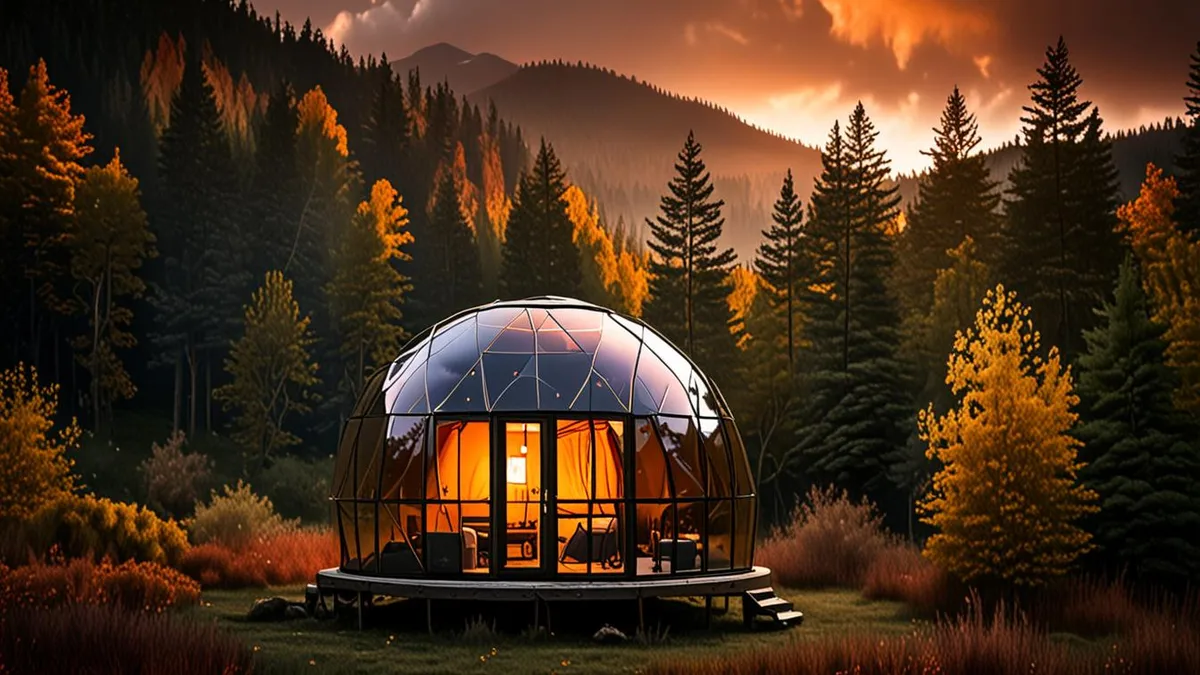
That said, don’t overlook the view-focused options. Glass domes and A-frames put the foliage front and center, letting you watch color change from bed as dawn light hits the canopy. If you go this route, ask specifically how the unit is heated and whether heat runs all night, since panoramic glass can lose warmth quickly after sunset.
Check the season dates before you book
One detail trips up more foliage travelers than any other: some glamping sites are seasonal and close after summer, or scale back operations once the weather cools. Before you fall in love with a listing, confirm the site stays open past mid-October, especially if you’re aiming for the later Mid-Atlantic or Blue Ridge peak window. A quick email to the host about heating, water lines in freezing conditions, and exact seasonal dates will save you a canceled trip later.
Booking Ahead: Why Fall Foliage Glamping Sells Out
Fall foliage glamping looks like a quiet, off-season getaway, but the best sites treat autumn as high season. In New England, the stretch around Columbus Day week is the single most competitive window of the year, and the most photogenic tents and cabins are often gone long before the first leaf turns. A little planning discipline goes a long way, and it usually starts months before you pack your insulated layers.
- Count back 3-6 months from your target weekend. For peak weekends, especially Columbus Day week in New England, that is when availability is real. Waiting until September usually means choosing between leftovers or a motel two hours from the color. Popular properties with heated tents and wood stoves tend to fill first, since those are the units travelers trust when nights drop toward 40-50°F.
- Budget for peak-season rates. Expect $150-$400 per night at the most sought-after properties during foliage weeks. Rates vary by region and accommodation type, so compare a few options before committing. A dome with panoramic windows may cost more than a basic safari tent, but the view from bed can justify the difference.
- Shift your stay to midweek if your schedule allows. An early-October Tuesday-to-Thursday booking typically costs less than the same site on a weekend, and you will share trails and scenic roads with far fewer leaf peepers. Midweek stays also give you a better shot at last-minute openings if your dates are flexible.
- Read the cancellation terms carefully. Weather can shift peak color by days, so a flexible booking protects you if you decide to move your dates closer to the forecast.
If you are new to this style of travel, it helps to understand what you are paying for before comparing rates. Reading up on the real differences in cost and comfort between glamping and camping makes it easier to judge whether a $300 safari tent is worth it for your trip.
What to Pack for Cold Nights and Muddy Trails
Autumn glamping is a different animal from a summer stay. Even when afternoons feel mild, nights in peak foliage season can drop to 40-50°F, and a tent that felt cozy at sunset can turn chilly by 3 a.m. The fix is simple: pack as if you were going shoulder-season camping, even if your accommodation has heating. A wood stove or heater helps, but it will not do much if you are sitting around in a t-shirt after dark.
Muddy ground is the other autumn reality. Rain plus fallen leaves creates slick, slippery paths around most glamping sites, and the grassy walkway you saw in photos may be a mud track by the time you arrive. Pack with both problems in mind, and the season works in your favor instead of against you.
- Insulated layers and a warm hat: pack a base layer, a fleece or puffy midlayer, and a beanie for evenings around the fire. Most body heat escapes through your head, so the hat matters more than you would think.
- Waterproof boots: choose ones with decent tread, since wet leaves on a slope behave like ball bearings. Bring a second pair of socks so a wet morning hike does not ruin the whole day.
- Headlamp: sunrise is when the canopy glows, and you will likely be walking to your viewing spot in the dark. A headlamp keeps your hands free for coffee and camera gear.
- Thermos: fill it the night before or at breakfast so you can sip something hot while you wait for the light to hit the treetops.
Toss in a dry bag or plastic sacks for muddy boots and wet layers, and you will keep the inside of your tent or dome pleasant for the whole stay. A small packable towel is worth adding too, since it doubles for wiping condensation off windows and drying gear that got caught in a shower. None of this takes up much space in the car, and every item earns its place the moment the temperature drops or the rain moves in.
Planning Daily Activities Around the Color
One of the biggest adjustments in fall is how little usable daylight you actually get. Plan on roughly 10-11 hours of usable time per day, and build your schedule around that reality rather than around summer habits. If you arrive at a trailhead at 3 p.m. expecting a long afternoon hike, you may be walking back in the dark.
Chase the sunrise, not the sunset
Low-angle morning light is what makes foliage photographs glow, so hike or drive your scenic routes at sunrise whenever you can. The canopy is brightest in the first hour or two after the sun comes up, popular overlooks are still quiet, and you have the rest of the day as a buffer. Bring a thermos, layer up, and let the light come to you.
Always have a low-elevation backup
Weather is the wild card of any foliage trip. A heavy rain or early windstorm can strip the high ridges of leaves days before the forecast promised, which is why smart planners build in a backup activity at lower elevation. A valley town with covered bridges, a farm stand, or a riverside walk can salvage a day when the mountaintop color is gone.
The rhythm that works best is simple: sunrise outing, long midday break at your accommodation, then a short late-afternoon walk before an early dinner. Short autumn days reward travelers who slow down instead of trying to cram in one more overlook.
Wrapping Up Your Fall Foliage Glamping Plan
Seeing brilliant autumn colors without giving up a comfortable bed comes down to three things: timing, location, and preparation. Aim your dates at the right regional peak window, whether that’s late September through mid-October in New England or mid-October through early November farther south, and track forecasts as the season approaches so you can adjust if the color runs early or late.
Then lock in the right stay. Pick a heated option such as a safari tent or cabin with a wood stove, since evenings get genuinely chilly once the leaves turn, and book 3-6 months out because peak weekends fill fast. Finally, pack for cold nights and muddy trails, and plan your days around short autumn daylight. Do those things and your glamping trip delivers the best of the season in comfort. If this helped you plan your trip, leave a comment or share the article with a fellow leaf-peeper.